桥梁复合材料防撞护舷的结构设计
2016-03-15赵维立蒋超周宣伊刘涛维方明霞
赵维立 蒋超 周宣伊 刘涛维 方明霞
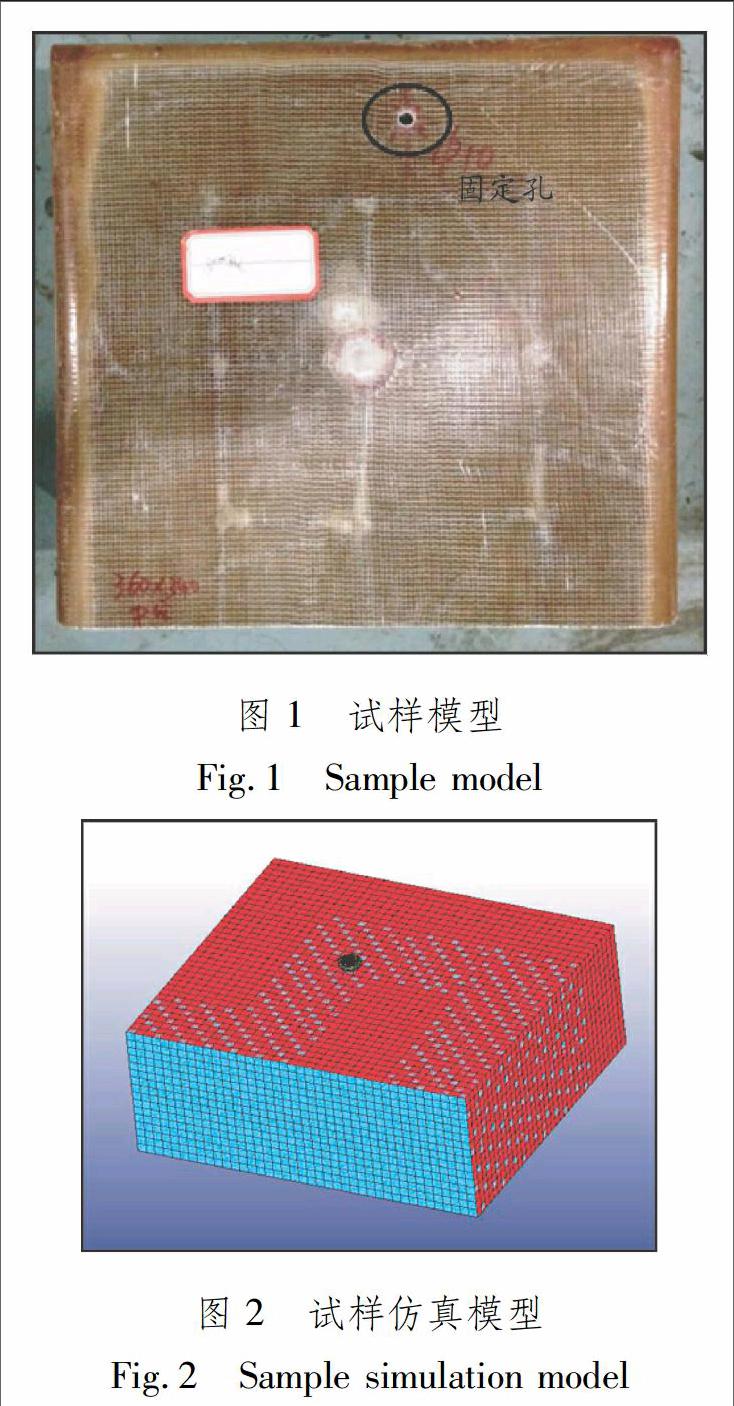
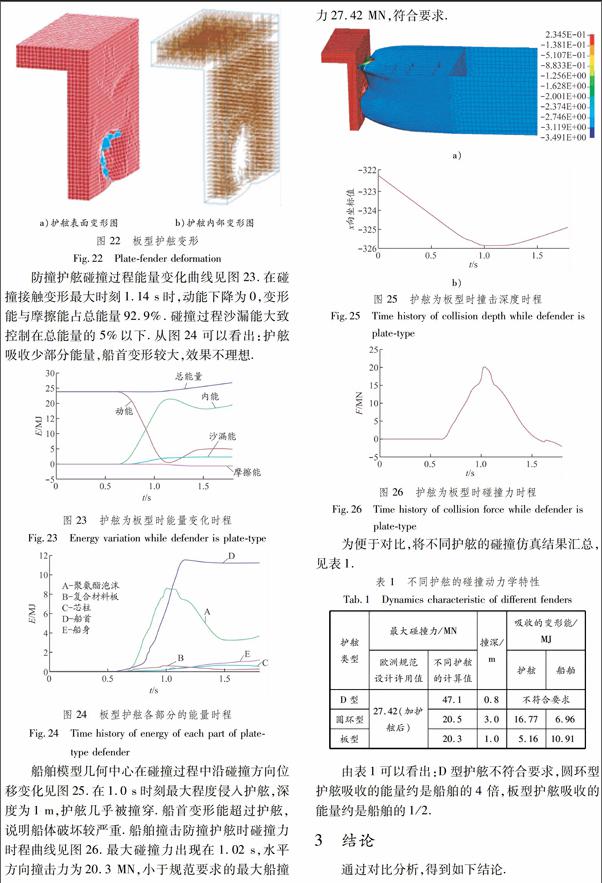
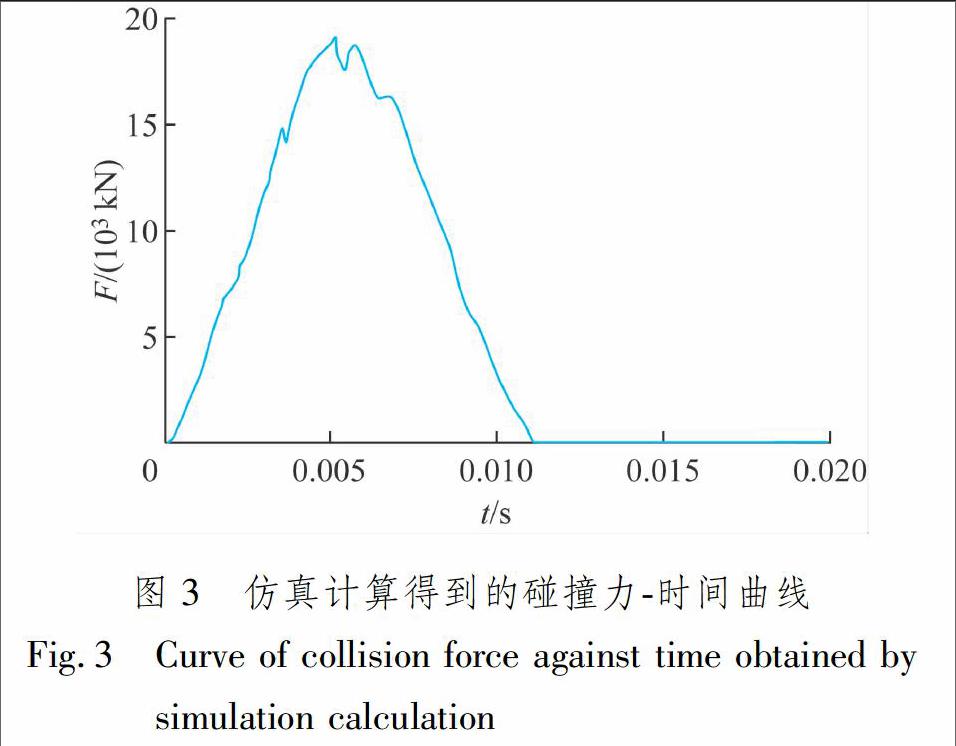
摘要:采用有限元法对某3 000 t船舶与桥梁防撞护舷碰撞的动力学特性进行分析.通过将护舷试样的碰撞试验与有限元计算结果进行对比,完善该防撞护舷的有限元模型,使其更可靠.用ANSYS/LSDYNA模拟3 000 t船舶撞击3种不同护舷(D型、圆环型和板型)的过程.不同护舷吸能结果表明:对于D型护舷,船舶会碰到桥墩,失去作用;对于板型护舷,船舶变形严重;圆环型护舷的效果最好.
关键词:桥梁; 护舷; 船舶; 碰撞; 复合材料; 动力学特性; 非线性有限元
中图分类号: U441.4 文献标志码:B
Abstract:The finite element method is used to analyze the collision dynamics characteristics of 3 000 t ship while it collides with bridge anticollision fender. To perfect the finite element model of the anticollision fender and make it more reliable, the experimental results of the fender sample are compared with the finite element calculation results. ANSYS/LSDYNA is used to simulate the process of the collision of 3 000 t ship with three types of fenders(Dtype, ringtype and platetype). The energy absorption results of these different fenders show that, the ship could impact the bridge pier while the fender is Dtype, which would be out of action; the deformation of the ship is serious while the fender is platetype; the ringtype fender are the best.
Key words:bridge; fender; ship; collision; composite material; dynamics characteristics; nonlinear finite element
0 引 言
虽然桥梁本体设计时一般要求能够承载一定的冲击,但若桥梁不设防撞装置,则船舶与桥梁碰撞时将直接与桥墩接触,由于二者的刚度均较大,不能通过变形吸收能量,会对桥墩产生极大的撞击力,极易造成船毁桥塌事故.[1]为桥梁设计合适的防撞护舷装置,通过吸收撞击能量降低船舶对桥墩的撞击力,对于船舶和桥梁的安全有非常重要的现实意义.
传统的桥梁防撞护舷多采用钢制金属材料或橡胶材料,不少专家学者对二者进行比较深入的研究.李元音等[2]提出用有限元非线性分析方法对码头橡胶护舷进行设计,改变单纯依赖实体试验或物理模型获得护舷力学性能的方式.李干华等[3]研究M型、D型、CY型和鼓型橡胶护舷防撞装置,并从产品结构、力学性能、安装维护和成本价格等方面进行相关的比较分析.张峰[4]以东海大桥为工程背景,总结现……
