“生产—消费”双重负责制下的贸易碳损失核算及碳排放责任界定研究
2015-10-13许冬兰王运慈
许冬兰++王运慈

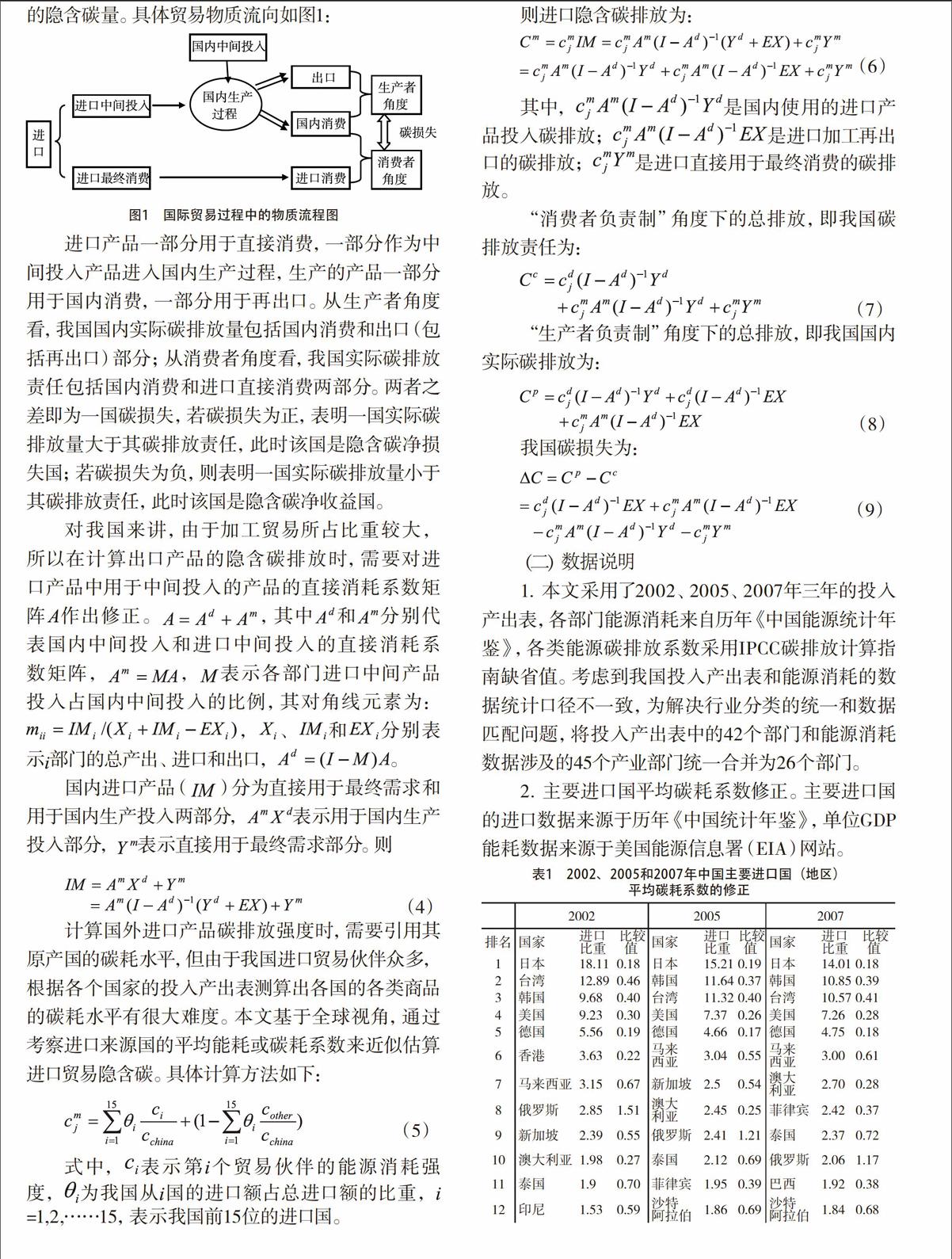
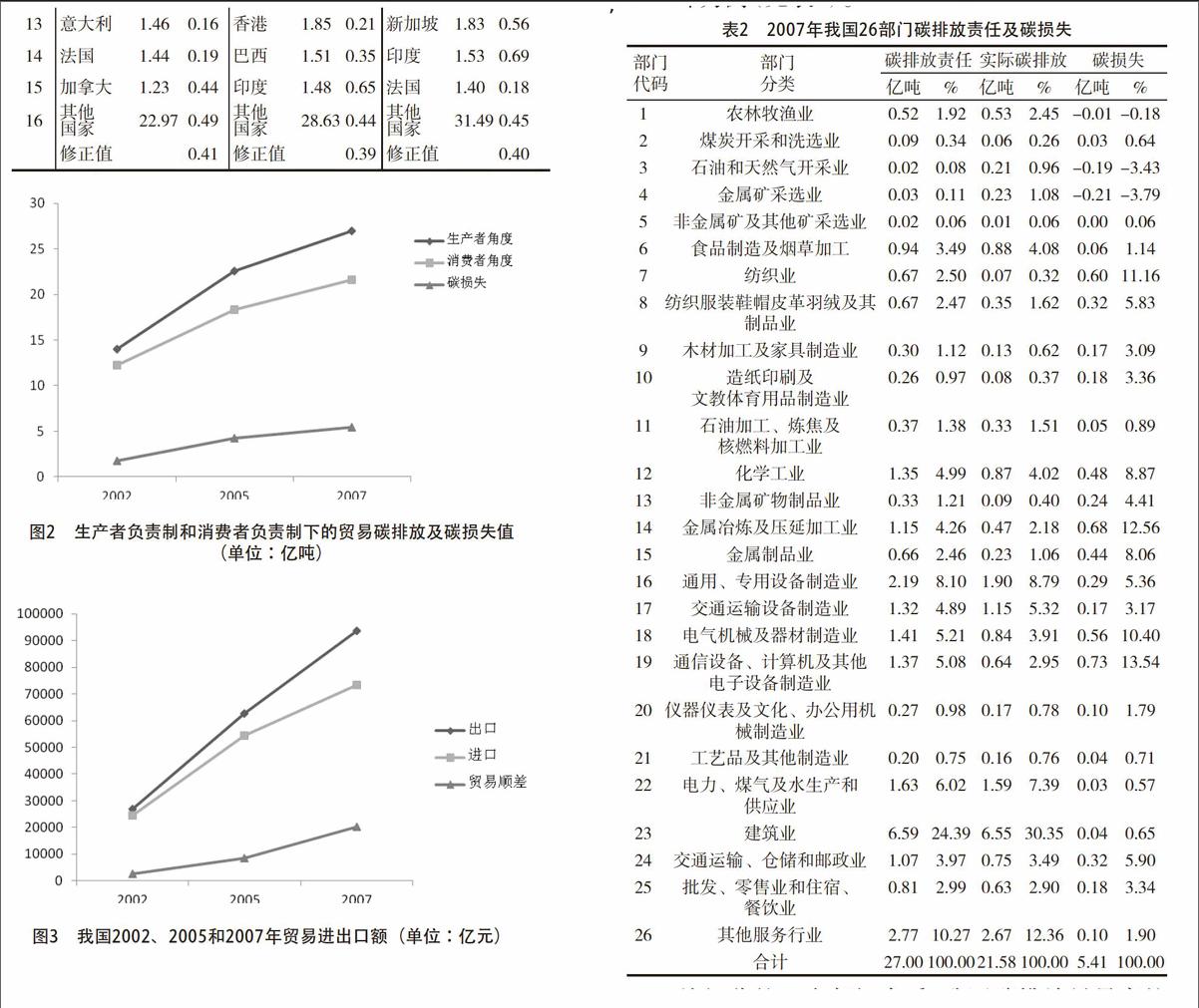
[摘 要]利用改进了的投入产出模型,在“生产-消费”双重负责制视域下分别计算2002、2005和2007年我国贸易隐含碳排放量及其差额即碳损失值,并计算具体部门的碳损失情况。结果表明,两种角度下我国隐含碳排放都有了明显的增长,碳损失值也变化巨大:由2002年的1.75亿吨增加到2007年的5.41亿吨,增长了3倍之多,其中,2007年高耗能行业和出口制造业所产生的碳损失占总碳损失的75.8%。因而建议从消费者负责制视角重新界定碳排放的责任,为我国在国际气候谈判中争取更多的主动权提供理论依据。
[关键词]碳损失;生产者负责制;消费者负责制;责任界定
[中图分类号]F205 [文献标识码]A [文章编号]1671-8372(2015)03-0033-06
On the carbon loss calculation and carbon emissions responsibility under the dual responsibility system of production and consumption
XU Dong-lan, WANG Yun-ci
(School of Economics, Ocean University of China, Qingdao 266100, China)
Abstract:This study calculated Chinas trade hidden carbon emissions and the carbon loss in 2002, 2005 and 2007 by using the improved input-output model from the perspective of producer responsibility system and consumer responsibility system. The results show that the hidden carbon emissions experience an obvious growth, and the carbon loss undergoes tremendous changes: from 175 million tons in 2002 to 541 million tons in 2007, increased by three times. The carbon loss in energy-intensive industries and exports manufacturing accounted for 75.8% of the total carbon loss in 2007.So it is suggested that we should redefine the carbon emissions responsibility from the perspective of consumer responsibility system, and provide scientific basis for taking more initiative in the international climate negotiation.
Key words:carbon loss; producer responsibility system; consumer responsibility system;responsibility judgment
一、引言
21世纪以来,经济全球化的速度不断加快,国际贸易量迅速增长,造成贸易过程中的隐含碳排放日益增多。从2007年起,由于经济的显著增长,以化石燃料为主导的能源结构以及出口的增加,中国的碳排放量超过美国,位居世界第一。2009年的哥本哈根会议之后,低碳经济成为各国倡导的经济发展理念,我国也做出了到2020年单位GDP碳排放比2005年减少40%~50%的承诺。我国面临着来自国内碳减排与国际碳转移的双重压力。当前,国内的能源消费是我国节能减排的主要对象,但是我国经济运行中所消耗的能源并非全部用于境内消费产品的生产上,部分能源实际用于境外消费的出口产品的生产上,因此,外贸出口的大量增长也加速了我国国内能源的消耗和二氧化碳的排放。……