Wang Xizhi and Sichuan
2021-12-23TangLin
Tang Lin
Sichuan Academy of Social Sciences
Abstract: In the history of Chinese calligraphy, Wang Xizhi (王羲之) was one of the most well-known calligraphers in China and was traditionally referred to as the Sage of Calligraphy. Together with another great calligrapher, Zhong Yao (钟繇), they were referred to as “Zhong Wang.” Wang Xizhi and his son Wang Xianzhi (王献之)were called the “Two Wangs” (two icons) of calligraphy. Wang Xizhi never visited the Bashu region in his life, but there are some traces of the area of Shu (蜀, in present-day Sichuan province) in the Shiqi Tie (十七帖, Seventeen Exemplars), which is one of the masterpieces of Wang Xizhi’s cursive scripts. The focus of this paper is not on the art of calligraphy in Shiqi Tie, but rather on the relationship between Wang Xizhi and Sichuan through his correspondence with Zhou Fu (周抚), the prefectural governor of Yizhou at the time. Why was Wang Xizhi so interested in Sichuan historical figures such as Yan Junping (严君平), Sima Xiangru (司马相如), Yang Ziyun (扬子云) (also known as Yang Xiong, [扬雄]) and Qiao Zhou (谯周)? Why did he pay so much attention to the cities and towns of Chengdu in the Qin Dynasty (221-207 BC), the schools of the Han Dynasty (202 BC-AD 220) in the area of Shu, the murals of the Han Dynasty, salt wells in Sichuan, as well as other sceneries and historical sites in Shu? Why was he so eager to visit Shu and considered “climbing Wenling (Min Mountains) and Emei Mountain” as a monumental event? These are the questions this paper intends to explore. This is by far the most comprehensive and detailed article on Wang Xizhi’s relationship with Sichuan. In particular, his calligraphic works about significant historical figures, names of places, and heritage sites in Sichuan are very precious, such as Chengdu city (Chengdu, 成都), Shu County (Shujun, 蜀郡), Emei (峨眉), Yang Xiong, Sima Xiangru, ancient gas well (huojing, 火井). These are authentic calligraphy about Sichuan by famous artists that have been handed down to today and which are considered national treasures and a treasure trove of art for establishing Sichuan’s cultural brands and mining its cultural resources.
Keywords: Wang Xizhi, Sichuan, historical figures, historical sites
Wang Xizhi (AD 321-379, or AD 303-361), also named Yishao (逸少), was born in Linyi in Langya (present Linyi city in Shangdong province). He was a court minister during the Eastern Jin Dynasty (AD 317-420) and was known as the “Sage of Calligraphy.” During his career, he held various official positions. He served as court secretary, prefectural governor of Jiangzhou, and prefecture governor of Kuaiji. He was promoted progressively to the General of the Right Army, known as “Wang Youjun.” As a calligrapher, his workLantingji Xu(兰亭集序, the Preface to the Poems collected from the Orchid Povillion) is revered as the best running calligraphy in the world. He specialized in various styles of calligraphy:Li(隶, official-script styles),Cao(草, cursive hand),Kai(楷, regular script) andXing(行, running hand). In addition, he studied the features of different styles with great dedication and imitated them by heart. He was able to draw on the strengths of many others and eventually developed his own style, which had a profound impact on the development of calligraphy. In the history of Chinese calligraphy, Wang was peered with Zhong Yao, and they were referred to as “Zhong Wang.” Wang and his son Wang Xianzhi were called the “Two Wangs” (two icons) of calligraphy. He is one of the most well-known Chinese calligraphers and a prominent cultural icon of ancient China.
According to various historical documents, Wang Xizhi never visited the Shu area in his life. Then, what was his connection with Sichuan? Some clues can be found in Wang Xizhi’s calligraphic workShiqi Tie, which has been passed down through generations. The nameShiqi Tiecame from the opening of the first exemplarXi Sima Tie(郗司马帖), which wroteShiqi ri xian shu(十七日先书, on the seventeenth day).Shiqi Tieactually includes 29 pieces of correspondence, including 15 letters related to Sichuan, such asChengdu Tie(成都帖). These 15 letters by Wang Xizhi were written to Zhou Fu, the prefectural governor of Yizhou at the time. Wang Xizhi lived during the Eastern Jin Dynasty (AD 317-420), which was established by Sima Rui (司马睿), a relative of the Jin imperial family, after the relocation of the capital of the Empire. At that time, the prefectural-level government of Yizhou was located in Chengdu in Shu County (present Chengdu city). During his correspondence with Wang Xizhi, Zhou Fu was the highest governor of not only the Bashu region but also parts of Yunnan and Guizhou.
Zhou Fu (?-AD 365), also named Daohe (道和), was born in An’cheng, Runan (present Ru’nan County in Henan province). He was the son of Zhou Fang (周访) (AD 265-420), who was a famous general of Zhongxing in the Jin Dynasty. After Zhou Fang’s death, Zhou Fu inherited the position and joined the Grand Commander Huan Wen (桓温) to conquer Shu County and quell the rebellion. Later, he served as the prefectural governor of Yizhou and guarded Sichuan for 30 years, including 18 years in Chengdu. During the Eastern Jin Dynasty (AD 317-420), Yizhou (now Chengdu) covered 10 counties. Its prefectural-level government was located in Chengdu county (now downtown Chengdu) and was once located in Fengjie, Chongqing. According to theDongxi Jin Yanyi(东西晋演义,
Romance of the Eastern and Western Jin Dynasties), Zhou Fu was very prestigious and benevolent during his tenure in Shu, and the people appreciated his virtue. Zhou Fu died in June of the third year of Xingning (AD 365) during the reign of Emperor Ai of the Eastern Jin Dynasty. The Jin court appointed Zhou Chu (周楚), son of Zhou Fu, as the prefectural governor of Yizhou. Sima Xun (司马勋), the prefectural governor of Liangzhou in the Eastern Jin Dynasty, thought that no one could challenge him, so he revolted and attempted to take over the Bashu region but was defeated by Huan Wen’s army.
Wang Xizhi was from the prestigious Wang clan of Langya. The Wang clan of Langya was very prominent in the Eastern Jin Dynasty and was called “Wang Xie” together with the Xie family of Chen Jun (represented by Xie An [谢安]). In Liu Yuxi’s poem “Wuyi Lane (乌衣巷),” it says: “Where once the swallows knew the mansions of the great, they now to humbler homes would fly to nest and mate.” (旧时王谢堂前燕). The “Wang Xie” (the mansions of two noble clans) here refers to these two clans. Before Zhou Fu served as the prefectural governor of Yizhou, Zhou Fu had received help from the Wang clan of Langya several times. In the first year of Yongchang (AD 322), Wang Xizhi’s uncle Wang Dun (王敦), an outstanding founding minister, rebelled against the Jin family (known as Wang Dun’s Rebellion). Zhou Fu was his key subordinate. Following the failure of Wang Dun in the second year of Taining (AD 324), Zhou Fu and others fled into Xiyang and were exonerated because of their special relationship with the Wang clan of Langya. The court granted an amnesty in the third year of Taining. In the beginning of the Xianhe period (AD 326), Zhou Fu was appointed by Wang Gui, who was also Wang Xizhi’s uncle and the first Prime Minister of the Eastern Jin Dynasty. Since then, he returned to the government and eventually became a high-level official in Yizhou.
It was probably during the frequent contact with the Wang clan of Langya that a deep friendship was established between Zhou Fu and Wang Xizhi. Their friendship was not interrupted by Zhou’s visit to Shu. On the contrary, it developed into the greetings and thoughts contained in the 15 letters from Wang Xizhi to Zhou Fu.
These 15 letters (included inShiqi Tie) contain 71 lines and a total of 597 words. According to Chen Youshan’s study. They are:Chengdu Tie(成都帖),Jiangtang Tie(讲堂帖, letter about a lecture hall),Yan Junping Tie(严君平帖),Qiaozhou Tie(谯周帖),Yanjing Tie(盐井帖, letter about the salt wells),Qiongzhu Zhang Tie(邛竹杖帖, letter about walking sticks made of bamboo from Qionglai),Tianshu Gao Tie(天鼠膏帖, letter about ointment made from wildcats or bats),Yaocao Tie(药草帖, letter about herbs),Qingli Tie(青李帖, letter about green plums),Zhanji Hutao Tie(旃罽胡桃帖, letter about wool fabrics and walnuts),Qingyan Tie(清晏帖, letter about peace and tranquility),Qishi Tie(七十帖, letter about being 70 years old),Shudu Tie(蜀都帖), andErnv Tie(儿女帖, letter about children) (Chen, 2014). Some of these 15 letters are related to the specialties of Sichuan at that time, such asQiongzhu ZhangandTianshu Gao. However, given the lack of systematic research on these specialties, very few studies have been conducted, so they are not discussed in this paper. This paper discusses the connections between Wang Xizhi and Sichuan from three aspects: Wang Xizhi and historical figures in Sichuan, Wang Xizhi and Sichuan sceneries, and Wang Xizhi’s yearn for Yizhou (Chengdu, Sichuan).
Shiqi Tieis a representative work of Wang Xizhi’s cursive calligraphy. This collection is blessed with free-flowing brushwork and an unrestrained spirit. It has been regarded as a classic of cursive calligraphy by calligraphers throughout the ages. In the words of Huang Bosi (黄伯思), a calligrapher and calligraphy theorist of the Song Dynasty (AD 960-1279), it is the “dragon of calligraphy” (书中龙, supreme example of calligraphy). For generations, it has been regarded as a standard for cursive calligraphy. It was highly praised by many significant figures, such as Emperor Taizong of the Tang Dynasty (AD 618-907), the calligrapher Zhang Yanyuan (张彦远) of the Tang Dynasty, and the philosopher Zhu Xi (朱熹) of the Song Dynasty (Wang, 2018).
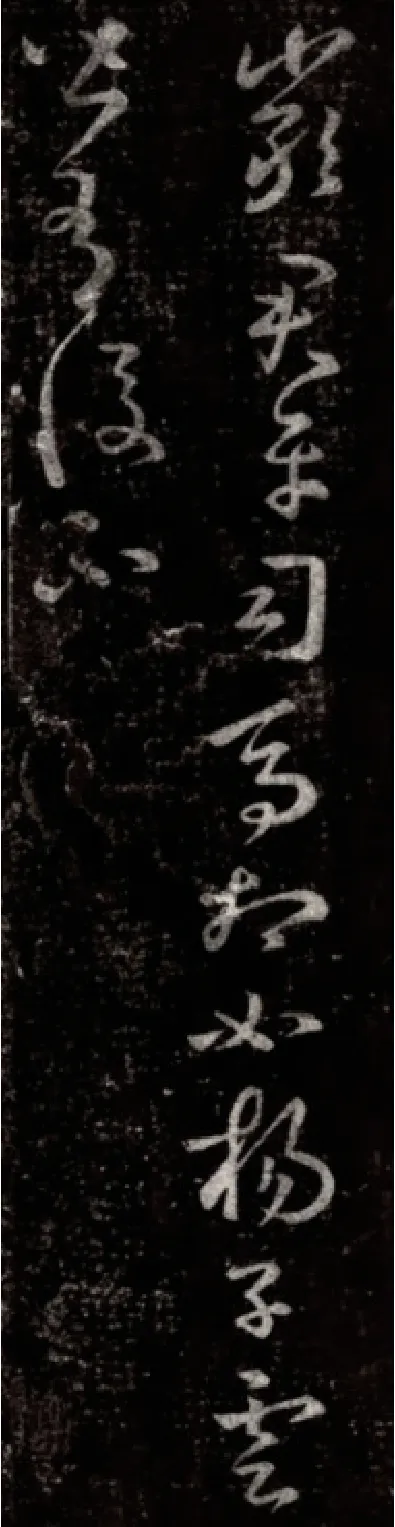
Yan Junping Tie by Wang Xizhi
Historical Figures in Sichuan
According to statistics, the historical figures of Sichuan mentioned inShiqi Tiewere all found inYan Junping Tie(严君平帖) andQiao Zhou Tie(谯周帖). Five significant figures were mentioned:Yan Junping,Sima Xiangru, Yang Ziyun, Qiao Zhou, and Qiao Xiu (谯秀) (Tang, 2021). So the question is: In what way were these five people in Shu so special that they attracted the attention of Wang Xizhi, who was thousands of miles away from them?
Yan Junping Tie
Yan Junping Tieby Wang Xizhi is a paper-based piece inCaocalligraphy (cursive script), with 12 lines and 14 characters. The meaning of this exemplar is clear at a glance. The original Chinese text of the question that Wang Xizhi asked Zhou Fu and its English translation are as follows.
严君平、司马相如、扬子云,皆有后否?
Do Yan Junping, Sima Xiangru, and Yang Ziyun all have descendants?
Yan Junping
Yan Junping (严君平 87 BC-AD 6 or AD 7), also named Zun (遵), was a famous thinker of the Han Dynasty and a native of Shu County (Chengdu) in the Western Han Dynasty (202 BC-AD 8). He used to live in seclusion in Jingyu Mountain in Pengxi County, Sichuan province, and sold divination in many places such as (present) Pi County, Chengdu, Pengzhou, Qionglai, Guanghan, and Mianzhu. He retired after the age of 50 and spent his time thereafter writing and teaching in Pingle Mountain, Pixian County. He died at the age of 95 and was buried in Pingle Mountain. He embraced the thoughts of Lao Tzu and Zhuang Zhou and used them to guide his thoughts and behaviors. He lived in seclusion in the city and was not distracted by gains and losses. These qualities were what Yan Junping was admired for, and what Wang Xizhi wanted to emulate. In the 10th volume ofHuayang Guozhi(华阳国志,Chronicles of Huayang), Xianxian Zhi (先贤志,Records of Sages), it reads:
著《指归》,为道书之宗。扬雄少师之,称其德......
[He] wroteZhi Gui[指归, a guide], [and] is a pioneering Taoist master. When Yang Xiong
was young, he acknowledged him as his teacher and praised him for his virtue.
Yan Junping’s ideology and lifestyle were particularly in tune with Wang Xizhi’s state of mind in his later years, which is probably the main reason why Wang Xizhi gave priority to Yan Junping. Significant works of Yan includeLaozi Zhi Gui(老子指归,A Guide to Laozi) andDao De Zhi Gui Lun(道德指归论,Ethical Theories and Moral Guidance). He was a great hermit of the Western Han Dynasty, an enlightened teacher of Yang Xiong, a Chinese philosopher, and the founder of Shu Studies.
The former residence of Yan Junping has been found in Qionglai, Pengzhou, Pidu, and other places in Chengdu today. Junping Street, built next to Chengdu People’s Park, was named in honor of Yan Junping.
Sima Xiangru
Sima Xiangru (179-117 BC), named Changqing, was born in Anhan County, Ba County (now Peng’an, Sichuan) in the Western Han Dynasty and grew up in Chengdu, Shu County (now Chengdu, Sichuan). He was a famous litterateur of the Han Dynasty. He was initially an aide of Liu Wu (刘武), Prince Xiao of Liang. After Liu Wu’s death, he returned to Shu, during which he ran off with a talented lady named Zhuo Wenjun (卓文君), leaving a beautiful love story for the centuries that followed. Later, Emperor Wu of the Han Dynasty was so impressed by Sima Xiangru’sZixu Fu(子虚赋,Fu on Sir Vacuous) that he summoned him to the palace and pointed him as a court writer ofCiandFu. He was credited for his diplomatic trips to Qiong (邛) and Ze (笮). In his later years, he settled in Maoling (now Xingping city in Shaanxi province). Sima Xiangru was a representative writer of the Han Dynasty. HisFuworks mostly depicted the splendor of royal gardens and the joy of field hunting. His works were highly elaborated and rich in artistic expressions, which have been imitated by literati since the Han and Wei dynasties. He is a prominent figure in Chinese cultural and literary history. Because of his achievements in literature, Sima Xiangru was considered to be an important writer on par with Sima Qian (司马迁). InHan Wenxueshi Gangyao(汉文学史纲要,An Outline of the History of Han Literature), Lu Xun said:
武帝时文人,赋莫若司马相如,文莫若司马迁。
Of the literati at the time of Emperor Wu, the most talented composer ofFuwas Sima
Xiangru, and the most remarkable writer was Sima Qian.
Sima Xiangru was one of the second batch of top ten Sichuan historical figures. His former residence was located in Peng’an County, Sichuan. Today, places such as Qintai Road in Chengdu and Wenjun Well in Qionglai are both associated with Sima Xiangru. His romance with Zhuo Wenjun is one of the classics of Chinese love stories.
Yang Xiong
Yang Xiong (53 BC-AD 18), also named Zi Yun, was a well-known scholar and litterateur of the Han Dynasty. He was a native of Shu (蜀, modern Sichuan province), specifically the area of Pi (郫, modern Pi county, Chengdu). Some sources also suggest that he was from Shu, Mianzhu, or Qionglai. Since his childhood, Yang Xiong was a dedicated learner and was good at writing rhetoric. Most of his great works imitated the style of Sima Xiangru. He read widely and knew a lot of ancient and unusual characters, and was a cultural master with high prestige during his generation. He produced a great number of works. InHuayang Guozhi, it says:
以经莫大于《易》,故而作《太玄》;传莫大于《论语》,故作《法言》;史莫善于《苍颉》,故作《训篡》;箴誎莫美于《虞箴》,故作《州箴》;赋莫弘于《离骚》,故反屈原而广之;典莫正于《尔雅》,故作《方言》......
The most important scripture was theYi Jing(Book of Changes), so he composedTaixuan(Jing); The most significant biography wasLun Yu(The Analects of Confucius), so he wroteFa Yan(The Model Sayings); The complete collection of history wasCangjie Pian(The Three Chapters), so he wroteXun Cuan; The best collection of wise words of advice and admonition wasYu Zhen, so he wrote12 Zhou Zhen(Advice for States); The most impressiveFuwasLi Sao(The Lament), so he referred to Qu Yuan to promote his popularity; The most accurate dictionary wasErya, so he compiled a dictionary of regionalismsFangyan.
FaYancomprised thirteen volumes. One of the volumesXue Xing(学行,Learning and Virtue) was approximately 1,500 words long. This was a theoretical work on Chinese education that was much more popular than theXue Ji(学记,Record on the Subject of Education) during the Warring States Period (475 BC-221 BC). In addition toFa Yan, he also wroteFang Yan,Tai Xuan, andShu Wang Ben Ji(蜀王本纪,Biographies of the Kings of Ancient Shu). Among them, the 1,333-wordShu Wang Ben Jiwas the first historical book to record the history of Bashu in ancient times. In Liu Yuxi’s famousLou Shi Ming(陋室铭,An Epigraph for My Humble Home), it says, “the pavilion of Ziyun of West Shu” (xishu ziyun ting, 西蜀子云亭). Here, “Ziyun of West Shu” refers to Yang Xiong. Yang Xiong was the foundation ofDa Fu(long-formFu) of the all times. He is by far the most influential Sichuan thinker in history and was revered by later generations as Confucius of the Western Tao and Confucius of the Han Dynasty. He was one of the most famous thinkers of Confucianism in the Han Dynasty.
Along with Li Bing, Wu Zetian, and Li Bai, Yang Xiong is among the top 10 Sichuan historical figures. Today there are several memorial sites for him in Sichuan, such as the tomb of Yang Xiong in the area of Pi (Pidu District, Chengdu), Ziyun Pavilion in Xishan Area in Mianyang, and Ziyun Mountain in Qianwei County, Leshan.
Whether Yang Xiong had descendants has received a lot of attention, so I once wrote a paper on this topic titled: Was Yang Wujiu a descendant of Yang Xiong? And I believe that Yang Xiong had a descendant (Tang, 2021).
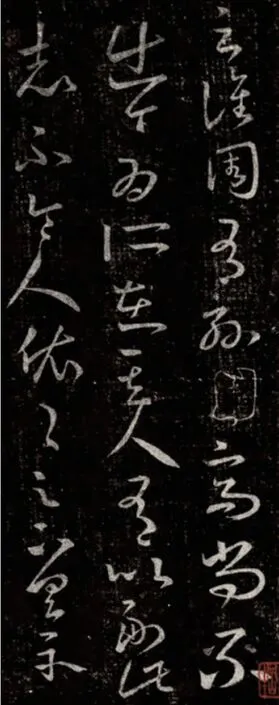
Qiao Zhou Tie by Wang Xizhi
Qiao Zhou Tie
Qiao Zhou Tieby Wang Xizhi is a paper-based piece inCaocalligraphy, with 13 lines and 27 characters. The original Chinese text and its English are shown beside:
云谯周有孙□,高尚不出,今为所在?其人有副此志?令人依依,足下具示。
I heard that Qiao Zhou had a grandson named Qiao (Xiu), who was a noble man and lived in seclusion. Where is he now? Is he really as unrestrained as people say he is, and devoted to nature? He sounds really admirable. I hope you can tell me more about him.
Two characters between Sun (孙) and Gao (高) are unrecognizable, so they are replaced by the symbol “□.” According to experts, this unrecognizable word is likely to be“ming xiu” (名秀, named Xiu).
Qiao Zhou
Qiao Zhou (AD 201-270), also named Yunnan (允南), was a native of Xichong State, the west of Ba (now Huaishu Town in Xichong, Sichuan). He was a famous Confucian scholar and historian in the Shu-Han Dynasty (AD 221-263), also known as “Confucius of Shu.” He was the teacher of Chen Shou (陈寿), the author ofSan Guo Zhi(三国志,Records of the Three Kingdoms).San Guo Zhi, together with Sima Qian’sShi Ji(史记,Records of the Grand Historian), Ban Gu’sHan Shu(汉书,Book of Han), and Fan Ye’sHou Han Shu(后汉书,Book of the Later Han), are known as the “First Four Histories.” He has a very high status among historians. In the first year of the Yan Xing period (AD 263), Wei invaded Shu from three directions. Qiao Zhou was granted the title of Neighborhood Marquis of Yangcheng for persuading Shu’s lord Liu Shan (刘禅) to surrender. Qiao Zhou was very far-sighted and persuaded Liu Shan to surrender at a critical moment, thus contributing to the whole state. At the fall of the Shu-Han Dynasty in 265, the total number of people in Shu-Han was only about one million, but the army had more than 100,000 soldiers, making such a heavy burden unbearable for the people. Qiao Zhou’s persuasion both avoided war and helped unify the state. Similar to his contemporaries Chen Shou and Chang Qu (常璩), Qiao Zhou was also a highly accomplished historian. He was very knowledgeable and made contributions to scripture, history, and astronomy.
As part of the culture of Bashu, “the fatalism in Shu” (tianshu zai shu, 天数在蜀) was widely recognized and had a significant impact on Chinese astronomy. He wrote extensively, and his representative works includeShu Ben Ji(蜀本纪,Notes on People in Shu) andthe Sanbaji (三巴記, Notes on the Three Ba Commanderies). These works, which recounted the historical and geographical stories of the area, had a great influence on the later compilation of local histories in Sichuan.
Today, in the Wanjuan Tower Scenic Area of the Scenic Spot of Xishan in Nanchong, there are the Qiao Zhou Memorial Temple and Qiao Zhou’s Tomb. The Qiao Zhou Memorial Temple is a popular place of interest in Nanchong. Qiao Zhou was a great minister of Shu-Han during the Three Kingdoms period that Sichuan people should especially remember.
Qiao Xiu
Qiao Xiu, also nam ed Yuan Yan, was the grandson of Qiao Zhou and a famous scholar in Shu. At the end of the Western Jin Dynasty, he knew that the world would be in chaos, so he planned not to interact with his friends and not to meet with relatives of any clans. Li Xiong, the founding emperor of the Han Dynasty, occupied Shu. Faced with a sincere invitation, even the greetings from Emperor Li, he did not respond. This is the famous story of “the emperor’s private visit to Qiao Xiu” in history. He often wore a deerskin hat and farmed in the mountains and forests in seclusion. Huan Wen, also named Ziyuan (子元), was the Great General of the Eastern Jin Dynasty (AD 317-420) who conquered the western area, as well as a poet and essayist of the Eastern Jin Dynasty. In the third year of Yonghe under the reign of Emperor Mu of Jin (347), he led his troops and pacified Li Xiong, who was in Shu. After that, he stayed in Chengdu for 30 days. Knowing Qiao Xiu’s great talents and high reputation, Huan Wen submitted a “Recommendation for Qiao Xiu” to Emperor Mu, recommending Qiao Xiu to join the court. The court sent an ambassador to invite Qiao Xiu, hence the historical story of “Huan Wen’s recommendation for great talents.” When Fan Ben (范贲) and Xiao Jing (萧敬) were in rebellion, he took refuge in Dang Qu (in the northeast of Qu County, Sichuan) and was followed by hundreds of people in his village. He died in his 90s.
Qiao Xiu was well-known in later times. Li Shangyin once created a poem about Qiao Xiu, titled “Zitong Wang Changqing Shan Zhi Baxi Fuhuai Qiao Xiu” (梓潼望长卿山至巴西复怀谯秀,Looking for Qian Xiu from Changqing Mountain in Zitong to Baxi). It reads as follows:
梓潼不见马相如, I did not find Sima Xiangru in Zitong,
更欲南行问酒垆。 so I went to the south to ask about his whereabouts at liquor stores.
行到巴西觅谯秀, I went all the way to the west of Ba to look for Qiao Xiu in Xichong,
巴西唯是有寒芜。 but all I could see was desolation.
Li Shangyin (AD 813-AD 858) was a famous poet of the late Tang Dynasty. He and Du Mu (杜牧, AD 803-AD 852) were known as “Li-Du Jr,(Li Shangyin and Du Mu)” as compared to the Li-Du Sr., (Li Bai [李白, AD 701-AD 762] and Du Fu [杜甫, AD 712-AD 770]).
The letter from Zhou Fu to Wang Xizhi was long missing, so it was impossible to know how he replied to Wang Xizhi. However, based on Wang Xizhi’s two lettersYan Junping TieandQiao Zhou Tie, people can know of Yan Junping’s secluded life, Sima Xiangru’s literary talent, Yang Ziyun’s inner tranquility, Qiao Zhou’s knowledge and character, and Qiao Xiu’s seclusion and nobility. They were already famous in the Eastern Jin Dynasty and were models for future generations. Otherwise, it was unlikely that Wang Xizhi, who was a famous person in the Eastern Jin Dynasty, would have written to Zhou Fu specifically to ask about them or their descendants.
In the above two letters, Wang Xizhi wrote “Yan Junping,” “Sima Xiangru,” “Yang Ziyun” (Yang Xiong), and “Qiao Zhou.” These were the first time that they were written by a great calligrapher and have been handed down to this day.
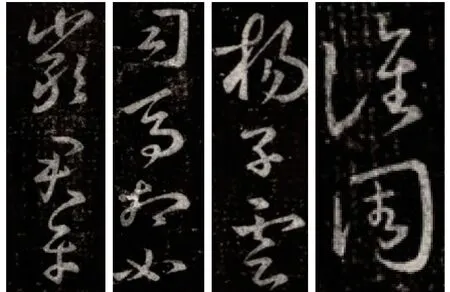
Sichuan historical figures written by the Sage of Calligraphy.From left to right: Yan Junping, Sima Xiangru, Yang Ziyun and Qiao Zhou.
Sceneries and Historical Sites in Sichuan
According to statistics, the sceneries and historical sites in Sichuan mentioned inShiqi Tiewere all found in three letters:Chengdu Chengchi Tie(the Fortifications of Chengdu),Jiangtang Tie, andYanjing Tie(Tang, 2021). The Sichuan sceneries and historical sites mentioned include: the fortifications of Chengdu, the schools of the Han Dynasty in the area of Shu, the murals of the Han Dynasty, and the salt wells in Sichuan at the end of the Warring States Period. Then, more than 1,600 years ago, what was so special about them that they drew so much attention from Wang Xizhi, the sage of calligraphy, who particularly wrote a letter to Zhou Fu for a reply?
Chengdu Chengchi Tie by Wang Xizhi
Chengdu Chengchi Tieby Wang Xizhi is a paper-based piece inCaocalligraphy, with five lines and 48 characters. The original Chinese text and its English translation are shown below.
往在都,见诸葛颙,曾具问蜀中事,云:成都城池、门屋、楼观,皆是秦时司马错所修。令人远想慨然,为尔不?信具示,为欲广异闻。
[When I] was in the capital, [I] met Zhuge Yong and asked him about things [happened] in Shu. [He] said [that] the fortifications, gates, houses and buildings in Chengdu were all built by Sima Cuo in the Qin Dynasty. Is this true? Could you please tell me in detail so that I can know more about it?
In Wang Xizhi’s letter, the capital refers to the capital of the Eastern Jin Dynasty, i.e., Jiankang (now Nanjing). Zhuge Yong (诸葛颙) was the grandson of Zhuge Jin (诸葛瑾), the brother of Zhuge Liang (诸葛亮). Some sources suggest that it should be Zhuge Xian (诸……
杂志排行
Contemporary Social Sciences的其它文章
- Wang Chuan’s Abstract Painting: A Contemporary Expression of Chinese Zen Ink Painting
- A Study of Idiom Translation in Bonsall’s The Red Chamber Dream
- A Study of Feminine Space in Romance of the Three Kingdoms
- A Study of the European Union’s Path for Constructing Digital Governance Rules and the Logical Implications of the Path
- The Influence of Sichuan–Tibet Railway on the Accessibility and Economic Development of City Propers along the Line: Taking Chengdu and Ya’an as Examples
- Does Environmental Regulation Increase Employment? Based on the SCM and RCM Methods