磁性纳米流体微通道散热分析
2021-12-09李春泉李雪斌林奈黄红艳
李春泉 李雪斌 林奈 黄红艳


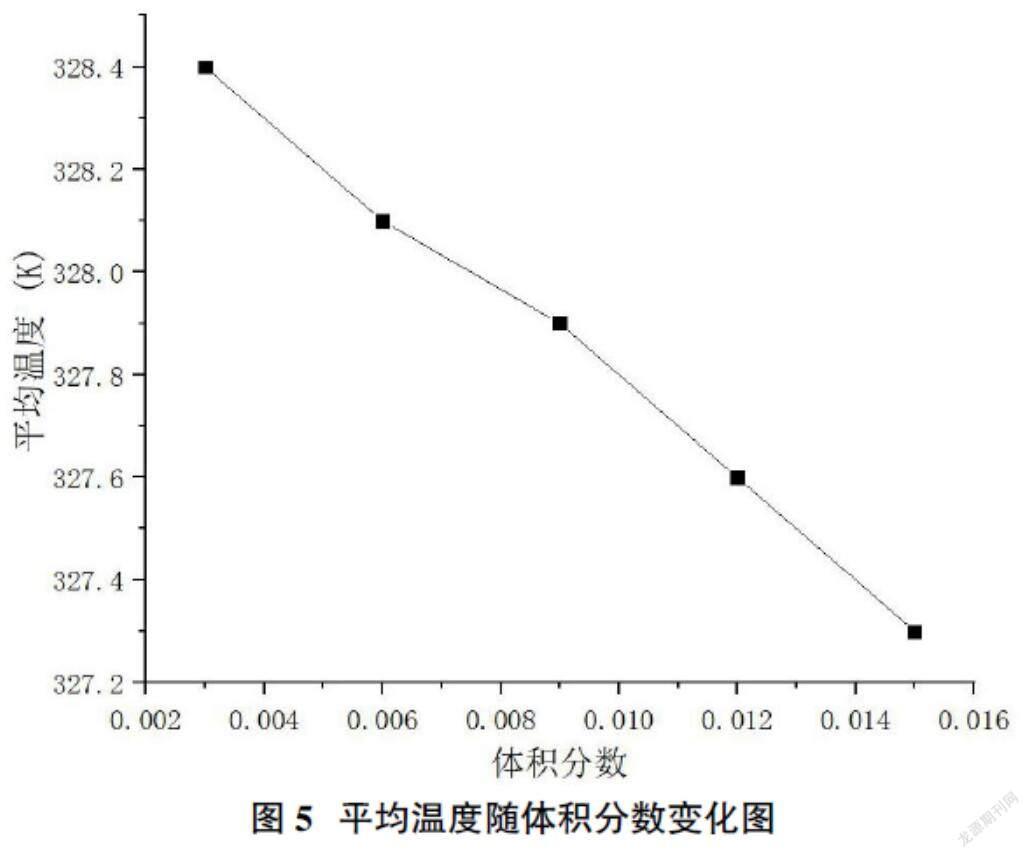
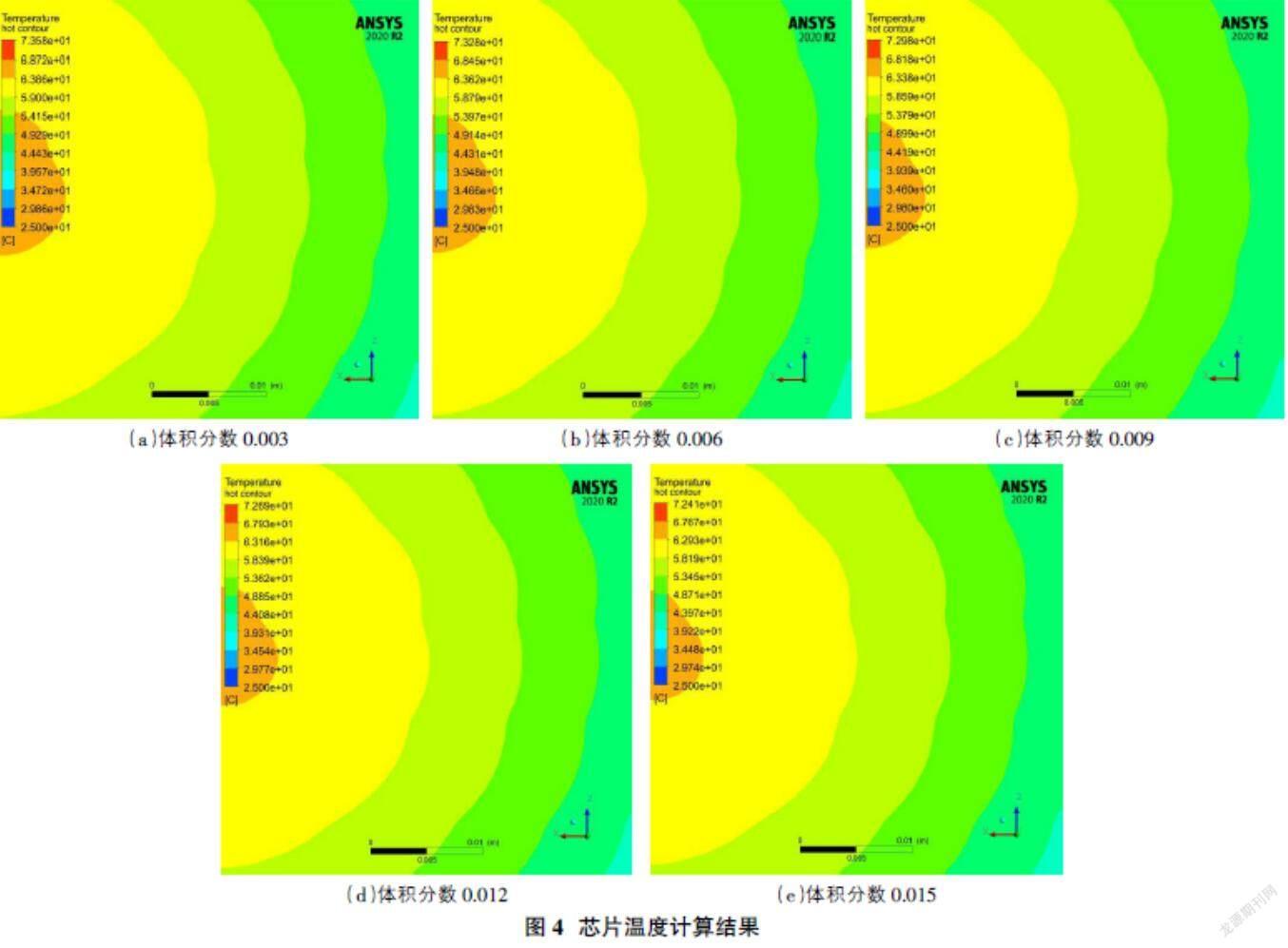
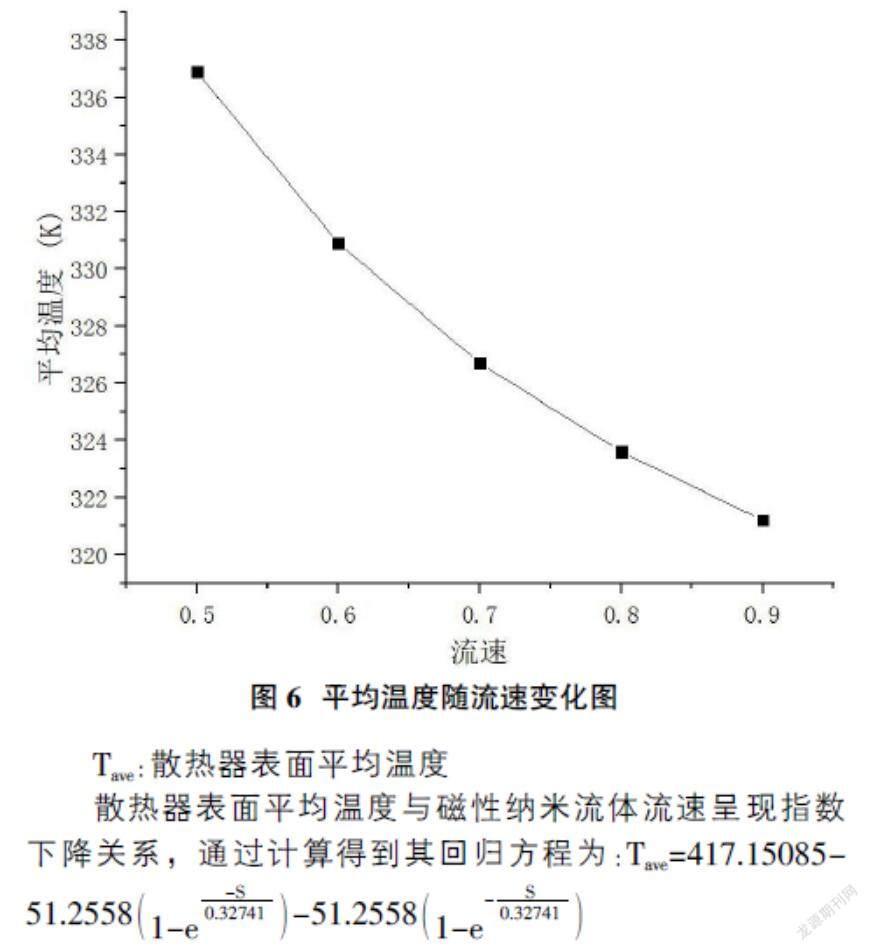
摘要: 为研究磁性纳米流体在微通道散热器中的散热能力,利用Space Claim和Fluent Meshing建立微通道散热器的三维几何模型与网格模型,再将其导入Fluent中,以水基四氧化三铁磁性纳米流体冷却液为研究对象,仿真不同体积分数磁性纳米流体以不同流速在微通道散热器中传热情况,得到芯片温度分布,并结合数值计算获得磁性纳米流体散热性能及其变化趋势,研究磁性纳米颗粒体积分数与流速对基液散热能力的影响规律。
Abstract: In order to study the heat dissipation capacity of magnetic nanofluids in microchannel radiators, Space Claim and Fluent Meshing are used to establish the three-dimensional geometric model and mesh model of the microchannel radiator, and then import them into Fluent to use water-based ferromagnetic Nanofluid coolant is the research object, simulate the heat transfer of different volume fractions of magnetic nanofluids in the microchannel radiator at different flow rates, obtain the chip temperature distribution, and combine the numerical calculation to obtain the heat dissipation performance and change trend of the magnetic nanofluid, and study the magnetism The influence of nanoparticle volume fraction and flow rate on the heat dissipation capacity of base fluid.
关键词: 磁性纳米流体;Fe3O4;微通道散热;热分析;有限元分析
Key words: magnetic nanofluid;Fe3O4;microchannel heat dissipation;thermal analysis;finite element analysis
中图分类号:TK124 文献标识码:A 文章编号:1674-957X(2021)23-0045-03
0 引言
随着节能减排政策推出,为解决此问题,长期目标是发展新能源汽车(混合动力、纯电动、燃料电池),但短期可行的途径还是发展高效内燃机技术,使用汽车发动机电子控制单元(ECU)智能化控制内燃机。因对内燃机智能化控制的要求和半导体制造工艺的进一步发展,ECU的集成化势必会进一步提高,随之而来的则是其发热量的增大,降低ECU的可靠性的降低,因此增强对ECU的散热能力是必要的。磁性纳米流体微通道散热有着结构紧凑、轻巧、散热高效的优点,同时换热介质为磁性纳米流体,其有着导热率高、传热性能好的优点[1],因此磁性纳米流体微通道散热器利于增强ECU的散热能力,对磁性纳米流体散热的分析是有必要的。
1 仿真模型建立
1.1 结构设计及前处理 运用Space Claim几何建模软件建立微通道散热器的几何模型如图1所示,其中微通道共分为三层上层与下层材料为铝合金,中间层材料为铜;发热元件与微通道散热器下层相接触,流体域主要分布在中間层。……