研发人员跨界行为何以影响其创造力?
2021-10-16张建卫滑卫军周愉凡郑文峰
张建卫 滑卫军 周愉凡 郑文峰
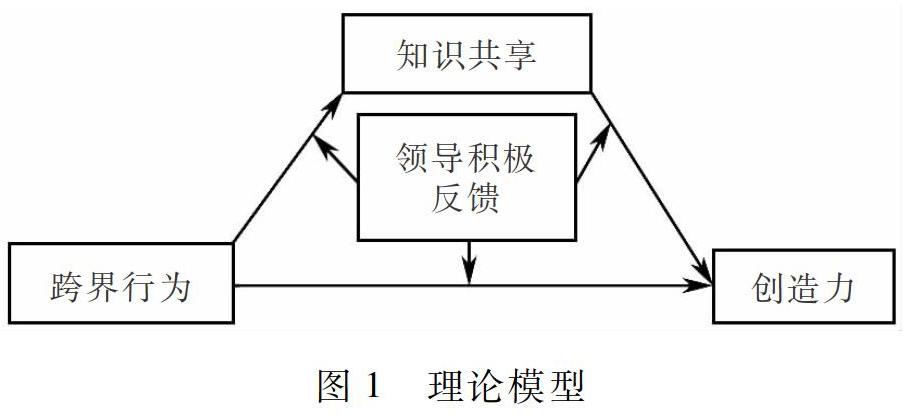
摘 要:个体跨界行为与创造力关系是协同创新背景下组织行为研究的一项重要主题,但二者间的作用机理尚不清晰。基于资源依赖理论,本文构建了一个有调节的中介效应模型以探讨研发人员跨界行为对创造力的作用机制。对8家科技型企业668名研发人员开展实证研究,结果显示:(1)研发人员跨界行为对创造力具有显著正向影响,知识共享部分中介了二者间关系;(2)领导积极反馈分别正向调节了跨界行为与知识共享、创造力间关系,以及知识共享与创造力间关系;(3)领导积极反馈正向调节了知识共享在跨界行为和创造力间的中介效应。研究结果为科技型企业激励研发人员跨界行为和创造力提供了重要理论和实践启示。
关键词:研发人员;跨界行为;创造力;知识共享;领导积极反馈
中图分类号:F272.92 文献标识码:A 文章编号:1003-5192(2021)05-0009-08 doi:10.11847/fj.40.5.9
Abstract:The relationship between individuals boundary-spanning behavior and creativity is an important topic in the research of organizational behavior in the context of collaborative innovation, but the mechanism between them is still unclear. Drawing on the resource dependence theory, we construct a moderated mediation model to investigate the relationship between boundary-spanning behavior and creativity. Empirical data is collected from 668 R&D personnel in 8 technology enterprises. The results indicate that: boundary-spanning behavior of R&D personnel positively impacts creativity; knowledge sharing partly mediates the relationship above; leaders positive feedback positively moderates the relationship between boundary-spanning behavior and knowledge sharing, boundary-spanning behavior and creativity, knowledge sharing and creativity; leaders positive feedback positively moderates the mediating effect of knowledge sharing on boundary-spanning behavior and creativity. Theoretical contribution and practical implication of the findings are also discussed.Key words:R&D personnel; boundary-spanning behavior; creativity; knowledge sharing; leaders positive feedback
1 引言
隨着协同创新时代的到来,行业跨界融合、企业跨界创新和员工跨界学习不断打破组织边界。个体与环境之间在知识、技术、信息等层面上的互动趋强、融合趋深,跨越行业、学科、专业等边界的工作行为不断发生且日益普遍,尤其是在科技加速演进的研发领域。研发人员跨界行为已经成为促进科技型企业创新发展的重要工作行为[1]。跨界行为是指行为主体为实现目标和提升效能所采取的、不断与外部利益相关者进行互动的行为[2]。当前学者主要从团队和个体两个层面考察了跨界行为的作用效果。……