ZL104铝合金刀盘体的铸造工艺优化
2021-09-10贝伟明
贝伟明
摘要:公司生产的ZL104铝合金刀盘体铸件厚壁处常出现缩松缩孔缺陷。使用芸峰CAE软件对此盘体原有的铸造工艺进行凝固过程模拟仿真,预测缩松缩孔缺陷位置与实际生产相吻合。优化工艺后,再次用CAE软件进行模拟仿真,得到合理的方案后,在实际生产中应用,毛坯加工后该区域的缩松缩孔完全消除,获得了合格零件。
Abstract: The ZL104 aluminum alloy cutterhead castings produced by our company often appear shrinkage holes in the thick wall. Using Yunfeng CAE software to simulate the solidification process of the original casting process of this castings, the position of shrinkage porosity defect predicted is consistent with the actual production. After optimizing the process, simulate again. And a reasonable process was obtained, it was applied in actual production. Finally, the shrinkage cavity in this area was completely eliminated, and qualified parts were obtained.
關键词:ZL104铝合金;缩松缩孔缺陷;铸造工艺优化
Key words: ZL104 aluminum alloy;shrinkage defect;optimization of casting process
中图分类号:TG2;TP3 文献标识码:A 文章编号:1674-957X(2021)06-0085-02
0 引言
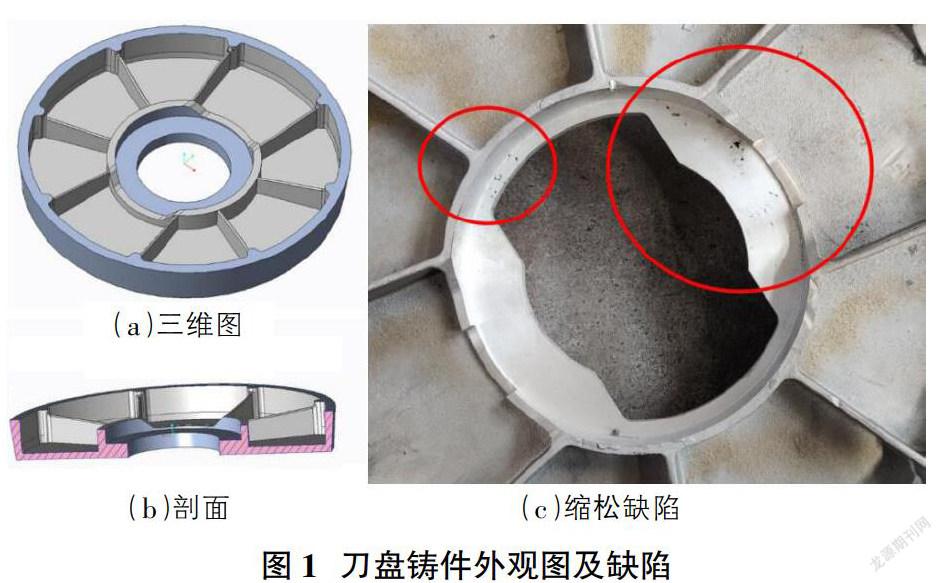
公司生产的刀盘体采用的是ZL104材料,刀盘体用于安装切割烟支的刀片,要求没有缩孔缩松、裂纹等铸造缺陷。此铸件进行精加工后发现中间较厚区域常出现缩松缺陷(图1),产生批量报废。为此采用铸造CAE模拟仿真技术并结合铸造理论基础寻求解决措施[1-5]。
1 刀盘结构特点
刀盘最大轮廓尺寸为460mm,高度为57mm,最大壁厚为20mm,最小壁厚为4mm,重7.6kg,采用粘土砂造型小批量生产,铸件结构如图1所示。
2 原铸造工艺
2.1 浇注系统
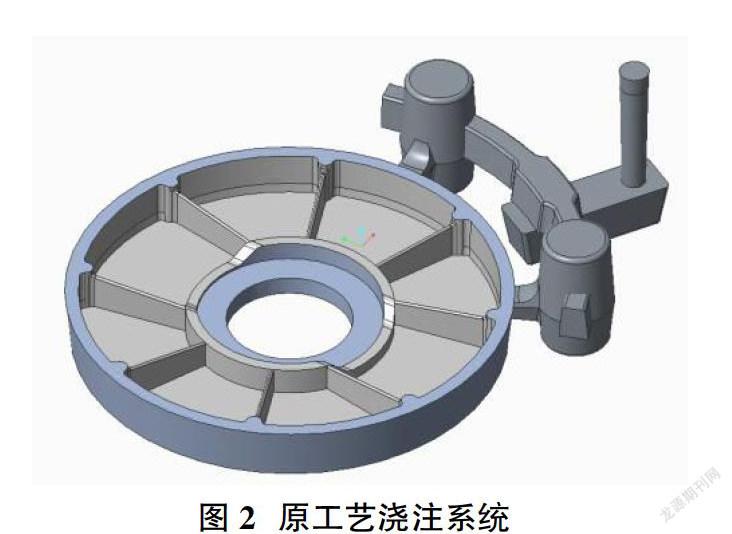
原铸造工艺如图2 所示,刀盘平面朝下,采用顶注开放式浇注系统,内浇口通过暗冒口引入铸型,浇注温度为730℃。
2.2 凝固过程仿真分析
通过使用芸峰CAE软件对刀盘的凝固过程进行模拟仿真分析。
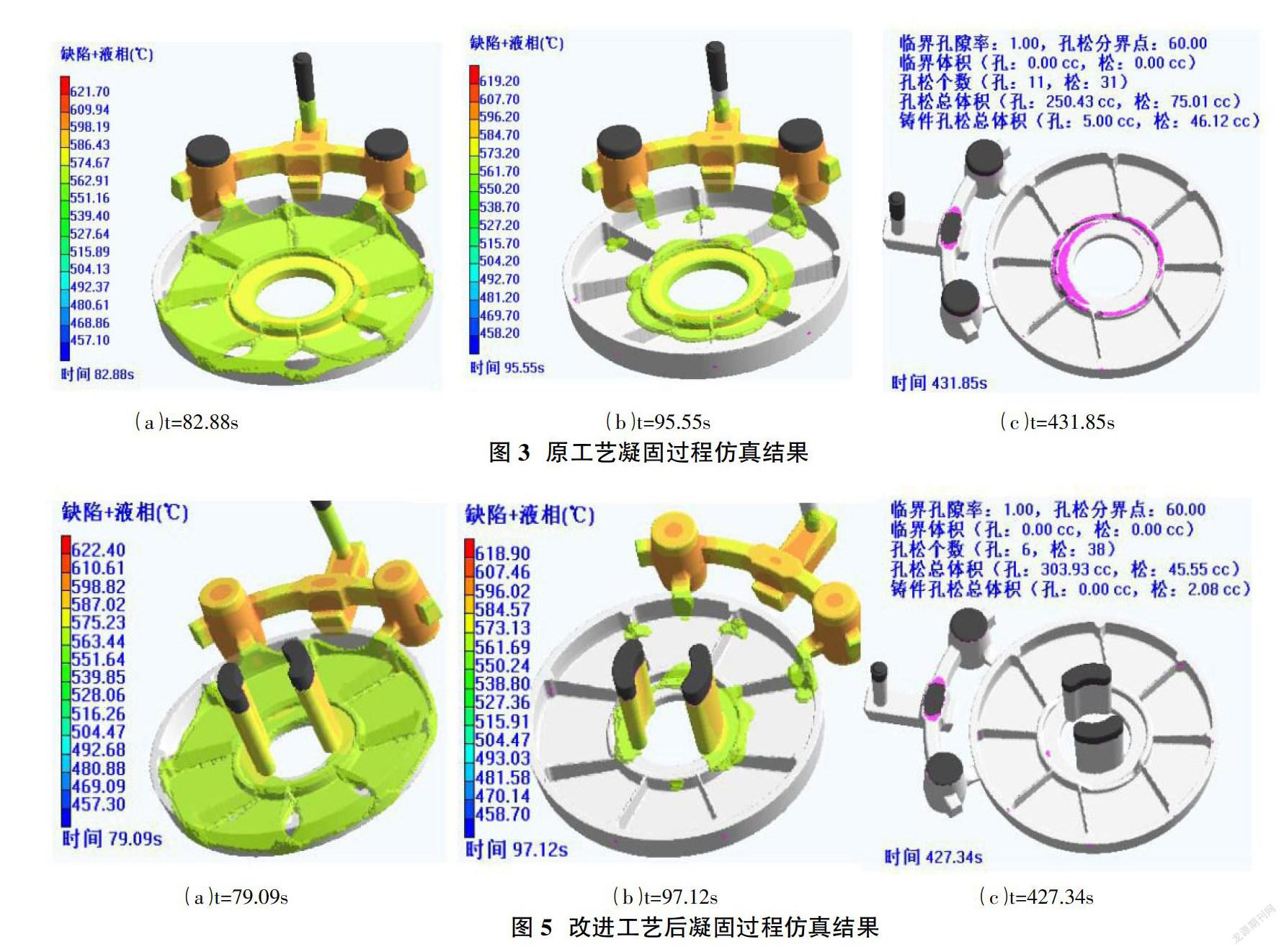
图3(a)为t=82.88s时的凝固状态,此时刀盘四周的壁已经凝固,底部平面大部分仍处于液相状态;图3(b)显示t=95.55s时底部平面外圈基本凝固完成,而中间较厚部位形成了孤立液相区,冒口的补缩通道也消失;图3(c)为t=431.85s时凝固状态,此时整个铸件与浇冒口凝固完成。从图3(c)右上方显示文字看出,铸件孔松总体积为,孔5.00cc,松46.12cc,表明原始工艺易产生缩孔缩松缺陷,其位置也与加工过程中发现的位置相符。……