不同粒径悬移质泥沙对邻苯二甲酸二正丁酯的吸附特性
2021-09-10冉艳何强袁若愚代国义李宏
冉艳 何强 袁若愚 代国义 李宏
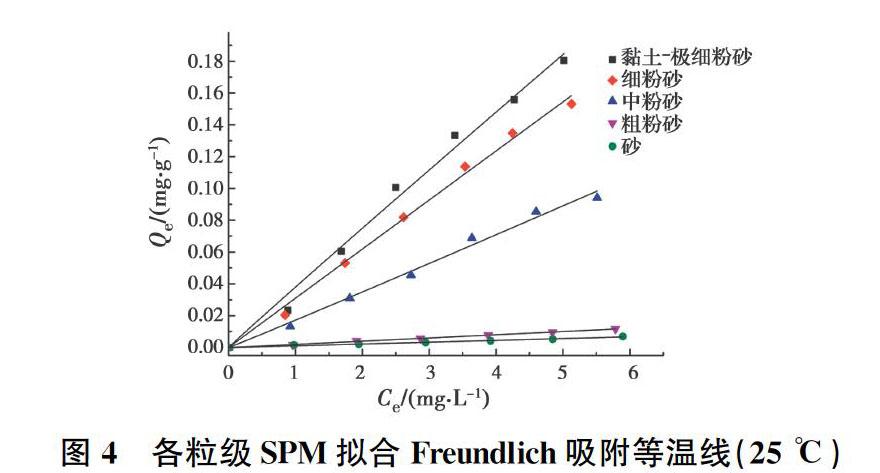

摘 要:为了解不同粒径悬移质泥沙(SPM)对邻苯二甲酸二正丁酯(DBP)的吸附行为,比较不同粒径SPM对DBP的吸附性能差异并确定导致其差异的潜在原因,选取三峡库区库尾一级支流御临河的原位SPM,并利用湿筛自然沉降的物理方法将原位SPM分成黏土极细粉砂(<8 μm)、细粉砂(8~20 μm)、中粉砂(20~32 μm)、粗粉砂(32~63 μm)和砂(>63 μm)5个粒级,采用批量平衡法研究DBP在不同粒级SPM上的吸附行为。结果表明:分配作用是各粒级SPM吸附DBP的主要机制,各粒级SPM对DBP吸附能力由强到弱依次为:黏土极细粉砂>细粉砂>中粉砂>粗粉砂>砂。总有机碳(TOC)是影响各粒级SPM对DBP吸附的主要因素。此外,黏土极细粉砂粒级SPM中有机质的物质组成差异可能是导致其对DBP高吸附量的原因;就砂质SPM而言,其比表面积、孔容和有机质腐殖化程度也会影响SPM对DBP的吸附能力。
关键词:邻苯二甲酸二正丁酯;悬移质泥沙;粒径;吸附;总有机碳
Abstract: In order to understand the adsorption behavior and evaluate the adsorption performance of dibutyl phthalate (DBP) by different grain-sized suspended particulate matter (SPM), and identify the potential mechanism, the adsorption of DBP by different grain-sized SPM was studied by batch equilibrium method.The in-situ SPM that collected from the Yulin River of the tributary of the Three Gorges Reservoir area, was sorted into five grain-sized fractions (clay-very fine silt (<8 μm), fine silt (8~20 μm), medium silt (20~32 μm), coarse silt (32~63 μm) and sand (>63 μm)) via physical method of wet screening and natural settling in this study. The results showed that partition was the main mechanism of removal of DBP by SPM from the solution, and the adsorption capacity of different grain-sized SPM for DBP follows: clay-fine sand > fine sand > medium sand > coarse sand > sand. Total organic carbon (TOC) was the main factor affecting the partition of DBP by different grain-sized SPM. In addition, the difference of organic matter composition in clay-very fine silt SPM may be the reason for its high adsorption capacity for DBP. The specific surface area, pore volume and humification degree of organic matter affect its adsorption of DBP by silt-sand SPM.
Keywords: dibutyl phthalate; suspended particulate matter; grain size; adsorption; total organic carbon
鄰苯二甲酸酯(Phthalates esters, PAEs)是一类由邻苯二甲酸酐与相应醇类在酸催化剂作用下通过酯化反应生成的有机化合物[1],其主要功能是提高各类塑料制品的延展度和柔韧度。由于PAEs仅通过氢键和范德华力结合在塑料分子上,呈游离态,不可避免地从塑料制品迁移到环境中[2]。PAEs作为一类典型的环境激素类污染物,可通过食物链在不同营养级传递并呈现出生物富集的效应[3],且大量研究[3-6]表明,PAEs对水生生物、陆生生物及人类具有肝肾毒性、生殖毒性和“三致”毒性。随着PAEs的广泛应用,中国诸多地区的土壤、水体、沉积物、大气及大气悬浮颗粒等都受到不同……