A reassessment of Iteravis huchzermeyeri and Gansus zheni from the Jehol Biota in western Liaoning, China
2021-08-03ShubinJuXuriWngYichunLiuYngWng
Shu-bin Ju, Xu-ri Wng, Yi-chun Liu, Yng Wng
a Institute of Geology, Chinese Academy of Geological Sciences, Key Laboratory of Stratigraphy and Paleontology of the Ministry of Natural Resources, Beijing 100037, China
b China University of Geosciences (Beijing), Beijing 100083, China
Keywords:Jehol Biota Lower Cretaceous Ornithuromorpha Synonym Geological survey engineering Western Liaoning China
ABSTRACT The authors reassessed the taxonomic distinction of Iteravis huchzermeyeri and Gansus zheni, which are two species of Ornithuromorpha based on specimens from the same locality in western Liaoning and derive from the Jehol Biota. The detailed comparisons of the holotype and referred specimens of both species, reveal no anatomical features that distinguish these taxa as separate species. Some minor differences are considered to relate to ontogenetic or interspecific differences. The stratigraphic occurrence for both specimens is the Lower Cretaceous Jiufotang Formation. Accordingly, the authors conclude that Iteravis huchzermeyeri has priority, by 15 days, for this taxon and that Gansus zheni is a junior synonym.The diagnosis of Iteravis huchzermeyeri is revised based on further study on all specimens referred to this species. Its generic distinction from Gansus is maintained thereby removing a potential genus-level correlation linking Xiagou Formation in Gansu Province with the Jiufotang Formation in Liaoning Province.
1. Introduction
Ornithuromorpha is the most inclusive clade that includes extant birds but not Mesozoic Enantiornithes (Chiappe LM,2002). As of July 2020, more than 20 species of Ornithuromorpha have been reported from the Lower Cretaceous in China, which are mostly distributed in the Jehol Biota in northern Hebei, western Liaoning and the neighboring areas of Inner Mongolia (Zhou ZH and Zhang FC, 2001, 2005; Chiappe LM et al., 2014; Wang M et al.,2015). The characteristics that distinguish Ornithuromorpha from other Mesozoic birds include the U-shaped furcula without hypocleideum, rectangular sternum with a keel, as well as completely fused metatarsals. According to the morphological characteristics, most species of this group have strong flight abilities. Some species still retain primitive features, such as the teeth, the pubic symphysis developed at the distal end of the pubic bone, and no ilium ischial foramen between the ilium and ischium. A large number of fossils of ornithuromorphs have been found in China preserved with not only clear skeletal anatomical features, but also feathers,gastroliths and even skin impressions, which are significant for studying the origin, radiation and life habits of species in this clade (Zhou ZH and Zhang FC, 2001; You HL et al.,2006; Chiappe LM et al., 2014; Zhou S et al., 2014; Wang M et al., 2016; Zheng XT et al., 2018).
Over the last 20 years, lots of new species of Ornithuromorpha have been coined based on specimens uncovered from the Jehol Biota in China (e.g.,Chaoyangia beishanensis,Yixianornis grabaui,Yanornis martini,Hongshanornis longicresta,Archaeorhynchus spathula,Jianchangornis microdonta,Longicrusavis houi,Schizooura lii,Piscivoravis lii,Iteravis huchzermeyeri,Gansus zheni,Tianyuornis cheni,Archaeornithura meemannae,Changzuiornis ahgmi,Bellulia rectusunguis,Eogranivora edentulata,Khinganornis hulunbuirensis) (Hou LH and Zhang J, 1993; Zhou ZH and Zhang FC, 2001, 2005, 2006;Zhou FC et al., 2009; O’Connor JK et al., 2010; Zhou S et al.,2014; Liu D et al., 2014; 2018; Wang M et al., 2015, 2016;Huang JD et al., 2016; Wang XR et al., 2020). Because different researchers may study different specimens of the same species more or less simultaneously, it is likely that synonyms of a single species could be published.Iteravis huchzermeyeri(Zhou S et al. 2014) andGansus zheni(Liu D et al. 2014) were both uncovered at Sihedang town, Lingyuan City, Liaoning Province. The former was reported from the Yixian Formation and the latter was from the Jiufotang Formation.I. huchzermeyeriwas published 15 days earlier thanG. zheni. Most importantly, they have very similar characteristics and very close phylogenetic relationship (Zhou S et al., 2014; Liu D et al., 2014). Wang X et al. (2018)proposed thatG. zheniwas a synonym ofI. huchzermeyeri,but they did not conduct detailed comparisons and discussion.G. zheniprovided the best-known example of genus-level avian clade correlation between two broadly separated basins(being closely related toGansus yumenensisfound about 2000 km distant in the Xiagou Formation, Gansu Province)and represented the most advanced bird for the Jehol Biota(Liu D et al., 2014). It is worthy to clarify its validity, horizon and relationship withI. huchzermeyeriandG. yumenensis.
2. Systematic Paleontology
Aves Linnaeus C, 1758
Ornithothoraces Chiappe LM, 1995
Ornithuromorpha Chiappe LM, 2002
Iteravis huchzermeyeriZhou S et al., 2014
Revised diagnosis: Premaxillary corpus elongate and toothless; maxilla and dentary with numerous small teeth;rostrum 50% of skull length; ethmoid bone lining rostral half of the orbit; sternal margin of the coracoid extended nearly equally medially and laterally; rostral margin of the sternum strongly arched, defining an acute angle slightly less than 90°;alular metacarpal short and narrow, slightly more than half the width of the major metacarpal; pubic strongly curved dorsally from the distal 1/3 and with dorsally expanded distal boot;ischium with concave ventral margin and prominent triangular-shaped dorsal process at the midpoint.
Holotype: A nearly complete individual preserved in a single slab with feather impressions around the forelimbs and gastroliths in the abdominal area. It is housed at the Institute of Vertebrate Paleontology and Paleoanthropology, Chinese Academy of Sciences, under the collection number of IVPP V18958.
Paratype: A nearly complete individual preserved in a single slab with feather impressions around the forelimbs and gastroliths in the abdominal area. It is housed at Beijing Museum of Natural History, under the collection number of BMNHC-Ph1342.
Referred materials: Two nearly complete individuals preserved in single slabs. They are housed at Beijing Museum of Natural History, under the collection numbers of BMNHCPh1318 and BMNHC-Ph1394.
Locality and horizon: All published specimens ofI.huchzermeyeri(including the junior synonyms listed here)were uncoverd from Sihedang town near Lingyuan City,western Liaoning. Previously reported specimens are from the Yixian Formation or Jiufotang Formation. Actually, the stratigraphic occurrence forI. huchzermeyerishould be the Lower Cretaceous Jiufotang Formation.
3. Description and comparison
The central axial lengths from head to tail for the holotype specimens ofI. huchzermeyeri(IVPP V18958) andG. zheni(BMNHC-Ph1342), and the referred specimens ofG. zheni(BMNHC-Ph1318) are about 204.3 mm, 195.7 mm and 217 mm,respectively, showing a variation in body length of less than 10%. Although no osteohistological analyses have been taken for the studied materials, the well ossified periosteal surfaces of the preserved elements and the complete fusion of the tibiotarsus and tarsometatarsus indicated that they all were adults or near-adults that had ceased to grow (Zhou S et al.,2014; Liu D et al., 2014).
Skulls of IVPP V18958, BMNHC-Ph1342 and BMNHCPh1318 are sub-triangular in shape, with a long rostrum nearly half of the skull length. The distinct pores are present on the lateral surface of premaxilla of IVPP V18958, which might represent vascularization of the horny beak. Similar pores are also present on the lateral surface of the premaxilla and maxilla of BMNHC-Ph1342. The dentaries of IVPP V18958, BMNHC-Ph1342 and BMNHC-Ph1318 are relatively straight, and their posterior ends are slightly curved towards the ventral sides. The distal end of the surangular is deeply concave in IVPP V18958, while this part is not visible in BMNHC-Ph1318 (Fig. 1). The frontal is overlapped by the radius of IVPP V18958. There is a narrow salt gland fossa on the frontal of BMNHC-Ph1342, which is smaller and narrower than that ofIchthyornisandHesperornis(Wang X et al., 2018). The teeth are present on both dentary and maxilla of IVPP V18958, with several teeth mutually intercalating.However, very small teeth are only visible on the dentary of BMNHC-Ph342 and BMNHC-Ph1318. It is not certain whether teeth are preserved on the premaxilla and maxilla.Teeth are often covered by other bones during fossilization because there are many regularly dislocated bones with complex structure in the skull. This is especially so for the maxilla and dentary which often overlap to prevent observing the teeth. For example, there were no visible teeth on the maxilla and dentary on the holotype ofHongshanornis longicresta(Zhou ZH and Zhang FC, 2005), while teeth were later observed on the dentary of other referred specimens(Chiappe LM et al., 2014). There are no teeth on the premaxilla of IVPP V18958.
There are 13 cervical vertebrae in IVPP V18958, and 12-13 in BMNHC-Ph1342. In IVPP V18958, the cranial cervical vertebrae are more elongate than the caudal ones, with the length approximately twice of the width, while the caudal six preserved vertebrae are much shorter, with nearly equal length and width (Zhou S et al., 2014). In BMNHC-Ph1318, the sixth and seventh cervical vertebrae are extremely elongate,while the proximal and distal cervical vertebrae are relatively shorter. The difference might be related with preservation conditions because the cervical vertebrae are too fragile to be deformed during preservation. Cervical ribs are slightly shorter than the corresponding cervical length and gradually tapered distally in IVPP V18958. Several cervical ribs are also preserved in BMNHC-Ph1318 with similar morphologies as those of IVPP V18958. The absence of cervical ribs in BMNHC-Ph1342 is possibly due to preservation. The synsacrum of IVPP V18958 is mostly covered by other bones,with only the proximal and distal surfaces exposed with flat ventral surface. There is a broad groove on the ventral surface of the synsacrum of BMNHC-PH1318. Five to six free delicate caudal vertebrae are preserved in IVPP V18958,which are relatively longer than the pygostyle. The pygostyle of BMNHC-Ph1342 is formed by three to four fused caudal vertebrae. A thin ridge is developed in the proximal ventral margin, and a groove is present on the ventral surface, which is very similar to that of IVPP V18958.
The coracoids of IVPP V18958, BMNHC-Ph1342 and BMNHC-Ph1318 are similar in morphology, and are strutshaped with the ratio of length to width of about 1.4. In IVPP V18958, the coracoid neck is strongly convex. The procoracoid process is relatively straight and the laterodistal process is hooked anteriorly (Fig. 2a). In BMNHC-Ph1342,the coracoid neck is significantly compressed mediolaterally.The procoracoid process is prominently expanded and the laterodistal process is gently hooked anteriorly (Fig. 2b) (Liu D et al., 2014). The sternal margin of the coracoid of BMNHC-Ph1342 extends nearly equally medially and laterally, which is similar to that of IVPP V18958, but different from that ofG. yumenensis, in which it extends much more laterally than medially (Fig. 2c). The U-shaped furcula of BMNHC-Ph1342 is slender and has an interclavicular angle of approximately 60°. This feature is one of these originally considered to distinguishG. zhenifromG.yumenensis(40°) (Liu D et al., 2014), while it is the same as that of IVPP V18958 (60°).
If you have ever gone through a toll1 booth, you know that your relationship to the person in the booth is not the most intimate you ll ever have. It is one of life s frequent non-encounters: You hand over some money; you might get change; you drive off. I have been through every one of the 17 toll booths on the Oakland-San Francisco Bay Bridge on thousands of occasions, and never had an exchange worth remembering with anybody.
The sternum of BMNHC-Ph1342 is craniocaudally elongate, nearly twice of its width, with a deep keel extending through the middle section, and the rostral margin forming an angle of less than 90° (Fig. 2b), which is the same as that of IVPP V18958 (Fig. 2a) but different from that ofG.yumenensis(140°) (Fig. 2d). The caudal margin of the sternum of BMNHC-Ph1342 is covered by gastroliths and other bones, which prevents establishing the exact morphology.
The humeri of IVPP V18958 and BMNHC-Ph1342 are similar in morphology. The left ulna of IVPP V18958 is broken at the one third of length from the proximal end and partially overlapped by the left radius. The proximal end of the right ulna of IVPP V18958 is partially covered by the right tibia. It is difficult to determine the exact length and its characteristics. The ulna of BMNHC-Ph1342 is as long as the humerus (ulna/humerus=1.03), and its proximal quarter is slightly curved cranially (Fig. 3b). The ulna of IVPP V18958 is similar to that of BMNHC-Ph1342, with the mid-shaft width nearly twice the width of the radius. The ulna ofG.yumenensisis relatively longer than the humerus(ulna/humerus=1.1) (Fig. 3c) (You HL et al., 2006).
The proximal ends of the major and minor metacarpals of IVPP V18958 are incompletely fused (Fig. 3a; Zhou S et al.,2014). However, the components of the carpometacarpus of BMNHC-Ph1342 are fully fused both proximally and distally(Liu D et al., 2014). The alular metacarpal of BMNHCPh1342 is relatively narrower than the major metacarpal (Fig.3b), which is similar with those of IVPP V18958 andG.yumenensis(Fig. 3d).

Fig. 2. Photograph of the thoracic girdle and sternum of Iteravis huchzermeyeri IVPP V18958 (a) and Gansus zheni BMNHC-Ph 1342 (b);Photograph of the thoracic girdle of Gansus yumensensis (c); Photograph of the sternum of Gansus yumensensis (d). fu–furcula; co–coracoid;sc–scapula; st–sternum; k–keel; lap–laterodistal process; g–gastroliths.
The alular digit of both IVPP V18958 and BMNHCPh1342 are short, not distally surpassing the distal end of the major metacarpal. The alular phalanx is slightly curved, but a bit larger than that of the major digit. The major digit is nearly as long as the carpometacarpus, with a strong first phalanx three times wider than the second one (Figs. 3a, b). However,the width of the major digit ofG. yumenensisis more uniform(Fig. 3c). The minor digit of both IVPP V18958 and BMNHC-Ph1342 only retain the proximal wedge-shaped phalanx, which proximal end is slightly wide and its length is more than half of the first phalanx of the major digit.
The ischium of IVPP V18958 is about two thirds of the length of the pubis, with a concave ventral margin and a sharply tapered distal half (Fig. 4a) (Zhou S et al., 2014). The ischium of BMNHC-Ph1342 is less than half the length of the pubis, with the distal one third curved ventrally (Liu D et al.,2014). Based on the reobservation, the pubes of IVPP V18958 are broken or overlapped by the tibiotarsus (Fig. 4a), and the fragile part of the distal ischium of BMNHC-Ph1342 may be absent (Fig. 4b). The pubis of IVPP V18958 are smoothly recurved with a boot-shaped pubis symphysis distally.However, the posterior one third of the pubis of BMNHCPh1342 is strongly recurved (Fig. 4b).
The femur of BMNHC-Ph1342 is shorter than the tarsometatarsus (femur/tarsometatarsus=0.96), consistent with that ofG. yumenensis(femur/tarsometatarsus=0.92), but opposite to that of IVPP V18958 (femur/tarsometatarsus=1.13). Considering that the right femur is mostly covered by the sternum and the left femur is somewhat crushed and broken in IVPP V18958, the reported femur length is probably distored. The medial condyle of the tibiotarsus is wider than the lateral condyle both in IVPP V18958 and BMNHC-Ph1342, but opposite to that ofG. yumenensiswhich the media condyle has similar width to the lateral condyle (Fig. 4c).
The components of the tarsometatarsus are completely fused in IVPP V18958 and BMNHC-Ph1342 (Zhou S et al.,2014; Liu D et al., 2014). In IVPP V18958, the trochlea of metatarsal II ends only slightly proximally to the trochleae of either metatarsal III or IV and the trochlea of metatarsal IV ends nearly at the same level as that of metatarsal III (Fig. 4a).In BMNHC-Ph1342, the trochlea of metatarsal II ends much more proximally than the trochleae of either metatarsal III or IV and the trochlea of metatarsal IV ends more proximally than that of metatarsal III (Fig. 4b). However, the morphology of the distal part of the tarsometatarsus of both specimens show triangle pattern, which is an important feature of terrestrial birds (Zhang YG, 2006). These similar and different features are probably related to interspecific differences.
The pedal phalangeal formula is 2-3-4-5-x in IVPP V18958 and BMNHC-Ph1342 (Zhou S et al., 2014; Liu D et al., 2014). However, there are some differences between them. In IVPP V18958, pedal digit IV is as robust as digit III and slightly shorter than digit III, and all ungual phalanges bear a pronounced flexor process (Fig. 4a) (Zhou S et al.,2014). In BMNHC-Ph1342, pedal digit IV is prominently slender and slightly longer than digit III, and all ungual phalanges lack a pronounced flexor process (Fig. 4b). The pedal digit II-2 of IVPP V18958 is longer than digit II-1(Zhou S et al., 2014). Actually, they are nearly the same length as the condition in BMNHC-Ph1342. InG.yumenensis, pedal digit IV is much longer than digit III (Fig. 4c),with a length ratio (1.20) greater than that of IVPP V18958(0.93) and BMNHC-Ph1342 (1.02).

Fig. 3. Photograph of the forelimbs of Iteravis huchzermeyeri IVPP V18958 (a), Gansus zheni BMNHC-Ph1342 (b) and Gansus yumenensis(c) (d). rhu–right humerus; hu–humerus; rul–right ulna; ul–ulna; rra–right radius; ra–radius; al–alular metacarpal; mm–major metacarpal;mi–minor metacarpal; al1/2–alular digit 1/2; mm1/3–major digit 1/3; mi1–minor digit 1; co–coracoid; sc–scapula.
4. Discussion
The proportions of forelimb to hindlimb lengths are 0.97 and 1.02 in IVPP V18958 and BMNHC-Ph1342, respectively.Based on the elongated tibiotarsus, metatarsals and pedal digits, they are both terrestrial wading birds (Zhou S et al.,2014; Liu D et al., 2014; Fig. 5). The extensor process of the alular metacarpal is used to attach the flying muscle. This structure is present in IVPP V18958 but absent in BMNHCPh1342. However, the developed sternum of BMNHCPh1342 indicates that it also has strong flight ability. The absence of the extensor process is probably due to preservation. The ventral surface of the synsacrum has a wide groove in BMNHC-Ph1342 (Liu D et al., 2014), while it is smooth in IVPP V18958 (Zhou S et al., 2014). According to our reobservation, most of the synsacrum of IVPP V18958 is covered by other bones, with only the proximal and distal ends exposed. The coracoid has a hook-shaped anterolateral process in BMNHC-Ph1342 (Liu D et al., 2014), while the lateral margin of the coracoid is reported as straight in IVPP V18958 (Zhou S et al., 2014). Our observations reveal that the lateral margin of the left coracoid is not straight in IVPP V18958, and it retains a slightly convex ridge at the position corresponding to the hooked anterolateral process of BMNHC-Ph1342. The development difference of the anterolateral process is therefore likely to be related to ontogenetic stage. The proximal end of the carpometacarpus is not completely fused in IVPP V18958 (Zhou S et al., 2014).Actually, it was probably separated during the fossilization process as it partly lay on the ulna; the distal end is wholly fused. Liu D et al. (2014) described that both pubes formed a short pubic symphysis in BMNHC-Ph1342. The pubic symphysis of BMNHC-Ph1342 is nearly one third of the pubic shaft length, which is the same as that in IVPP V18958 and relatively longer than that ofG. yumenensis. The posterior part of the pubis is not strongly curved in IVPP V18958,which may be resulted by the deformation judging by the split near the pubic symphysis. The left and right ischium of BMNHC-Ph1318 are preserved between the pubes and the caudal vertebrae. They are slightly different in morphology,which indicates that they were deformed during the fossilization or preservation process. The extremely slender and tapered distal end of the ischium was probably not preserved in BMNHC-Ph1342. This part is too fragile to be well-preserved because it is also broken in IVPP V18958.Zhou S et al. (2014) described that the pedal digit II-1 of IVPP V18958 was slightly shorter than pedal digit II-2. In fact, the proximal end of the left pedal digit II-1 was covered by the tarsometatarsus, while the right pedal digit II-1 was completely exposed and it was nearly equal to pedal digit II-2,which is the same as the condition in BMNHC-Ph1342.

Fig. 4. Photograph of the hindlimbs and pelvic girdles of Iteravis huchzermeyeri IVPP V18958 (a), Gansus zheni BMNHC-Ph 1342 (b) and Gansus yumenensis (c). il–ilium; pu–pubis; is–ischium; fem–femur; ti–tibiotarsus; tmt–tarsometatarsus; I–pedal digit I; II–pedal digit II;III–pedal digit III; IV–pedal digit IV; st–sternum; syn–synsacrum; g–gastroliths.

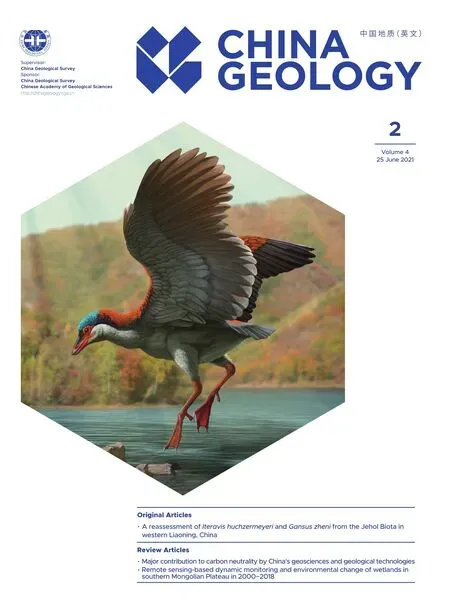
Fig. 5. Life scene of Iteravis huchzermeyeri (drawn by Chuang Zhao).
Originally, BMNHC-Ph1342 was referred to the genus ofGansusbecause it is very similar withG. yumenensis(Liu D et al., 2014). But there are some obvious differences to separate them in different genera. The interclavicular angle of BMNHC-Ph1342 (about 60°) is significantly greater than that ofG. yumenensis(about 40°). The sternal margin of the coracoid extends nearly equally laterally and medially in BMNHC-Ph1342, while it extends much more laterally than medially inG. yumenensis. The rostral margin of the sternum of BMNHC-Ph1342 is strongly arched, forming an acute angle slightly less than 90°, which is much lesser than the obtuse angle (about 140°) ofG. yumenensis. The alular metacarpal of BMNHC-Ph1342 is short and narrow, slightly more than half the width of the major metacarpal, with a small extensor process. The alular metacarpal ofG. yumenensisis nearly half the width of the major metacarpal. The first phalanx of the major digit is much wider than the second one in BMNHC-Ph1342. The major digit ofG. yumenensisis slenderer with a slight thicker first phalanx. Pedal digits III and IV of BMNHC-Ph1342 are nearly equal in length, while pedal digit IV ofG. yumenensisis much longer than pedal digit III. Claws of pedal digits III and IV of BMNHC-Ph1342 lack prominent pendant flexor tubercles, while they are present inG. yumenensis. Therefore,Iteravis huchzermeyeriis genetically distinct fromGansus yumenensis.
Both IVPP V18958 and BMNHC-Ph 1342 were uncovered from Sihedang town near Lingyuan City, western Liaoning. But IVPP V18958 was reported from the Yixian Formation, while BMNHC-Ph1342 was reported from the Jiufotang Formation. Based on our field investigation and latest research results (Wu ZJ et al., 2018; Gao FL et al.,2018), the stratigraphic occurrence for both specimens should be the Lower Cretaceous Jiufotang Formation.
5. Conclusion
Based on detailed comparisons of the anatomical characteristics, the authors conclude thatGansus zheniLiu D et al., 2014 is a junior synonym ofIteravis huchzermeyeriZhou S et al., 2014.Iteravis huchzermeyerihas nomenclatural priority because it was published 15 days beforeGansus zheni. Through the reobservation and comprehensive study of the type and referred specimens, the authors revised the diagnosis ofIteravis huchzermeyeri.Based on our field investigation and latest research results, the stratigraphic occurrence ofIteravis huchzermeyeriis revised as the Lower Cretaceous Jiufotang Formation.
CRediT authorship contribution statement
Shu-bin Ju, Xu-ri Wang, Yi-chuan Liu and Yang Wang contributed to the design and implementation of the research,to the analysis of the results and to the writing of the manuscript.
Declaration of competing interest
The authors declare no conflicts of interest.
Acknowledgement
The authors would like to thank Dr. Chiappe Luis, Dr.Shuang Zhou and Dr. Ya-ming Wang for providing highresolution photos of the studied materials and constructive comments that improved this manuscript. The authors are really appreciating Dr. Trevor Worthy, Prof. Hai-lu You and Dr. Ya-ming Wang for their constructive comments. This work was supported by projects from the National Natural Science Foundation of China (41872018, 41672019) and the China Geological Survey (DD20190602) awarded to Xu-ri Wang.
杂志排行
China Geology的其它文章
- Characteristics of Milankovitch cycles recorded in Eocene strata in the eastern depression of North Yellow Sea Basin, North China
- Assessment of acoustic backscatter intensity surveying on deep-sea ferromanganese crust: Constraints from Weijia Guyot, western Pacific Ocean
- Geochemical characteristics of REY, Li, Ga trace elements in the No. 9 coal seam of the Daheng mine, Ningwu coalfield, Shanxi Province, China
- REE characteristics of the coal in the Erlian Basin, Inner Mongolia, China, and its economic value
- Geometry and kinematics of brittle deformation in the Central Cameroon Shear Zone(Kékem area): Implication for gold exploration within the Central Africa Fold Belt in Cameroon
- Hydrothermal alteration processes in the giant Dahutang tungsten deposit, South China:Implications from litho-geochemistry and mass balance calculation