肝纤维化血清标志物与HBV-DNA联合检测在慢性乙肝疾病进程中的应用价值
2021-06-02任婷玉廖奕浪林芳楠宋春丽王大明周义文
任婷玉 廖奕浪 林芳楠 宋春丽 王大明 周义文
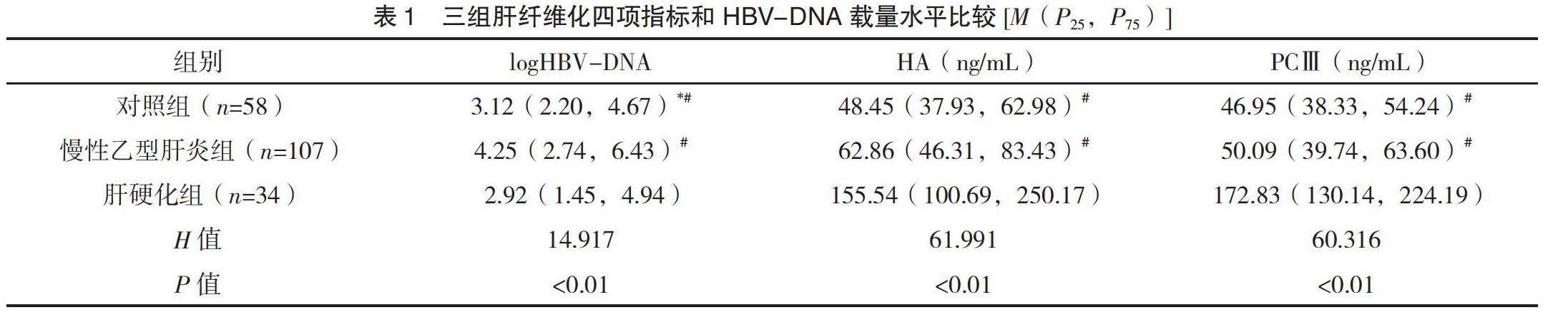
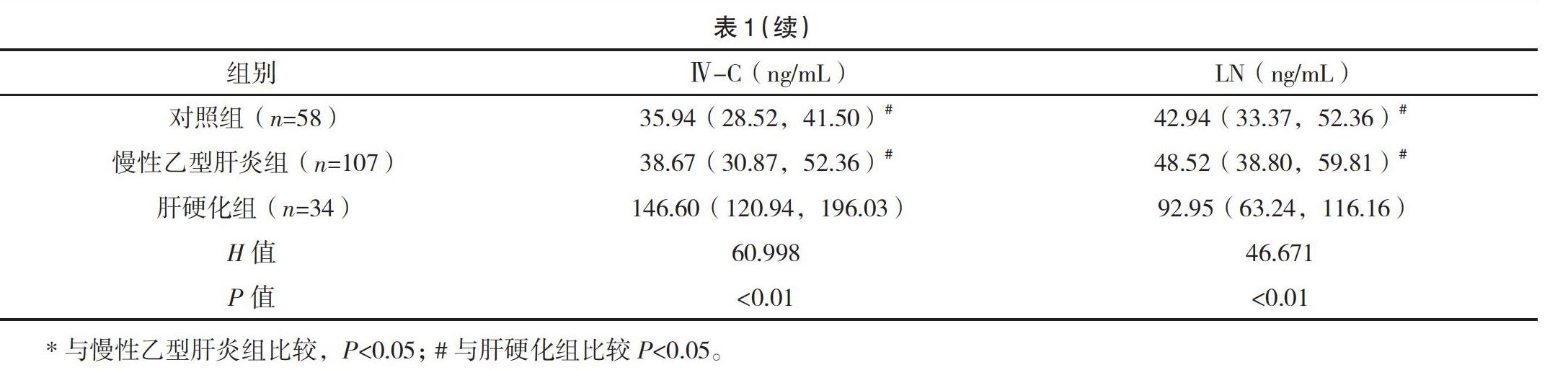
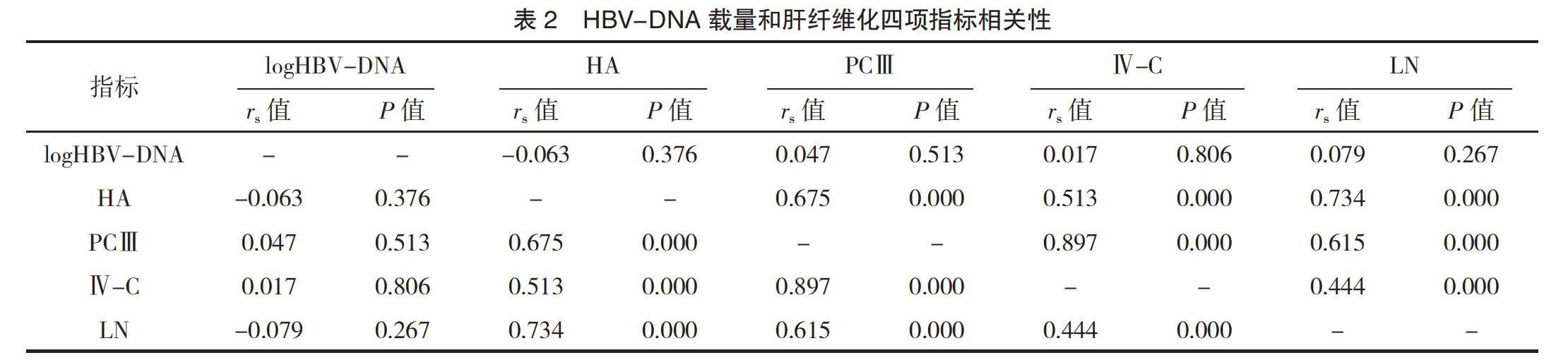
【摘要】 目的:探究肝纤维化标志物和HBV-DNA联合检测在慢性HBV感染后疾病进程中的应用价值。方法:回顾性分析2017年1月-2019年12月诊断为HBV携带者58例(对照组)、慢性乙型肝炎患者107例(慢性乙型肝炎组)、乙肝肝硬化患者34例(肝硬化组)的病历资料,检测并观察三组的肝纤维化标志物HA、PCⅢ、Ⅳ-C、LN和HBV-DNA载量,分析各指标之间及各指标与疾病进程的相关性,并绘制受试者工作特征(ROC)曲线。结果:肝纤维化四项指标HA、PCⅢ、Ⅳ-C、LN在对照组、慢性乙型肝炎组、肝硬化组中的含量依次增加,HBV-DNA载量在慢性乙型肝炎组中最高,其次是对照组;各指标在各组中的检测结果比较,差异均有统计学意义(P<0.05)。血清肝纤维化四项指标HA、PCⅢ、Ⅳ-C、LN之间均呈正相关关系(P<0.01),其中PCⅢ与Ⅳ-C之间为高度相关(rs=0.897,P<0.01)。血清肝纖维化四项指标HA、PCⅢ、Ⅳ-C、LN与HBV感染后疾病发展呈正相关(P<0.05),其中HA与HBV感染后疾病进程显著相关(rs=0.548,P<0.01)。HA、PCⅢ、Ⅳ-C、LN、HBV-DNA单一检测对应AUC分别为0.925、0.929、0.916、0.899、0.630,联合检测对应AUC为0.959。结论:HBV在慢性乙型肝炎患者中呈现较高水平的复制,在肝硬化阶段复制水平降低。肝纤维化四项指标在HBV感染后随着疾病发展含量升高,其含量与疾病发展呈正相关关系,HA、PCⅢ、Ⅳ-C、LN四项指标之间也具有正相关关系,其中PCⅢ与Ⅳ-C含量高度相关,HA含量与疾病进程明显相关。联合检测肝纤维化四项血清学标志物与HBV-DNA载量可提高肝纤维化的诊断效能。
【关键词】 乙型肝炎 肝纤维化 血清标志物
Application Value of Serum Liver Fibrosis Markers and HBV-DNA in Disease Progression after Chronic Hepatitis B Disease/REN Tingyu, LIAO Yilang, LIN Fangnan, SONG Chunli, WANG Daming, ZHOU Yiwen. //Medical Innovation of China, 2021, 18(10): 0-033
[Abstract] Objective: To explore the application value of HBV-DNA and serological markers for liver fibrosis on disease progression in chronic HBV infected patients. Method: From January 2017 to December 2019, the data of 58 patients with HBV carriers (control group), 107 patients with chronic hepatitis B (chronic hepatitis B group), 34 patients with chronic hepatitis B cirrhosis (cirrhosis group) were analyzed retrospectively, the levels of HA, PCⅢ, Ⅳ-C, LN in liver fibrosis markers and HBV-DNA of the three groups were detected and observed, the correlation between the indicators and the disease progression was analyzed, and the receiver operating characteristic (ROC) curve was drawn. Result: The four indexes of liver fibrosis HA, PCⅢ, Ⅳ-C and LN increased in the control group, chronic hepatitis B group and cirrhosis group successively, HBV-DNA load was the highest in the chronic hepatitis B group, followed by the control group. There were significant differences in the detection results among the indicators in each group (P<0.05). There was a positive correlation between four indexes of serum fibrosis HA, PCⅢ, Ⅳ-C and LN (P<0.01), PCⅢ was highly correlated with Ⅳ-C (rs=0.897, P<0.01). Serum liver fibrosis four indicators HA, PCⅢ, Ⅳ-C and LN were positively correlated with disease development after HBV infection (P<0.05), HA was significantly correlated with disease progression after HBV infection (rs=0.548, P<0.01). The AUC of HA, PCⅢ, Ⅳ-C, LN and HBV-DNA were 0.925, 0.929, 0.916, 0.899 and 0.630, respectively, the AUC of combined detection was 0.959. Conclusion: HBV replicates at a higher level in patients with chronic hepatitis B and decreases at the stage of cirrhosis.The four indexes of liver fibrosis increased with the development of the disease after HBV infection, and their content is positively correlated with the development of the disease. There is also a positive correlation between the four indexes of HA, PCⅢ, Ⅳ-C, and LN, among which the content of PCⅢ is highly correlated with the content of Ⅳ-C, and the content of HA is significantly correlated with the course of the disease. Combined detection of four serological markers of liver fibrosis and HBV-DNA load can improve the diagnostic efficiency of liver fibrosis.
[Key words] Hepatitis B Liver fibrosis Serum markers
First-authors address: Shenzhen Hospital of Southern Medical University, Shenzhen 518000, China
doi:10.3969/j.issn.1674-4985.2021.10.007
乙型肝炎病毒(HBV)属嗜肝DNA病毒科,是慢性乙型肝炎(CHB)的病原体[1],HBV感染已成为全球公共卫生问题[2],而中国是乙肝高发国家,据统计我国已有超过1亿人携带HBV[3]。HBV的持续感染是导致肝炎后肝硬化和肝细胞癌发生最主要的因素之一[4],慢性HBV感染者比未感染者发生肝癌的风险高出25~37倍[5]。部分HBV感染者将经历漫长的肝损伤,修复,再损伤,进而发生肝纤维化,如不及时干预,最终可能在肝硬化的基础上进展为肝细胞癌[6]。肝细胞癌是最常见的恶性肿瘤之一,恶性程度高,确诊后的5年生存率不到10%,其癌症相关死亡率已高居世界第二[7]。绝大部分肝炎病毒相关的肝细胞癌患者都经历了病毒性肝炎導致的肝损伤至肝纤维化,再到肝硬化的长期病程。一旦发展到肝细胞癌,最有效的方式只有手术治疗。……