MIMO系统中垂直分层空时检测算法的性能分析
2021-03-30张铭李莉周小平冀笑伟
张铭 李莉 周小平 冀笑伟
摘 要: 对多输入多输出系统中垂直分层空时检测算法常用的最小均方误差算法、迫零检测算法、非线性检测算法以及正交三角分解检测算法进行分析比较.仿真实验结果表明:在相同天线系统下,经过排序串行干扰消除的最小均方误差检测算法性能最优.
关键词: 排序串行干扰消除; 最小均方误差; 迫零检测; 正交三角分解
中图分类号: TN 911.6 文献标志码: A 文章编号: 1000-5137(2021)01-0078-06
Abstract: In this paper,the commonly used minimum mean square error algorithm,zero-forcing detection algorithm,nonlinear detection algorithm and orthogonal triangular decomposition detection algorithm in the vertical layered space-time detection algorithm were analyzed and compared in the multiple input-multiple output system. The experimental results showed that after ordering serial interference cancellation the minimum mean square error detection algorithm performed best in the same antenna system.
Key words: ordering serial interference cancellation; minimum mean square error; zero-forcing detection; orthogonal triangular decomposition
0 引 言
多输入多输出(MIMO)系统借助多天线技术可以有效地提高系统容量,从而满足更多的业务需求.因此,从传统的单输入单输出 (SISO)通信系统向MIMO系统的改进已经成为无线通信发展的趋势之一[1].
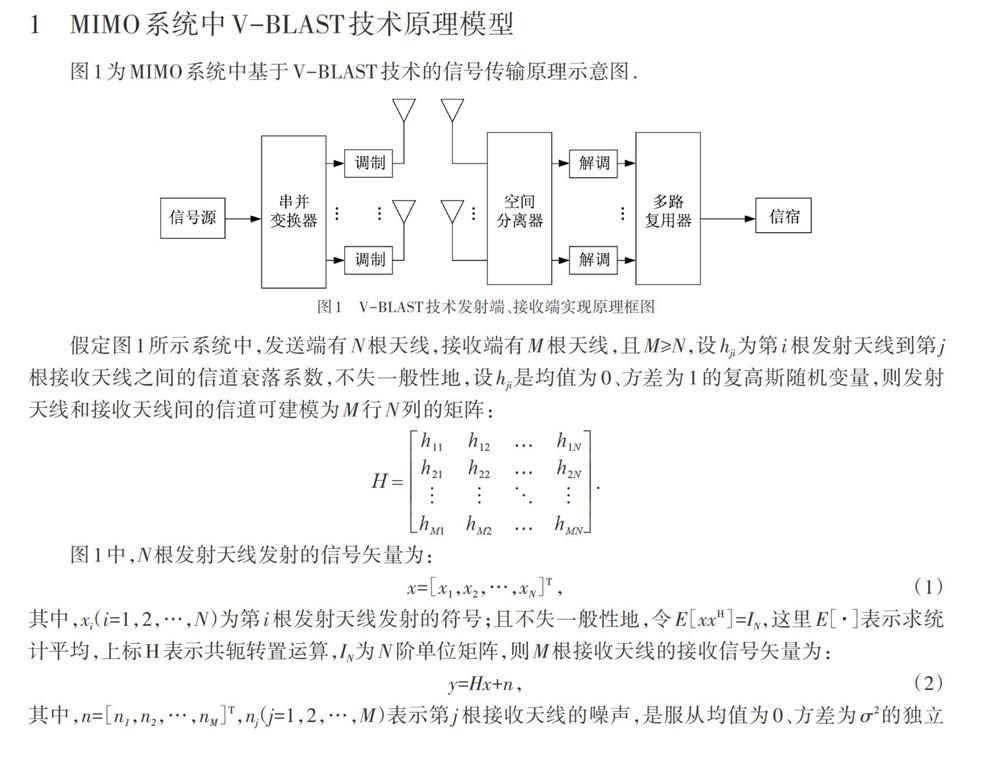
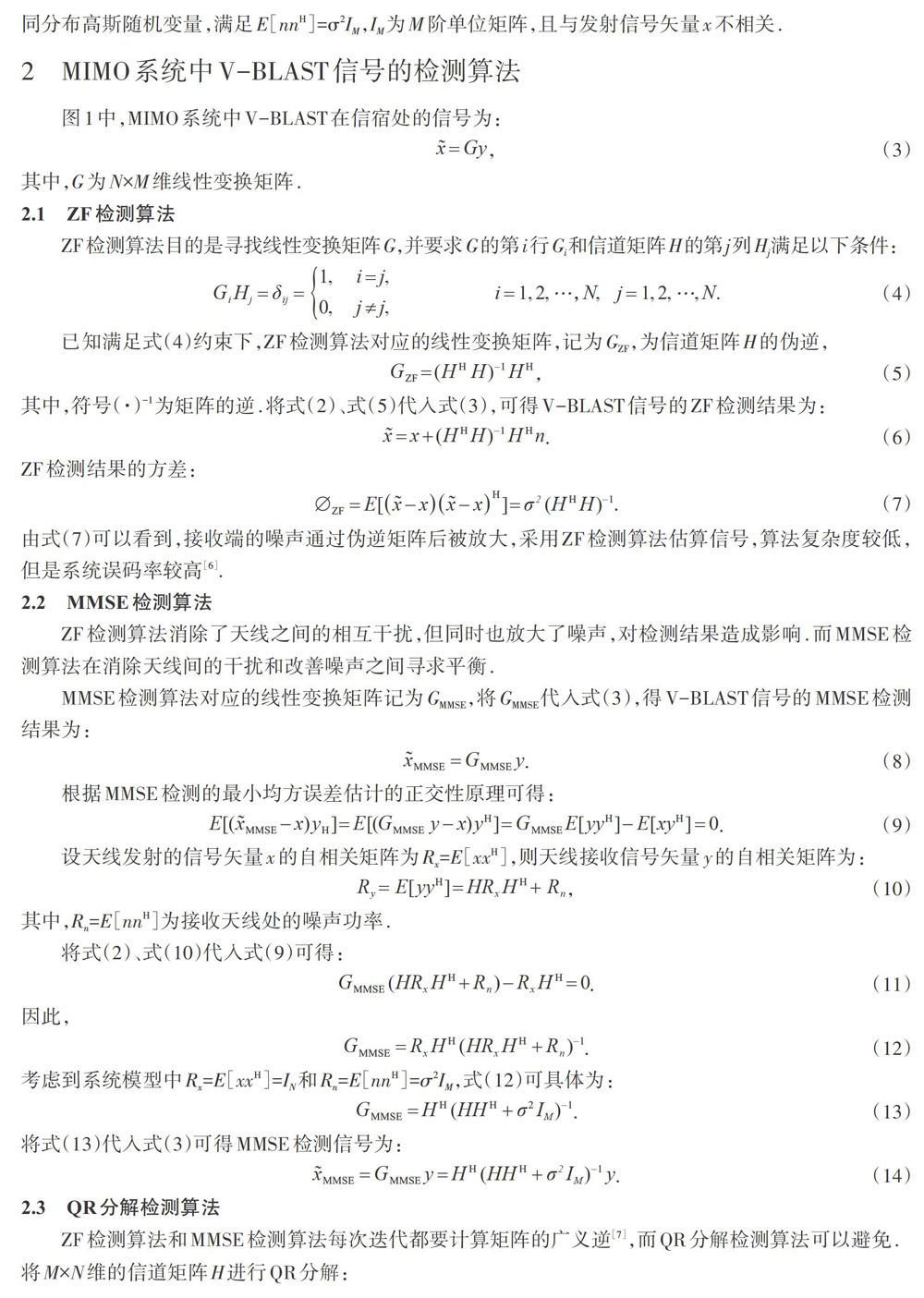
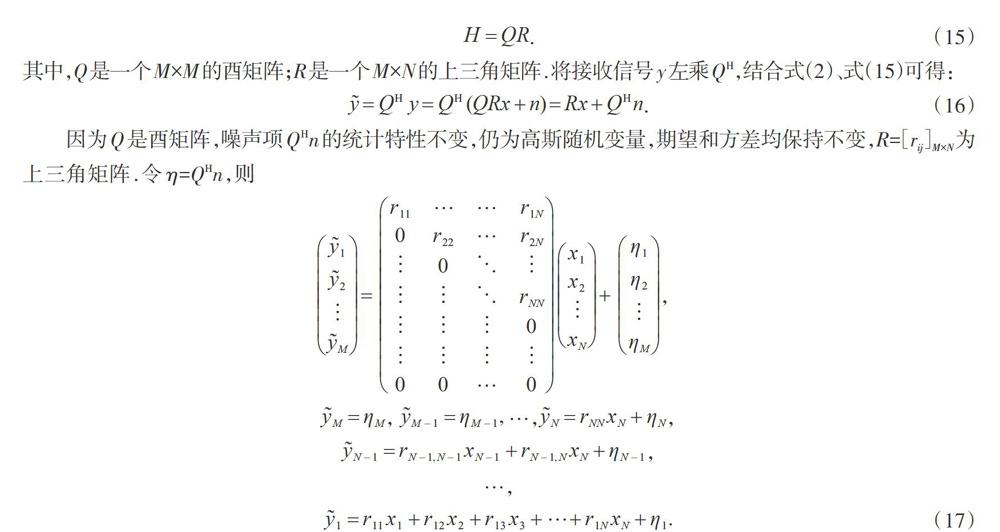
分层空时(BLAST)技术是一种同时在空间维度和时间维度上调制编码的技术,该技术要求MIMO系统中的接收天线数大于等于发射天线数.在每个发射信号之间,BLAST调制编码不会引入正交关系来实现不相关性,而是充分利用无线信道的多径传播特性来区分同一信道内的信号.BLAST技术的实现主要包括:对角分层空时(D-BLAST)结构、垂直分层空时(V-BLAST)结构和水平分层空时(H-BLAST)结构,其中,V-BLAST技术在移动通信系统中将某个用户信号的单个数据流通过串、并转换后,分解为多个数据流,经多天线发射至接收端,再进行并、串转换,以恢复原始信号[2].
在MIMO系统中,针对V-BLAST信号的检测算法性能的分析研究,吴君钦等[3]提出了一种基于最大似然(ML)的分步检测算法,最大限度地提高了每步检测的信号性能,减少误……