顶部构筑物对狭长空间烟气蔓延阻滞机理研究
2021-03-10邵琳姜昱辰杨金溢李志涌蔡永壮吴则琪
邵琳 姜昱辰 杨金溢 李志涌 蔡永壮 吴则琪


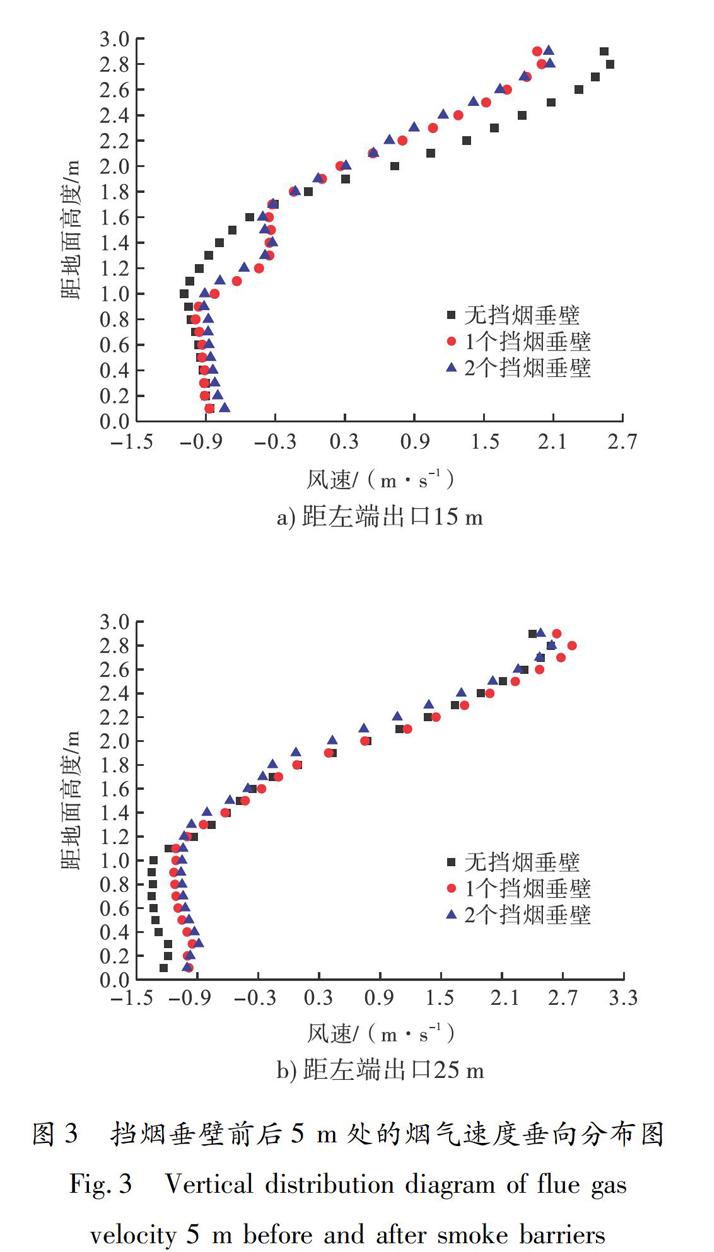
摘要:为研究火灾产生的烟气越过多个挡烟垂壁等顶部构筑物后的流动规律,采用FSD数值模拟方法,对比狭长空间模型中无挡烟垂壁、单挡烟垂壁和多挡烟垂壁情况下的烟气蔓延情况,并对烟气运移的速度场分布、不同区段流量的变化进行研究.结果表明:在无挡烟垂壁和分别设置1个、2个、4个挡烟垂壁的情况下,烟气到达狭长空间末端的时间分别为15.9 s,17.1 s、18.8 s和25.5 s;挡烟垂壁阻滞烟气蔓延的原因是,挡烟垂壁等构筑物可以减小烟气层与下部空气层的相对流动速度,减少烟气对空气的卷吸,降低烟气生成量;多挡烟垂壁对烟气的阻滞效果优于单挡烟垂壁,烟气蔓延速度更慢.
Abstract:In order to study the flow law of smoke generated by fire after passing through several top structures such as smoke barriers,FSD numerical simulation method was used to compare the smoke spreading situation of the long-narrow space model in the case of no smoke barrier,single smoke barrier and multi smoke barrier.The velocity field distribution of smoke migration and the flow rate change in different sections were studied.The results showed that the time for smoke to reach the end of the long-narrow space were 15.9 s,17.1 s,188 s and 25.5 s,respectively,in the case of no smoke barrier and 1,2 and 4 smoke barriers.The reason why smoke barriers retarded the smoke spreading was that the top structures such as smoke barriers could reduce the relative flow velocity of smoke layer and lower air layer,which reduced the entrainment of air and the amount of flue gas generated; the retarding effect of multi smoke barrier was better than that of single barrier,and the smoke spreading speed was slower.
0 引言
随着我国城市建设步伐的加快,在城市建筑中长度远大于高度和宽度的狭长空间大量出现,如地铁隧道、地下商业街、公路隧道等.这种狭长空间内部一旦发生火灾,烟气极易扩散,难以控制[1].现代建筑中的狭长空间往往设置有横梁、挡烟垂壁等顶部构筑物,这些顶部构筑物可以作为防排烟系统中防烟分区的分隔,将烟气限制在一定范围内.《建筑防火规范》[2]规定,长度>20 m的内走道需要设置排烟设施,并在该区域划分防烟分区,防烟分区间的分隔物往往采用挡烟垂壁.行业标准GA533—2012[3]中对挡烟垂壁的定义为:用不燃材料制成,垂直安装在建筑顶棚、横梁或吊顶下,能在火灾发生时形成一定蓄烟空间的挡烟分隔设施.挡烟垂壁在……