淹水胁迫对甜瓜幼苗形态及生理特性的影响
2020-12-23刘泽发邓欣谢波姜艳芳阳习鹏曾永贤
刘泽发 邓欣 谢波 姜艳芳 阳习鹏 曾永贤
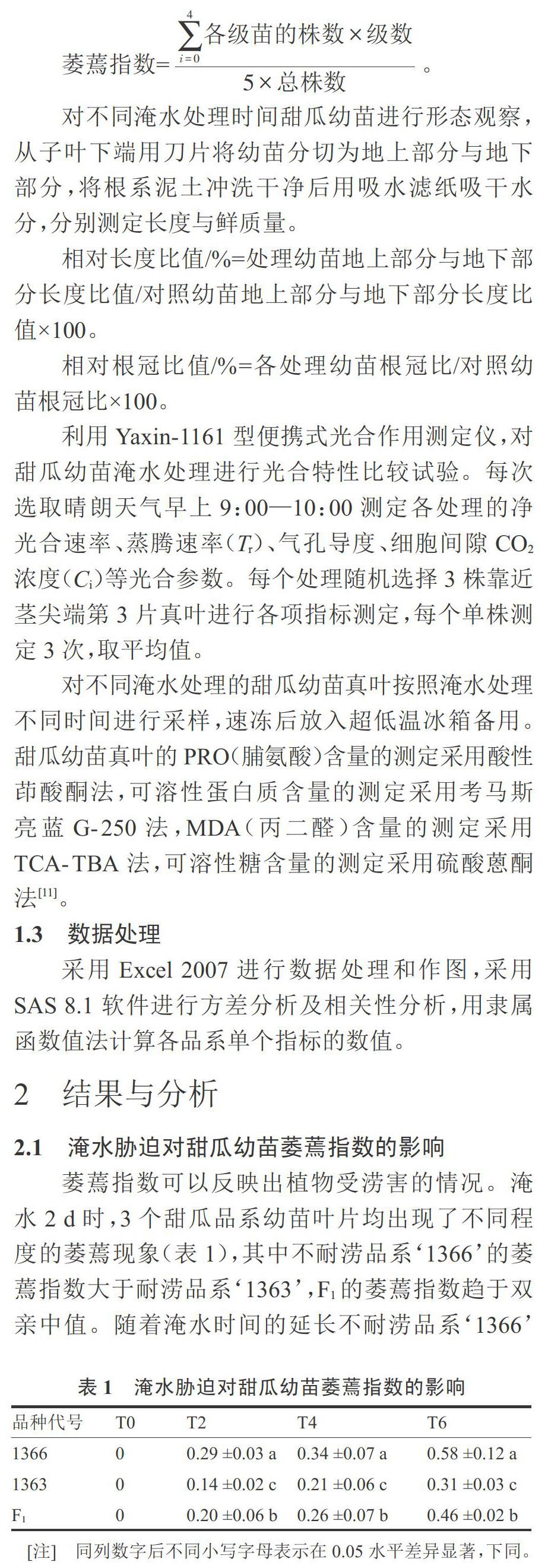
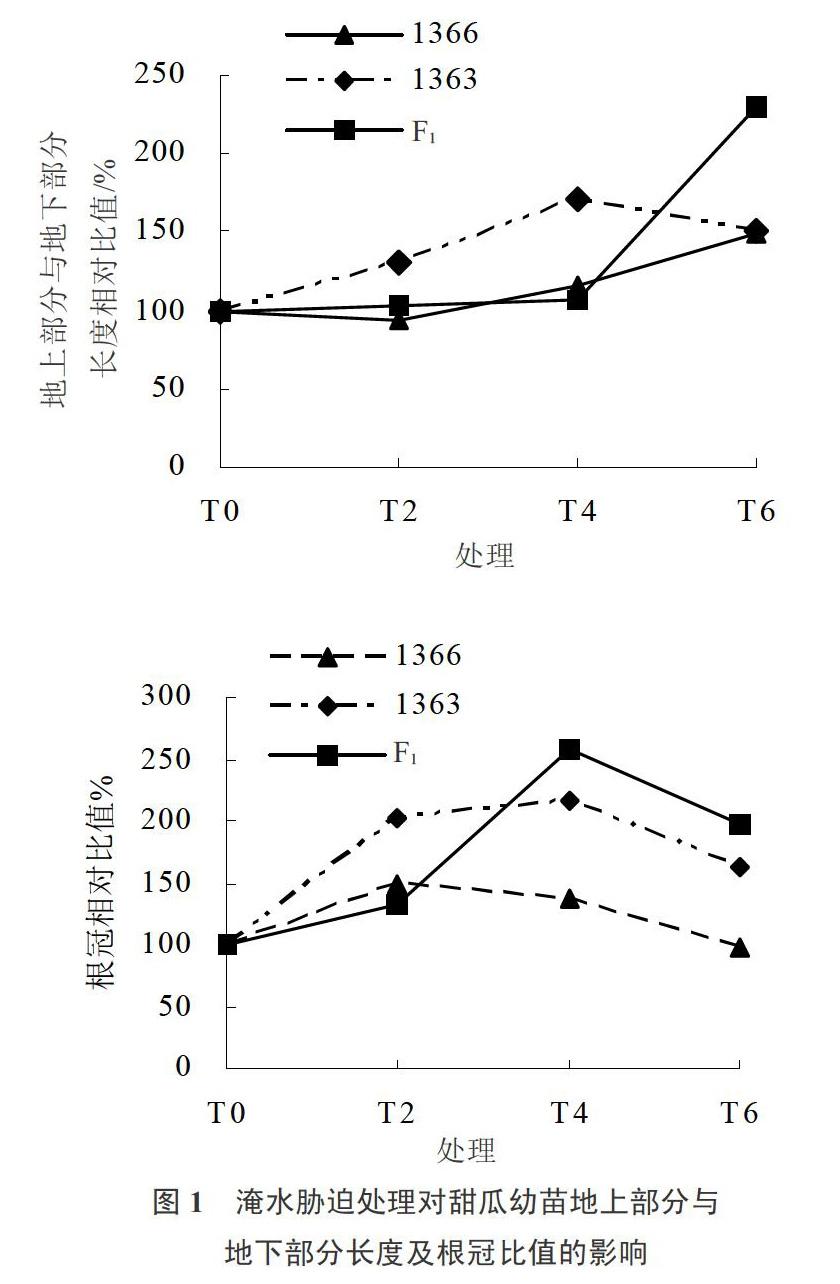
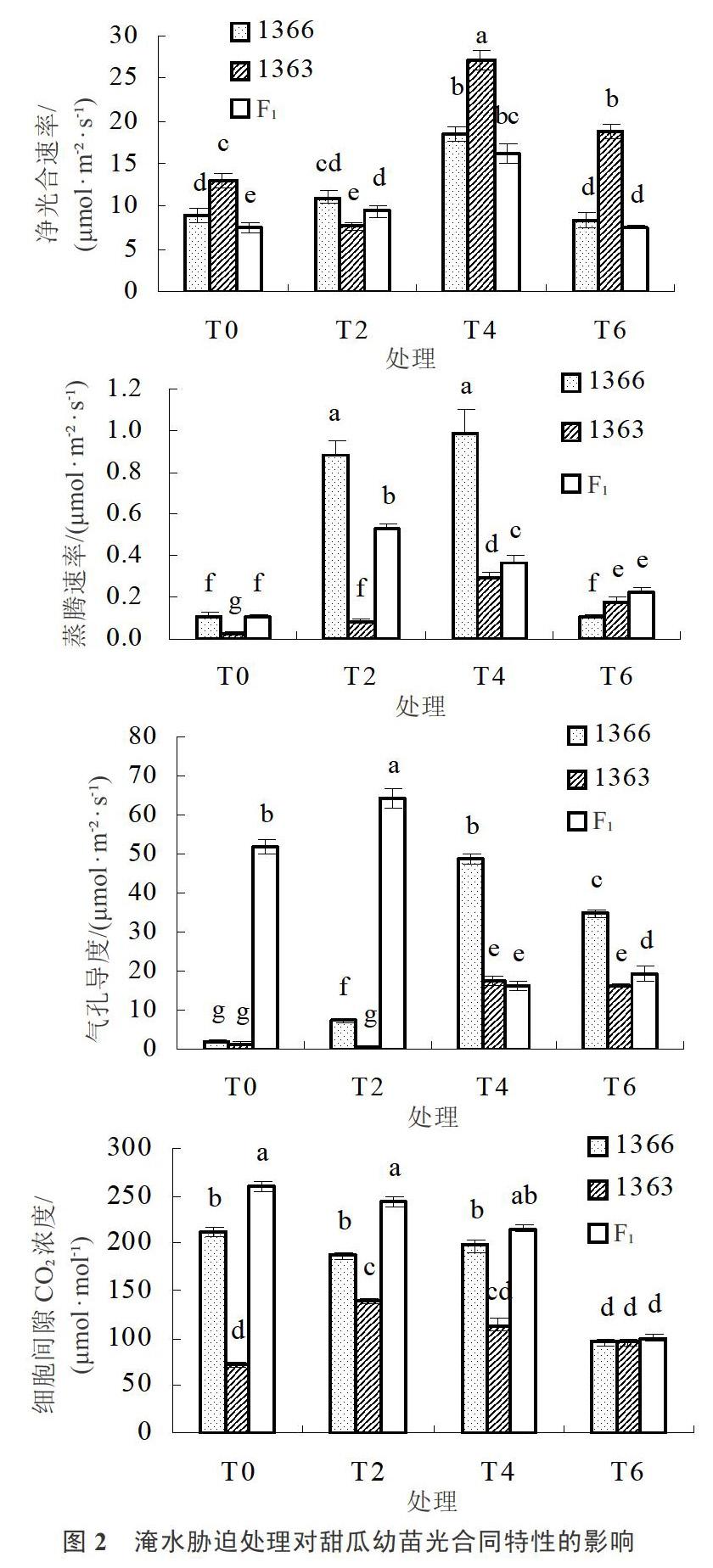
摘 要:为研究淹水胁迫对甜瓜幼苗形态及生理特性的影响,以甜瓜自交系‘1366‘1363及F1(1366×1363)为试验材料,设置T0(0 d)、T2(2 d)、T4(4 d)和T6(6 d)4个淹水胁迫处理,对甜瓜幼苗形态、光合特性及渗透调节物质含量进行测定和分析。结果表明,F1的萎蔫指数趋于双亲中值,幼苗根冠相对比值高于双亲;F1淹水2 d时气孔导度达到最大值64.4 mol·m-2·s-1,显著高于双亲,淹水6 d时‘1366和F1细胞间隙CO2浓度均显著降低;‘1366PRO含量先下降后上升,变化幅度最大。‘1366及F1中 MDA变化明显,‘1363无明显变化。可溶性糖含量均呈上升趋势,‘1366在淹水4 d时达到最大值10.51 mg·g-1,‘1363及F1在淹水6 d时分别达最大值11.77、11.41 mg·g-1,差异显著。研究结果可为甜瓜耐涝育种提供参考依据。
关键词:甜瓜;淹水胁迫;形态特性;光合特性;生理特性
中图分类号:S652 文献标志码:A 文章编号:1673-2871(2020)11-026-05
Abstract: In order to study the effects of waterlogging stress on the morphological and physiological characteristics of melon, the seedlings of each line at seedling stage were treated with flooding water. The seedling morphology, photosynthetic rate, transpiration rate, stomatal conductance, intercellular CO2 concentration,PRO, soluble protein , MDA and soluble sugar were detected from 0 to 6 days after treatment. The results showed that the WI of F1 tended to the median value between both parents. The length ratio of aboveground part to underground part of F1 was significantly higher than that each parent. The stomatal conductance reached the maximum value of 64.4 mol·m-2·s-1 after 2 days treatment, which was significantly higher than ‘1366 and ‘1363. The results showed that the intercellular CO2 concentration of ‘1366 and F1 decreased significantly after 6 days of treatment, and the PRO of ‘1366 decreased first and then increased with the largest change range. MDA in the true leaves of ‘1366 and F1 significantly changed, while that of ‘1363 was nonsignificant. The soluble sugar of ‘1366 reached the maximum value of 10.51 mg·g-1 on the 4th day of flooding, and the maximum values of ‘1363 and F1 were 11.77 mg·g-1 and 11.41 mg·g-1 respectively after 6 days treatment. The results can provide reference for melon waterlogging tolerance breeding.
Key words: C. melo L.; Waterlogging stress; Morphological characteristics; Photosynthetic characteristics; Physiological characteristics
甜瓜(Cucumis melo L.)是葫芦科一年生草本植物,性喜温热,对高湿及涝害环境敏感,是世界十大水果之一。据FAO数据显示,2018年全球甜瓜收获面积和产量分别为104.73万hm2、2 734.92万t,分别位居第15位和第10位,分别占世界水果面积的1.54%和产量的3.15%,甜瓜單位产量为35.90 t·hm-2,排名第7位[1]。2018年我国甜瓜的收获面积、产量分别为35.45万hm2、1 272.73万t,分别占全球的33.85%、46.54%[2]。据国际土壤学协会绘制的世界土壤图估算,世界上水分过多的土壤约占总土壤面积的12%[3]。水分参与植物体内的代谢过程和植株的形态构成,土壤中水分过多或过少对植株的生长都会产生不利的影响[4-5]。中国南部、中部部分地区及长江中下游地区是甜瓜重要产区,该地区春夏多雨,春季阴雨连绵,常导致土壤处于涝渍状态,高湿及涝害成为制约甜瓜露地生产的重要因素。……
