浙江省甜瓜根、叶部镰孢菌种类的分离与鉴定
2020-12-23郝芳敏严蕾艳臧全宇马二磊丁伟红黄芸萍王毓洪
郝芳敏 严蕾艳 臧全宇 马二磊 丁伟红 黄芸萍 王毓洪
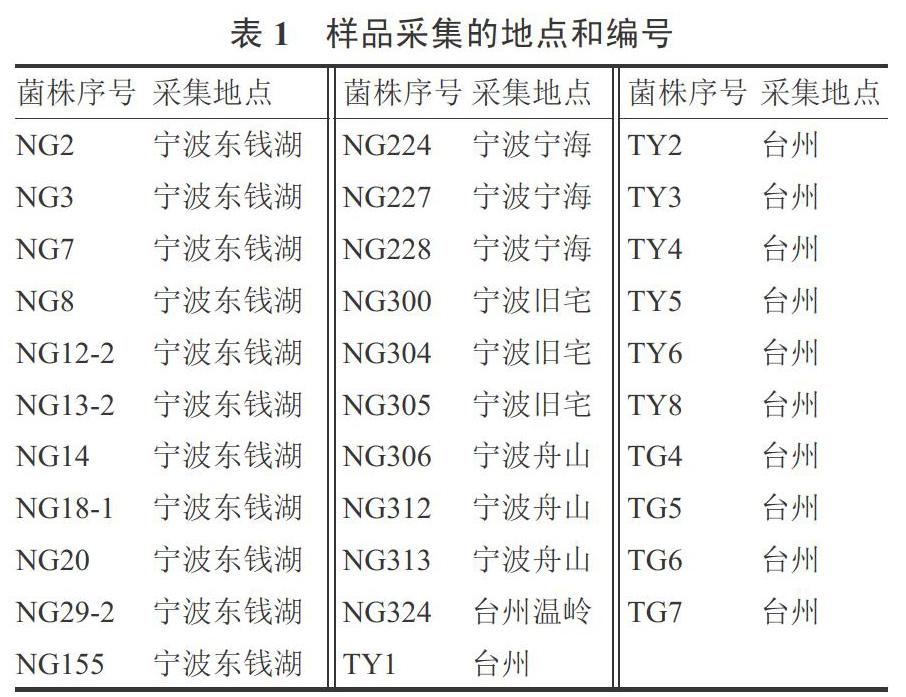
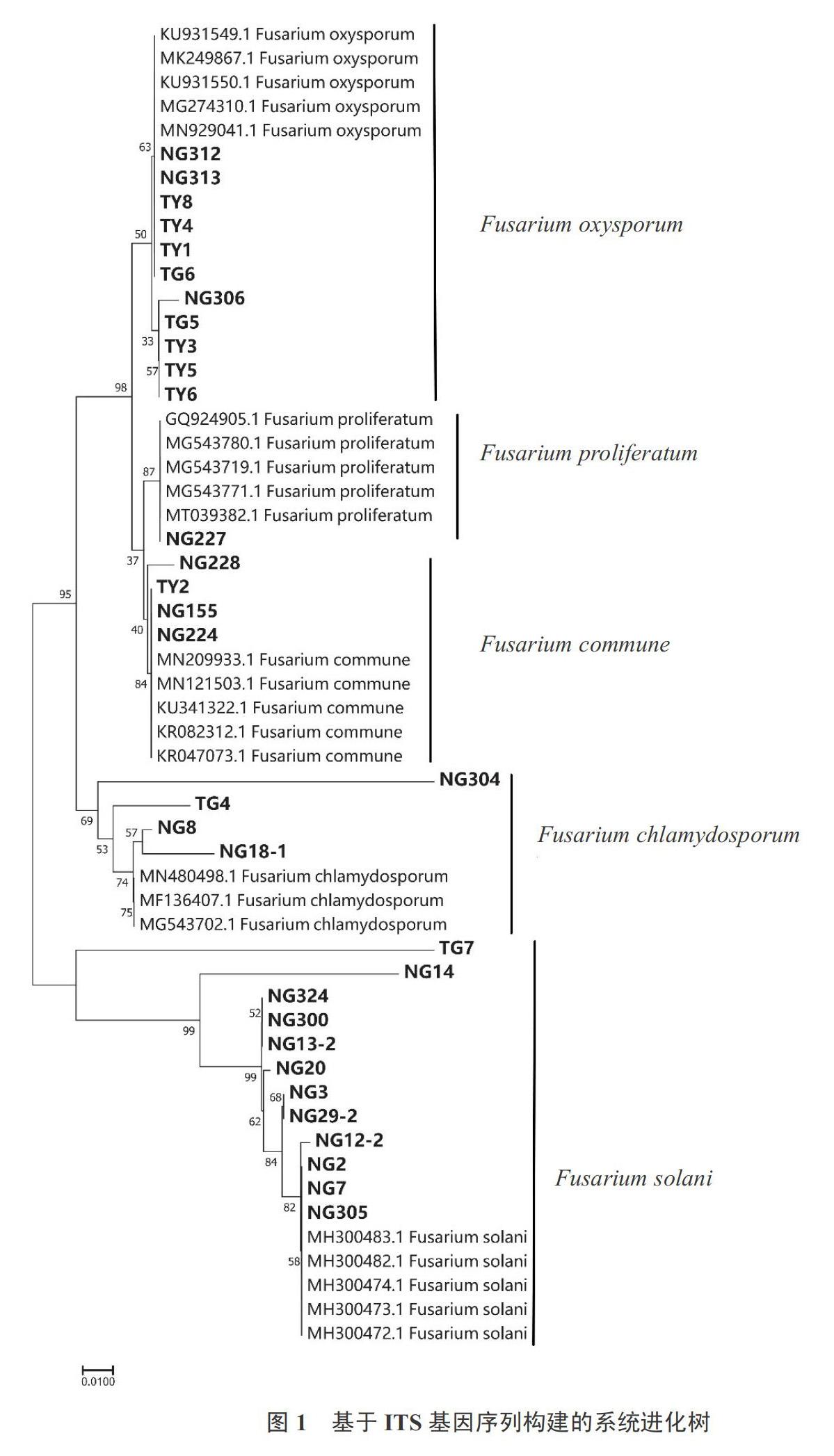
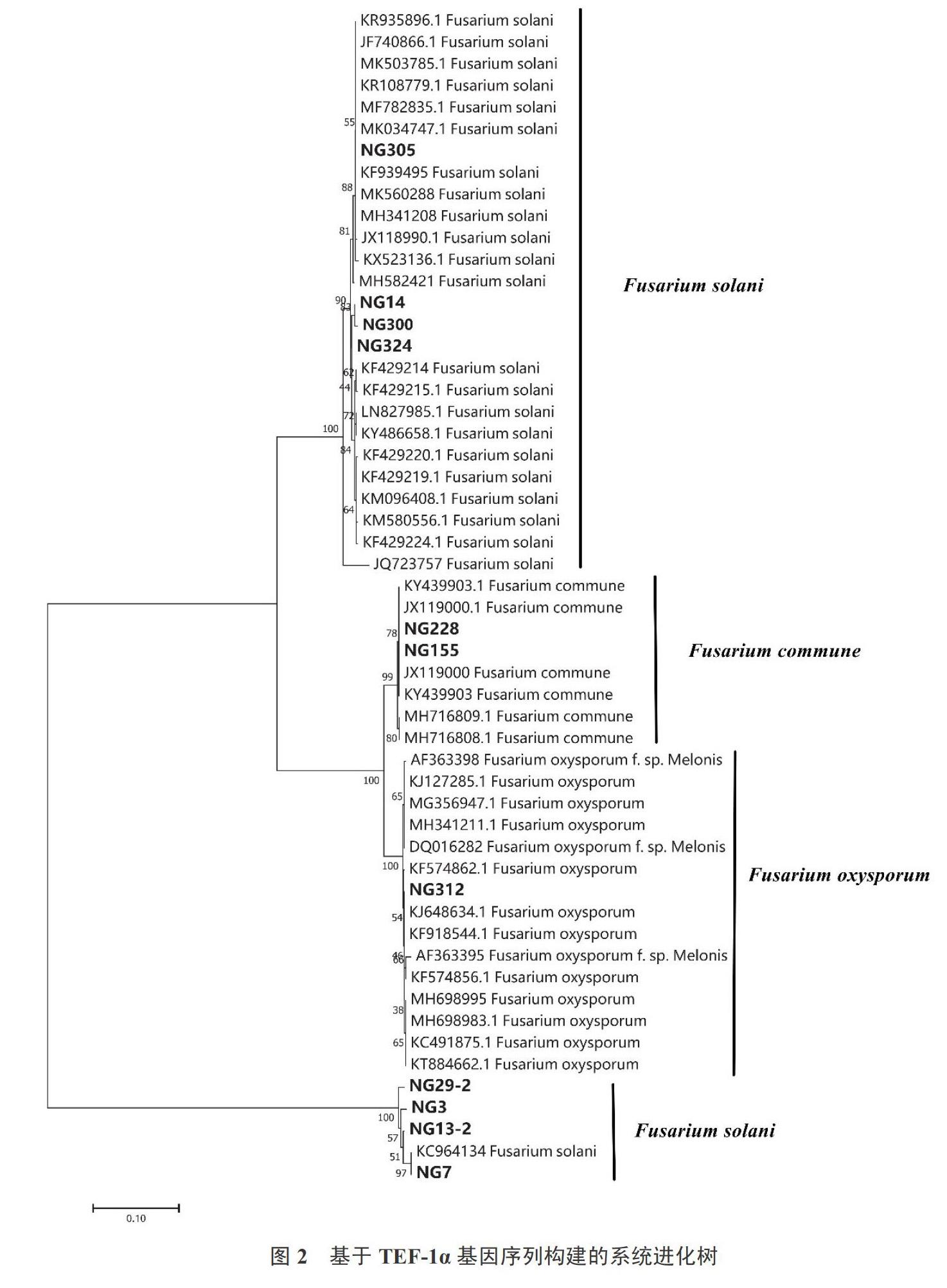
摘 要:从宁波和台州的不同地区采集了具有发病症状的甜瓜根部和叶部样品,采用常规的组织分离法进行分离纯化,共获得32株镰孢菌,经过分子鉴定,利用ITS和TEF-1α序列构建系统进化树,分别包含11个尖孢镰孢菌(Fusarium oxysporum)、11个腐皮镰孢菌(F. solani)、4个厚垣镰孢菌(F. chlamydosporum)、4个共享镰孢菌(F. commune)和1个层生镰孢菌(F. proliferatum),其中尖孢镰孢菌占镰孢菌总量的34.38%,对其中1株尖孢镰孢菌菌株TG5进行致病力测定,认为其可以造成甜瓜的枯萎症状,该结果为明确浙江省的镰孢菌种类奠定了基础。
关键词:甜瓜;镰孢菌;分离纯化;分子鉴定
中图分类号:S652 文献标志码:A 文章编号:1673-2871(2020)11-013-05
Abstract: To identify the Fusarium species of Cucumis melo L. crops in Zhejiang province, symptomatic roots and leaves of the samples were collected from different areas in Ningbo and Taizhou. The Fusarium strains were isolated and purificated by the conventional tissue method. The total 32 isolates were isolated from the roots and leaves of the samples. Based on the sequences of ITS and TEF-1α, two phylogenetic trees were established, which were identified as 5 species of Fusarium, 11 isolates of Fusarium oxysporum, 11 isolates of F. solani, 4 isolates of F. chlamydosporum, 4 isolates of F. commune, 1 isolates of F. proliferatum, respectively. The species of F. oxysporum accounting for 34.38%. The pathogenicity of one strain TG5 of F. oxysporum was determined, which could cause the wilt symptoms of melon.
Key words:Cucumis melo L.; Fusarium; Isolation and purificated; Molecular identification
甜瓜(Cucumis melo L.)是葫蘆科一年生蔓生草本植物,又名哈密瓜、甘瓜、香瓜等,食用价值高,广受消费者喜爱,是世界十大水果之一[1-2]。西瓜甜瓜产业是浙江省十大农业主导产业之一,也是浙江省重要的经济作物,在浙江省的蔬菜瓜果产业中占有重要地位[3]。
但是,甜瓜病害一直是生产上的难题,尤其是甜瓜枯萎病。甜瓜枯萎病是由尖孢镰孢菌甜瓜专化型(Fusarium oxysporum f. sp. melonis)引起的一种真菌病害,是一种世界类土传维管束病害。甜瓜枯萎病又称为蔓割病、死秧、萎蔫病、疫病、死藤等,在甜瓜全生育期均可发生,其中,甜瓜开花期至坐果期是发病的高峰期,发病率在50%~70%[4]。甜瓜枯萎病常常造成植株的主根颜色变褐并出现腐烂的症状,空气湿度大时,根部甚至会出现粉红色或者白色的霉状物,田间一旦发现病株,病害会很快在田间蔓延,对甜瓜产业造成严重的经济损失。……
