京津冀地区典型钢铁企业超低排放对空气质量的影响
2020-10-23李厚宇崔磊贾敏甄瑞卿毛娜刘厚凤伯鑫
李厚宇 崔磊 贾敏 甄瑞卿 毛娜 刘厚凤 伯鑫
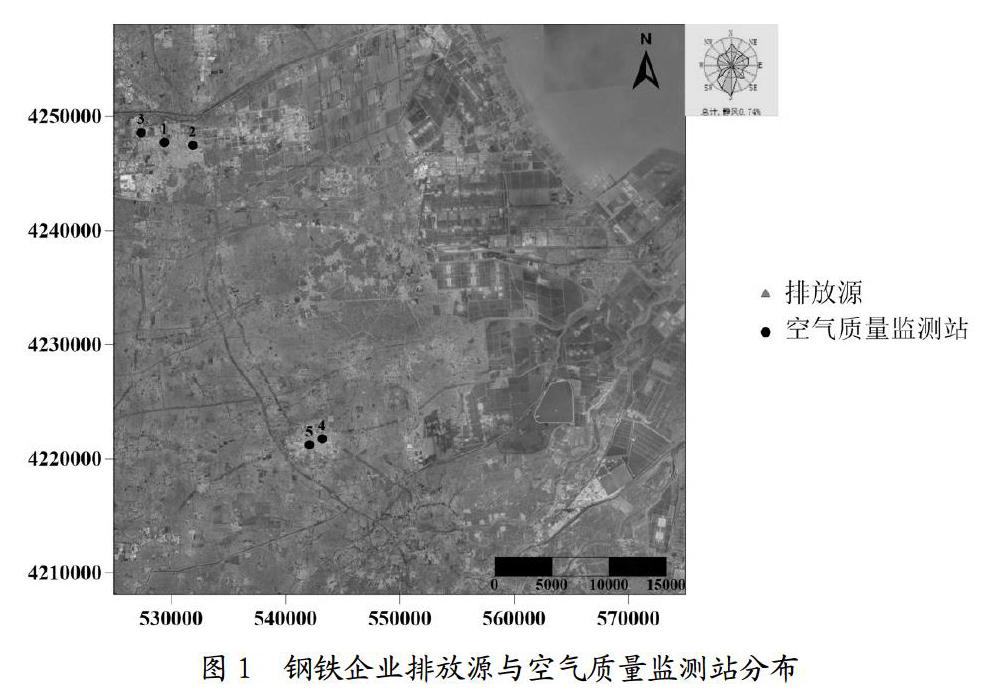
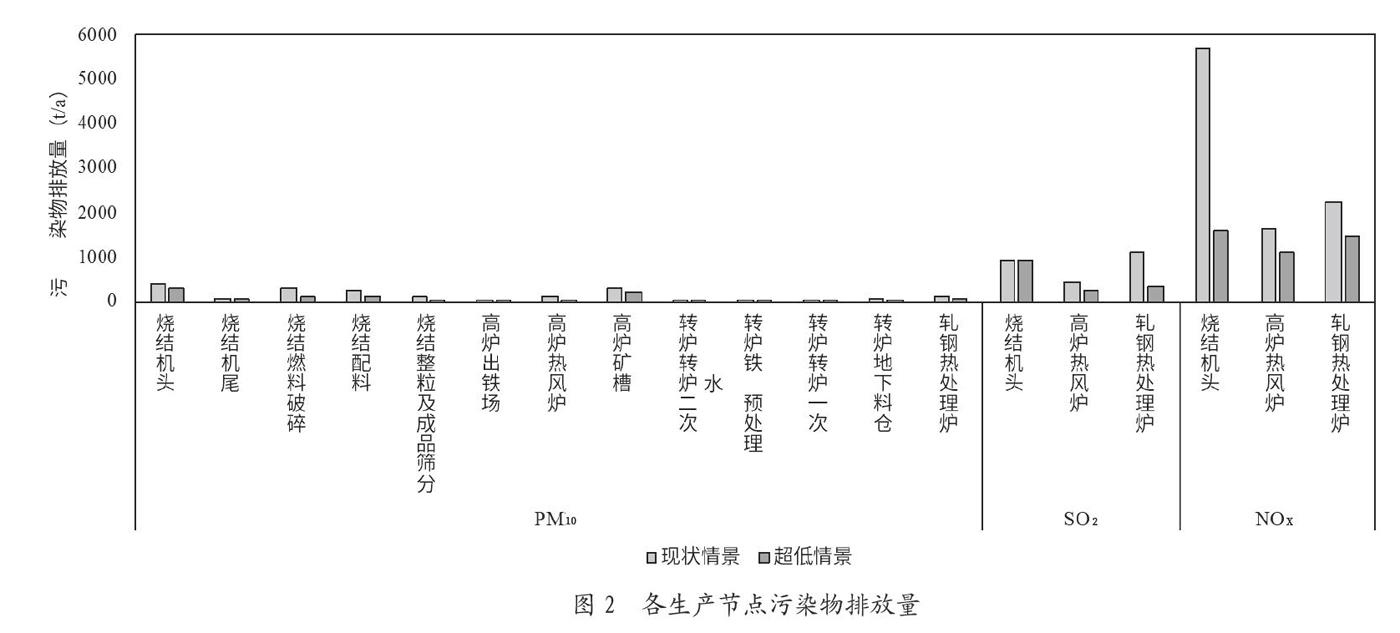
摘要:基于京津冀地区某典型钢铁企业排放清单,建立了超低排放改造前后两种情景,利用AERMOD模型模拟了两种情景下典型钢铁企业排放SO2、NOx和一次PM10对周边大气环境的影响。结果显示:从排放量来看,钢铁企业的超低排放改造对NOx减排效果更为明显,NOx减排比例达到为56.44%。现状情景下,典型钢铁企业对5个空气质量监测站SO2、NOx和PM10的年均贡献浓度分别为0.11μg/m3、0.34μg/m3和0.20μg/m3。超低排放改造后,典型钢铁企业对5个空气质量监测站SO2、NOx和PM10的年均贡献浓度分别下降0.05μg/m3、0.16μg/m3和0.07μg/m3。
关键词:钢铁企业;超低排放;空气质量;AERMOD
中图分类号:X820.6 文献标识码:A 文章编号:2095-672X(2020)09-00-04
DOI:10.16647/j.cnki.cn15-1369/X.2020.09.005
The impact of the implementation of ultra-low emission standards for a typical iron and steelmaking plant on air quality in Beijing-Tianjin-Hebei region
Li Houyu1,2, Cui Lei3, Jia Min2,4, Zhen Ruiqing5, Mao Na6, Lliu Houfeng1, Bo Xin2
(1.College of Geography and Environment, Shandong Normal University,Jinan Shandong 250014,China;2.Appraisal Center for Environment and Engineering, Ministry of Ecology and Environment,Beijing 100012,China;3.Zhongsheng Environmental Technology Development Co.,Ltd.,Xian Shaanxi 710000,China;4.School of Economics and Management,Beijing University of Chemical Technology,Beijing 100029,China;5.Capital Engineering & Research Incorporation Limited,Beijing 100176,China;6.Ecology and Environmental Protection Science Research Institute of Cangzhou City,Cangzhou Hebei 061000,China)
Abstract:Based on the basic emission inventories of a typical iron and steelmaking plant in Beijing-Tianjin-Hebei region, two scenarios before and after the implementation of ultra-low emission standards were established.AERMOD model was used to quantitatively simulate the environmental impact of SO2,NOx and PM10 emitted by the typical iron and steelmaking plant on the surrounding atmospheric environment under the two scenarios. The results showed that the mitigation effect was more striking for NOx emission if all emission facilities meeting ultra-low standards with the emission reductions of 56.44%,from the perspective of pollutants emissions. Under the current situation, the average annual contributions of SO2, NOx and PM10 of the typical iron and steelmaking plant are 0.11,0.34 and 0.20 μg/m3, respectively, to 5 air quality monitoring stations.After the implementation of ultra-low standards, the average annual contribution of SO2, NOx and PM10 decreased by 0.05, 0.16 and 0.07 μg/m3, respectively.
Key words:Iron and steelmaking plant;Ultra-low emission;Air quality;AERMOD
2018年,中國粗钢产量为9.3亿t,占全球粗钢产量的51.3%[1],钢铁工业企业排放大量的二氧化硫,氮氧化物,颗粒物和VOCs等污染物[2-3]。京津冀地区是钢铁企业重点分布区域,2018年京津冀地区粗钢产量占全国产量的27.7%[4]。京津冀钢铁企业具有较大的减排潜力[2,5-7]。为了继续降低京津冀地区排放水平,提高空气质量,打赢蓝天保卫战,生态环境部在钢铁行业推行超低排放改造,要求到2020年10月底前,京津冀及周边地区具备改造条件的钢铁企业基本完成超低排放改造。
目前,钢铁企业超低排放研究主要集中在超低排放技术,鲜有关于钢铁企业超低排放对空气质量影响的研究。相关研究多集中在钢铁企业的源解析和数值模拟等方面。Jia等[8]通过监测手段分析了钢铁行业不同工序排放不同粒径的颗粒物的化学成分。Dai等[9]对钢铁企业周边的空气中颗粒物进行了排放源的识别和分配。……
