船用铝/钢复合结构承载模式优化研究
2020-03-31孙宏坤余洋聂黎军胡波闫德俊
孙宏坤 余洋 聂黎军 胡波 闫德俊


摘 要:基于铝-钢复合过渡接头具有拉/剪强度相当的特性,提出了船舶铝/钢复合连接结构拉-剪双承载模式,即将铝-钢过渡接头的承载模式从传统的正向拉伸改变为拉伸与剪切共同作用模式。过渡接头倾斜角度由复合界面处的拉伸强度与剪切强度确定。数值模拟研究表明,拉-剪双承载模式能够将铝/钢复合结构承受拉伸负荷能力提高27%;并经试验验证,该模式将铝/钢复合结构的抗拉应力从256 MPa提高到306 MPa,承载能力提高了20%以上。
关键词:复合过渡接头;数值模拟;承载能力
中图分类号:TG441.8 文献标识码:A
Abstract: Based on the characteristics of aluminum/steel composite transition joint with equal tensile/shear strength, the tensile-shear double bearing mode of ship aluminum / steel composite connection structure is proposed. The bearing mode of aluminum/steel transition joint is changed from the traditional forward tensile bearing mode to the tensile and shear interaction mode, and the composite transition joint angle is determined by the tensile strength and shear strength of composite interface. The numerical simulation results show that the tensile-shear double bearing mode can increase the tensile load capacity of aluminum / steel composite structure by 27%, and the test shows that tensile stress of aluminum / steel composite structure is increased from 256 MPa to 306 MPa, and the bearing capacity is increased by more than 20%.
Key words: Composite transition joint; Numerical simulation; Bearing capacity
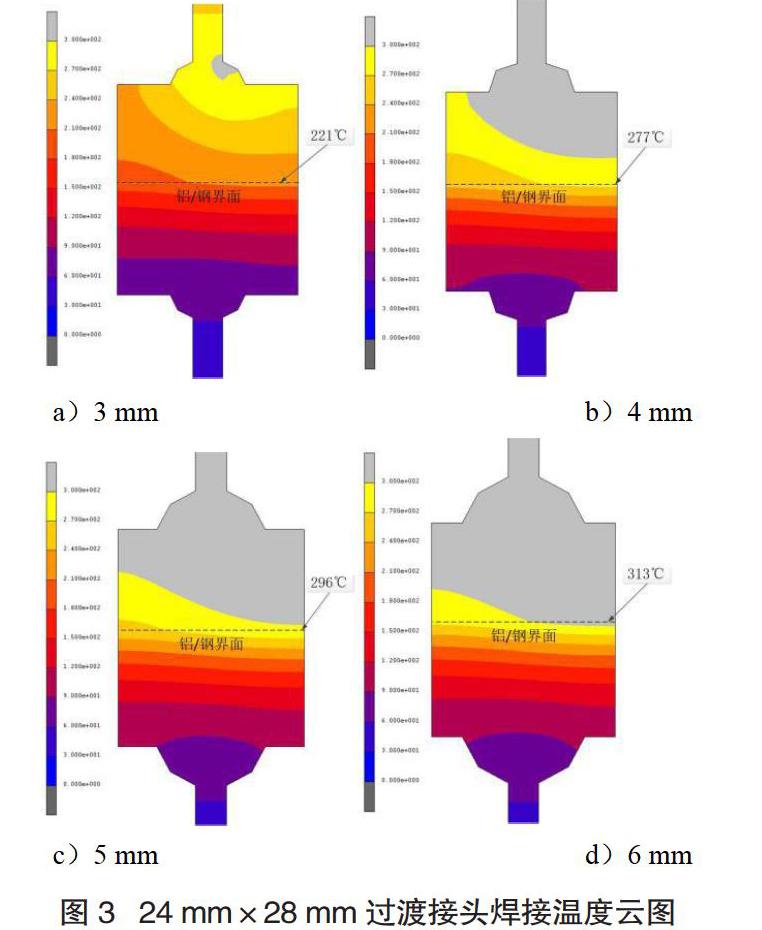
鋁合金上层建筑通过铝-钢过渡接头与钢质船体连接时,焊接产生的高温会促使铝-钢界面的金属间化合物长大,经过多次焊接热循环后形成较厚的化合物中间层,严重地降低复合界面的结合强度,易发生复合界面开裂进而危害船舶的性能和安全,而且在船舶使用过程中这种安全隐患将一直存在[1-4],因此焊接过程中铝-钢复合界面的最高温度应不超过300 ℃ [5-8]。
目前铝-钢复合过渡接头一般平行于甲板布置,在船舶航行过程中船体受到波浪冲击而发生弯曲变形,对过渡接头产生拉伸作用,使其容易发生开裂;焊接工艺控制不严格,也会出现焊接过程中局部结构的过渡接头发生开裂。
本文提出根据过渡接头的抗拉强度和剪切强度值,使甲板与铝-钢过渡接头成一定角度,避免拉伸载荷方向垂直于铝-钢界面……