基于AHP的智慧能源建设评价体系
2020-03-02李小龙
李小龙
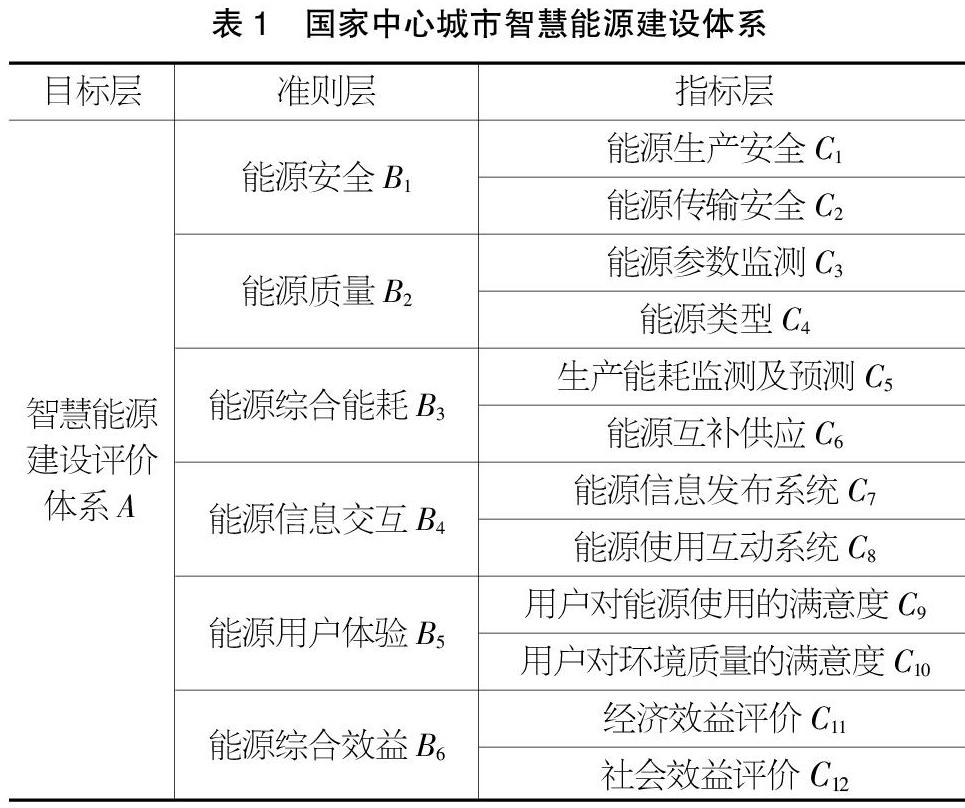
【摘 要】论文基于国家中心城市的特点,构建了国家中心城市智慧能源建设评价体系,利用层次分析法定量地分析符合国家中心城市智慧能源建设的指标,得到能源安全、能源质量、能源综合能耗、能源信息交互、能源用户体验和能源综合效益6个一级指标和对应划分的12个二级指标,为我国国家中心城市的智慧能源建设提供参考。
【Abstract】Based on the characteristics of national central cities, this paper constructs the evaluation system of smart energy construction in national central cities, and quantitatively analyzes the indicators in line with the smart energy construction of national central cities by using analytic hierarchy process, and obtains six first-level indicators of energy security, energy quality, comprehensive energy consumption, energy information interaction, energy user experience and energy comprehensive benefit, and 12 second-level indicators corresponding to the division, providing reference for the construction of smart energy in China's national central cities.
【關键词】智慧能源;AHP;国家中心城市
【Keywords】smart energy; AHP; national central city
【中图分类号】F299.2 【文献标志码】A 【文章编号】1673-1069(2020)12-0116-04
1 引言
国家中心城市是指居于国家战略要津、肩负国家使命、引领区域发展、参与国际竞争、代表国家形象的现代化大都市。国家中心城市作为全国城镇体系的核心城市,集中了经济中心、信息资源、服务管理等各个关键性职能,在经济、金融、管理、文化、交通、生活等方面都代表着城市发展程度的综合竞争力水平,是经济发展的增长极。然而,城市的快速集中发展,导致城市能源的消耗极速加快。据不完全统计,目前我国城市能耗的占比超过70%,预计在2030年将达到80%以上。这种状况会带来能源供应不足、能源浪费严重、能源供应安全等一系列问题。因此,寻求一个既能发展城市,又能合理高效利用能源的和谐发展之路就显得尤为重要。
2 国家中心城市发展分析
在经济全球化深度发展到一定阶段,便产生了国家中心城市,即在国家城镇体系中具有“顶级核心性”和区域内的“引领辐射性”特点的城市。国家中心城市在我国城镇体系中位于核心地位,不仅是我国的金融、管理、贸易、交通枢纽和文化中心,也是我国对外开放和进行国内外文化交流的门户。……
