Risk factors associated with recurrent stroke: A retrospective hospitalbased study
2019-12-20ShahramRafieHoseinKaveyaniParastooMoradiChoghakabodi
Shahram Rafie, Hosein Kaveyani✉, Parastoo Moradi Choghakabodi
1Department of Neurology, Golestan Hospital, Ahvaz Jundishapur University of Medical Sciences, Ahvaz, Iran
2Thalassemia and Hemoglobinopathy Research Center, Health Research Institute, Ahvaz Jundishapur University of Medical Sciences, Ahvaz, Iran
Keywords:Re-stroke Risk factor Ischemic heart disease Atrial fibrillation
ABSTRACT Objective: To determine the prevalence of the recurrent stroke and its risk factors in the city of Ahvaz, Iran.Methods: The present study investigated the medical records of 389 ischemic stroke patients admitted to the Department of Neurology, Ahvaz Hospitals from March 2015 to January 2016. Patients' information was collected. Patients who suffered recurrent stroke but survived were followed up for at least 12 months after the first attack, and their medical records were collected.Results: The incidence rate of recurrent stroke was 14.91% (n=58). There was a significant relationship between the incidence rate of recurrent ischemic stroke with atrial fibrillation(OR=2.012, P<0.05) and ischemic heart disease (OR=1.695, P<0.05). However, there was no significant relationship between recurrent stroke and age, sex, dyslipidemia, diabetes,hypertension, and cigarette smoking (P>0.05).Conclusions: Patients with a history of atrial fibrillation and ischemic heart disease were at a higher risk of recurrent ischemic stroke. The incidence can be reduced by better treatment of atrial fibrillation and active follow-up.
1. Introduction
Stroke is a worldwide serious problem, especially in Asia with higher mortality than Europe and North America[1], and is an important cause of disability and the death worldwide. Only onethird of strokes cases occur in developed countries. In developing countries, stroke is a major health issue, although it is preventable[2].It is estimated that about 5.7 million deaths occurred in 2005 and most of them (87%) were in low and middle-income countries[3].The issue becomes more serious considering the fact that the prevalence of the stroke in our country is higher than in most western countries. Moreover, the incidence of age-adjusted first-ever stroke in our country has been higher than the western countries(more than a decade)[4].
According to the classification of countries by the World Bank, Iran was qualified as a middle-income country[5,6]. The stroke prevalence in Iran is significantly higher than in developed countries, especially among young adults[7,8]. Similarly, in comparison with highincome countries, the mortality rate in young adults is higher in Iran[9]. Stroke is a major disease both due to its high mortality and disability. About 7.8 million people die due to stroke annually in the world, accounting for about 13% of total deaths[10]. Fortunately,stroke is a preventable disease. In this regard, gaining knowledge of its risk factors and epidemiology is essential[11].
Hypertension, atrial fibrillation (AF), diabetes, cigarette smoking,and dyslipidemia have been regarded as important risk factors of stroke. Systemic diseases caused by coagulation disorders and the use of contraceptive pills are among other risk factors[12,13].Hypertension is an important risk factor of hemorrhagic stroke. And the incidence of the ischemic stroke and hemorrhagic stroke will be reduced under well control. Congestive heart failure (HF) and coronary atherosclerotic disease can increase the risk of the embolic stroke. The most important risk factors for the embolic stroke include structural heart diseases and arrhythmias[14,15]. Diabetes mellitus (DM) is a strong risk factor for stroke, and its prevalence is increasing[12]. Diabetics have an increased susceptibility to atherosclerosis and atherogenic risk factors, notably hypertension,obesity, and abnormal blood lipids[16].
Diabetes can cause atherosclerotic changes in large (proximal)or small (distal) arteries. Overall, atherosclerotic diseases are the common causes of stroke and the modifiable risk factors for stroke as well. Therefore, stroke prevention and treatment should focus on the treatment of these underlying causes of the disease. On the other hand, the apparent difference in the incidence of the recurrent stroke(recurrent stroke) between developed countries (about 3%) and Iran(about 34%-43%)[14,15]suggested the same hypothesis, despite the same medical treatments. This difference can be due to the different risk factors, and lack of proper control of modifiable factors in Iran. Accordingly, it is necessary to explore these risk factors. This study attempts to find out the recurrent stroke prevalence rate and its risk factors in the city of Ahvaz, Iran. Our findings can explain the difference in the incidence of recurrent stroke between advanced countries and Iran, and make better insight into more appropriate control underlying risk factors.
2. Materials and methods
This was a retrospective hospital-based study performed at the Ahvaz Hospitals, Khuszestan province, Iran. All procedures involving human participants were in accordance with the ethical standards of the National Research Committee and with the 2008 Helsinki declaration and its later amendments or comparable ethical standards (Ethical code: ajums.REC.1396.405).
The present study investigated the medical records of all patients admitted to the department of neurology due to the ischemic stroke between March 2015 and January 2016. The stroke was confirmed by a neurologist according to CT scan or MRI evidence. Ischemic stroke patients were selected based on the patients' medical record and on the guideline from International Classification of Diseases,10th edition.
Patients' data, including age, sex, history of ischemic heart disease(IHD) and heart failure (HF) (cardiac output less than 35%), history of diabetes, hypertension, hyperlipidemia, and history of smoking and outcomes were later collected. Moreover, patients who suffered from the recurrent stroke and survived were re-visited for at least 12 months after their first ischemic stroke, and their medical data were later recorded and analyzed. Exclusion criteria were as following:
1. Patients who have died due to a cause other than the ischemic stroke;
2. Patients on whom the diagnostic analyses were not fully carried out for any reason;
3. Patients who refuse referral and follow-up for any reason(personal request or lack of access) (Figure 1).All patients were assessed by NIH Stroke Scale. The scoring was as following: 0: No stroke symptoms; 1-4: Minor stroke; 5-15:Moderate stroke; 16-20: Moderate to severe; 21-32: Severe to death.

Figure 1. Flow chart of the participants.
To explore the effect of IHD on the development of the recurrent ischemic stroke, the patients were divided into two groups: patients with and without IHD. The demographic data, history of HF,diabetes, hypertension, hyperlipidemia, and history of smoking all also collected and compared.
Data were analyzed by Fisher's exact test or Chi-square test,multiple logistic regression, and independent t-test using SPSS version 22 (SPSS Inc., Chicago, IL USA). Considering that the data related to the number of risk factors in patients with IHD were not a normal distribution, a Wilcoxon signed-rank test by GraphPad prism was used to their statistical analysis. P-value<0.05 was considered as statistically significant.
3. Results
Of the 389 ischemic stroke patients, 44.2% (n=172) were men and 55.8% (n=217) were women with body mass indexes of 26.39±3.26 and 26.32±1.66 respectively. Of these, 14.91% (n=58) had the recurrent stroke, among whom 13.82% (n=30) were women and 16.3% (n=28) were men. The age of the patients with recurrent stroke was 43-86 years old, averaged as (66.36±12.37) years old.There was no significant relationship between the incidence of the recurrent stroke and the patient's gender (P=0.56, χ2=4.79).The mean age of patients with the recurrent stroke was older(66.36±12.37 years vs. 65.77±8.63), and the difference was not significant (P=0.775). But the incidence of ischemic stroke was significantly higher among urban residents than rural residents(P<0.01). The baseline characteristics of the patients was shown in Table 1.
Out of patients with recurrent stroke, 15.5% (n=9) were smokers,while 15.1% were smokers in patients without recurrent stroke. The difference was not significant (P=0.534, χ2=0.406).
The incidence rates of DM, hypertension, dyslipidemia, HF,AF, and IHD were 32.76%, 63.8%, 22.41%, 12.07%, 36.2%, and 48.28% in patients with recurrent stroke; while the rates were 26.3%, 57.4%, 30.5%, 8.2%, 17.8%, and 29.3% in patients without recurrent stroke. There was no significant difference in the incidence of DM (P=0.338, χ2=1.044), hypertension (P=0.389, χ2=0.830),dyslipidemia (P=0.273,χ2=1.563), and HF (P=0.228, χ2=0.947)between patients with and without recurrent stroke (Table 1). But,the incidence rate of AF (OR=2.012, P=0.002, χ2=10.208) and IHD (OR=1.695, P=0.004, χ2=8.144) in patients with the recurrent ischemic stroke was significantly higher than those without recurrent stroke.
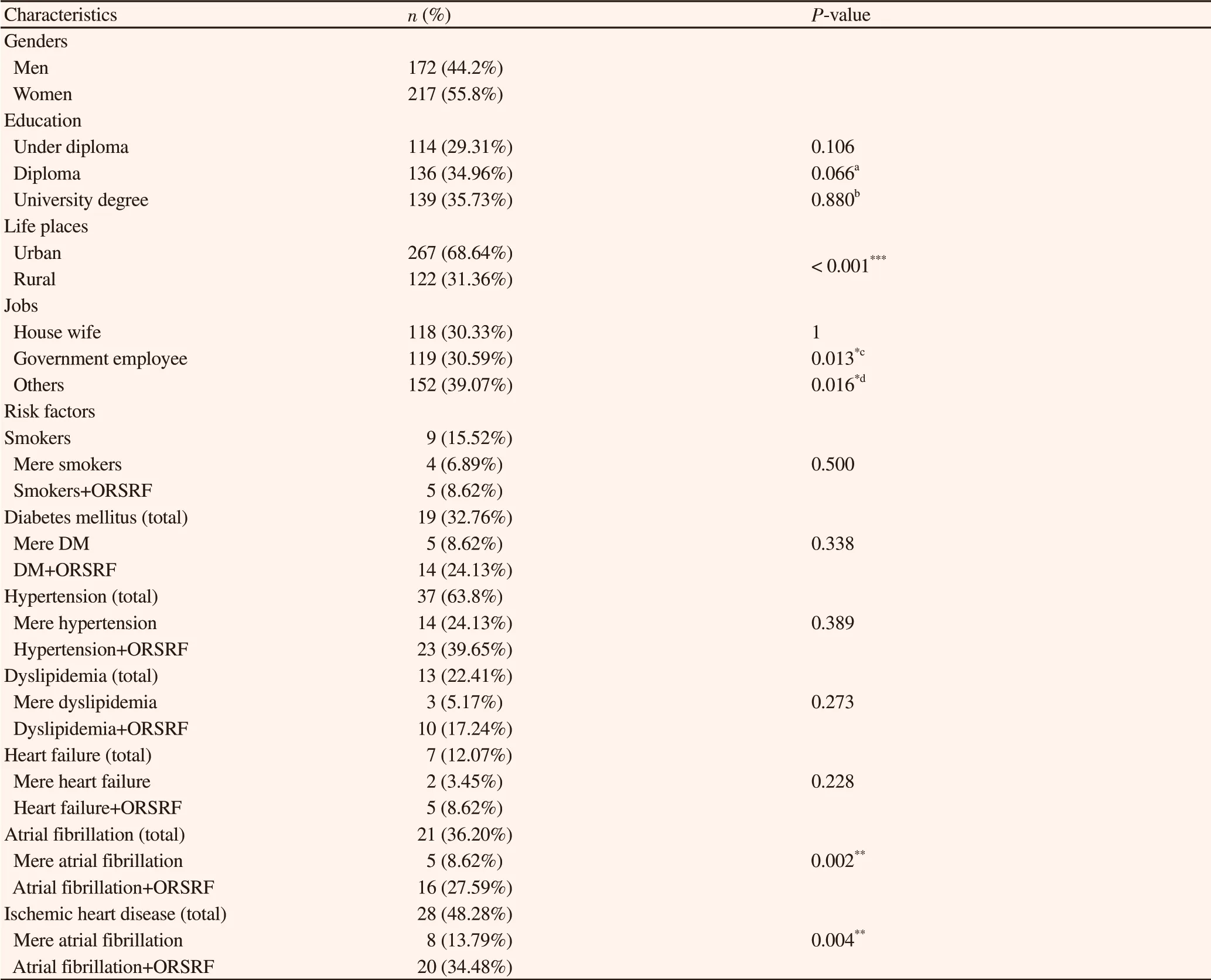
Table 1. Baseline characteristics of the patients (n=389).

Table 2. Treatments of recurrent stroke patients.
To explore the effect of IHD on the development of the recurrent ischemic stroke, the patients were divided into two groups: patients with and without IHD.
The mean age of patients with IHD was (68.42±6.43) years,significantly higher than those without IHD (64.65±8.47) years(P=0.008). The incidence rate of AF was significantly higher in patients with IHD (46.4%) than those without IHD (8.3%)(P=0.001). However, there was no significant difference between the two groups in terms of sex, hypertension, DM, dyslipidemia,and smoking. The mean number of risk factors in patients with IHD (2.06) was significantly higher than those without IHD (1.28)(P<0.001).
The treatments of recurrent stroke patients are presented in Table 2. Most patients had experienced the minor (198/391,50.63%) to moderate stroke (without recurrent stroke: 133/391,34.02%, with recurrent stroke: 51/391, 13.04%). Patients who had minor stroke and patients who had moderate stroke but no recurrent stroke returned home after recovery, change the lifestyle, and had medication therapy for other related disorders. Patients who had moderate stroke and recurrent stroke were transferred to the convalescence period hospital branch, long term nursing ward or geriatric care facilities. A total of 7 patients with recurrent stroke scoring 16-20 (Moderate to severe), and 2 patients scoring 21-32(Severe to death) died.
4. Discussion
Out of the 389 patients in the present study, 14.91% had experienced the recurrent ischemic stroke. Risk factors included hypertension (63.8%), IHD (48.28%), AF (36.2%), DM (32.76%),dyslipidemia (22.41%), cigarette smoking (15.52%) and HF(12.07%), respectively. Although the mean age, the incidence of DM, hypertension, HF, and cigarette smoking were higher in patients with recurrent ischemic stroke, the difference was not significant. The incidence rate of recurrent stroke was higher in men than women, but this difference was not significant either. The incidence of AF (OR=2.012, P<0.05) and IHD (OR=1.695, P<0.05)in patients with the recurrent ischemic stroke was significantly higher than those without recurrent stroke.
In a study conducted in Hamadan, the recurrence rate of the stroke was 17.35%, 92% of which was related to the ischemic stroke(15.96%), which is similar to our study[10]. Although hypertension,DM, heart diseases were reported to be the risk factors of e-stroke,Mazdeh, et al. didn't compare the incidence rate of the risk factors between patients with and without recurrent stroke. Also, they reported the brain hemorrhage as a part of the study.
Another study in Iran showed that hypertension, AF, and heart valve disease were reported to be important risk factors for stroke in patients with recurrent stroke[17], which is similar to the finding of our study. In a study conducted in Mashhad on the short-term stroke recurrence, the recurrence rate was 23.2% within 3 months.Also, DM was considered as an independent factor involved in the recurrent stroke[14]. Also, they reported transient ischemic attacks as the most important cause of recurrent stroke with the incidence rate of 76.91%. As regards to their results, subsequent stroke occurred more than ischemic stroke[14]. A study on patients with the recurrent ischemic stroke in Germany showed that the cardio-embolic cause was common cause of the ischemic stroke recurrence[18]. According to a study performed in the United States,AF and hypertension were the risk factors that independently lead to increased ischemic stroke recurrence rate[19]. The annual rate of ischemic stroke recurrence was 9.4%, according to a study in Spain, and age was considered as the only predictive factor for the stroke recurrence[20].
The AF complication was common and catastrophic for ischemic stroke, but it can be prevented. However, follow up for patients treated with vitamin K antagonists failed[21]. The results of a study in London also reported an annual ischemic stroke recurrence rate of 7.1%, and history of myocardial infarction and AF were the outcomes of the increased risk of recurrence[22].
A study conducted in Australia reported that the annual rate of stroke recurrence was 12% in one year. In this study, transient ischemic attack cases were included in the initial samples, leading to an increased recurrence rate. The strongest risk factors included diabetes, age, previous transient ischemic attack, AF, high alcohol consumption and hypertension[23]. A study in China reported that the annual rate of the stroke recurrence was 11.2% and the most common risk factors included AF, hypertension and cigarette smoking. It was also noted that recurrence rates in China were higher than the western countries and this increase was due to the weakness in risk factor control[24]. Also in another study in China,the recurrence rate was 14.7% and stroke-associated medical complications were considered to be the factor affecting the stroke recurrence because those with more complications followed the preventive treatments less regularly[25].
A study in Turkey showed that the annual ischemic stroke recurrence rate was 18%, and the most common risk factors included hypertension, diabetes, IHD, dyslipidemia, AF and cigarette smoking[26]. Cardiac factors, especially AF, have been considered as risk factors for ischemic stroke recurrence, even in some developed countries. But some differences were found in risk factors for the stroke recurrence, and could be attributed to differences in active follow-up and the treatment of diseases. For example, AF requires continued cooperation between the patient and the healthcare system.
In our study, assessment of the NIH Stroke Scale for all patients showed that most patients had experienced the minor to moderate stroke (Scores 1-4 and 5-15). Most patients without recurrent stroke, were recovered and transferred to home with medicines and lifestyle changes. On the other hand, most patients with recurrent stroke manifested more severe symptoms; so they were transferred to the convalescence period hospital branch, long term nursing ward or geriatric care facilities, and some of them died.
Moreover, in our study, the incidence of ischemic stroke was significantly higher among urban residents than rural residents.Such a difference may be affected by the difference in the stress levels or the rate of air pollution between two areas, which requires more precise study.
Our study shows that patients with a history of IHD and AF are at higher risk of the recurrent ischemic stroke. Therefore, the incidence of the recurrent ischemic stroke can be reduced by focusing on better treatment of AF, ischemic stroke and IHD, and active followup. Also, taking into account the common problems of warfarin prescribed in the treatment of IHD, the new oral anticoagulants(such as dabigatran and rivaroxaban) can be used[22], which cause fewer problems during the follow-up phase.
Conflict of interest statement
The authors report no conflict of interest.
Authors' contribution
S.R.: Design of the study, Clinical evaluation, supervised the project, final approval of the final version; H.K.: Clinical evaluation,data collection, writing and drafting the article, final approval of the final version; P.M.C.: Data analysis and interpretation, critical revision of the article, final approval of the final version.
杂志排行

Journal of Acute Disease的其它文章
- Epidemiological patterns of animal bites in Abadeh district of central Iran from 2012 to 2018: A cross-sectional study
- Epidemiological analysis of snakebite victims in southwestern Iran
- Diversity of Nocardia species isolated from transplantation and cancer centers of Tehran hospitals
- Prevalence of human herpesvirus 8 infection in patients undergoing hemodialysis using nested-PCR
- Preparedness for handling injuries by female primary school teachers: A cross-sectional survey in Southwestern Saudi Arabia
- Effect of rehabilitation education on pain, knee stiffness and performance difficulty in patients undergoing knee replacement surgery: A randomized clinical trial