适用于电网调控系统的细粒度多机冗余机制的设计与实现
2019-08-13高原张勇宁剑顾文杰陈鹏
高原 张勇 宁剑 顾文杰 陈鹏
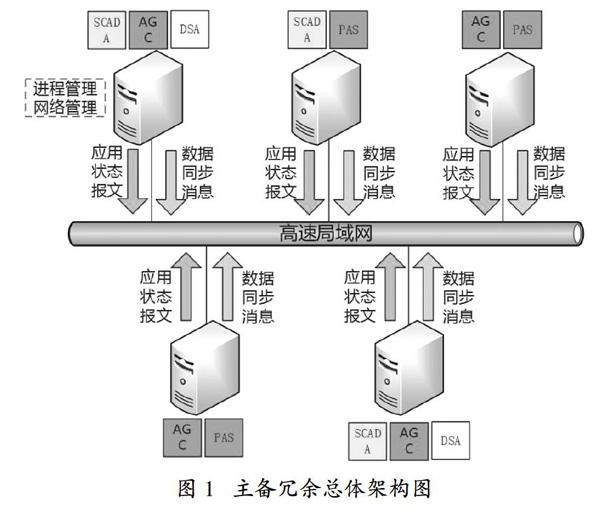
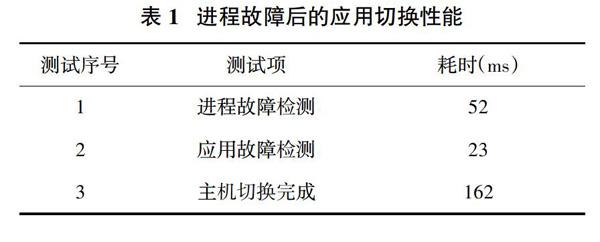
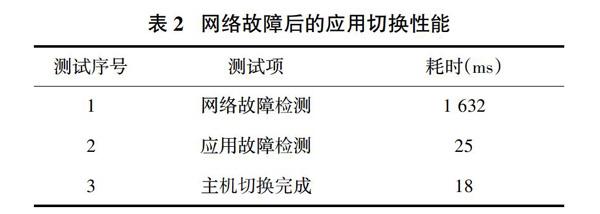
摘 要:针对传统的主备切换方法只能支持双机,仅支持心跳一种判断标准,需要人工介入进行切换,且存在单点故障等问题,提出了一种基于细粒度应用管理的多机主备冗余机制。该机制通过使用细粒度应用管理、多种条件的故障检测、分布式状态转换等技术,实现了多机主备冗余和资源充分利用,并且切换过程无需人工干预。最后通过多场景下的多次测试,验证了本机制在功能、性能方面的良好表现。多机冗余机制已在国调、华北、江苏等多个调控机构得到了应用。
关键词:主备;冗余;故障检测;心跳;切换
中图分类号:TP3-05 文献标识码:A
Design and Implementation of the Fine-grained Multi-machine
Redundancy Mechanism for Power Grid Dispatching and Control Systems
GAO Yuan1,2,3 ZHANG Yong4,NING Jian4,GU Wen-jie1,2,3,CHEN Peng1,2,3
(1.NARI Group Corporation(State Grid Electric Power Research Institute),Nanjing,Jiangsu 211106,China;
2.NARI Technology Development Co. Ltd. ,Nanjing,Jiangsu 211106,China;
3.State Key Laboratory of Smart Grid Protection and Control,Nanjing,Jiangsu 211106,China;
4. North China Branch of State Grid Corporation of China,Beijing 100053,China)
Abstract:The traditional active/standby switching methods can only support two machines,only support heartbeat for judging standard,manual intervention is required to perform the switch,have problems such as single point of failure and so on. A fine-grained multi-machine redundancy mechanism for power grid dispatching and control system is proposed. Through the use of fine grained application management technology,fault detection in a variety of conditions,distributed state transformation,this mechanism realizes the redundancy and resource utilization of multi-machine cluster. And there is no manual intervention during switch process. Finally,several experiments in different scenarios were conducted to verify the function and performance of the mechanism in this paper. The redundancy mechanism of this paper is adopted in the power grid dispatching and control system such as State Grid,North China,Jiangsu and so on.
Key words:active/standby;redundancy;fault detection;heartbeat;switch
隨着特高压、互联大电网的发展[1-3],全网数据规模的急剧增长,电网数据处理相关的应用也越来越丰富。智能电网调控系统向着集群化和服务化方向发展[4-5]。传统的单机运行所有应用的方式不再满足要求。同时电网调控系统的实时特性也决定了对安全机制的高要求[6]。因此迫切需要一种适应多机环境,切换快速的高可用冗余管理机制。
目前高可用管理机制的研究一般限于两个节点的一主一备方式,并且有诸多局限性。如文献[7中主备机配置相同的IP,采用心跳互相监测,此方案下备机平时不工作,造成了一半的资源浪费,且只支持双机互备。
文献[8]中仅有主机对外提供服务,备机尽管不服务但CPU也在全速运转,因为需从网络收取同样数量的报文。切换时需要人工操作控制台。……