改性玉米芯对Zn2+和Cu2+的吸附性能研究
2019-06-24王光荣高世霞于晓锋王珂巩苗苗
王光荣 高世霞 于晓锋 王珂 巩苗苗
中图分类号:O69;TS210.1文献标识码:ADOI:10.3969/j.issn.2096-1553.2019.02.008
文章编号:2096-1553(2019)02-0056-07
关键词:玉米芯;化学改性;重金属离子;吸附性能
Key words:corn cob;chemical modification;heavy metal ions;adsorption property
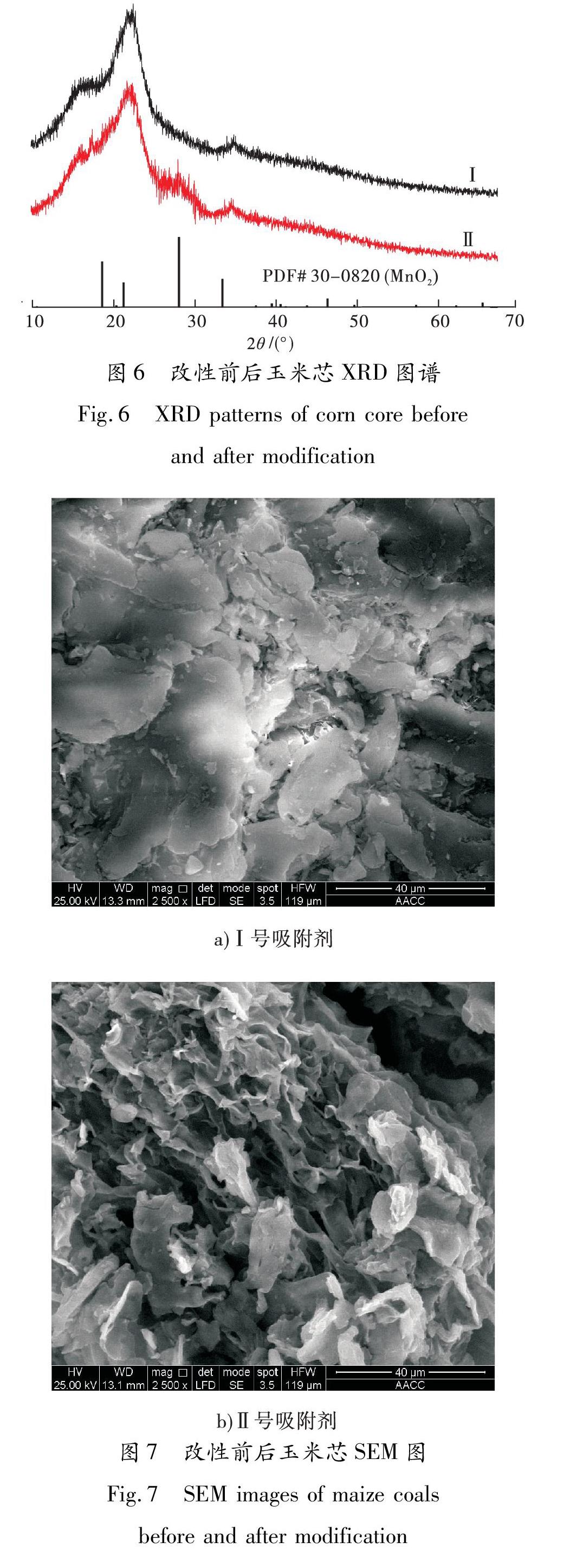
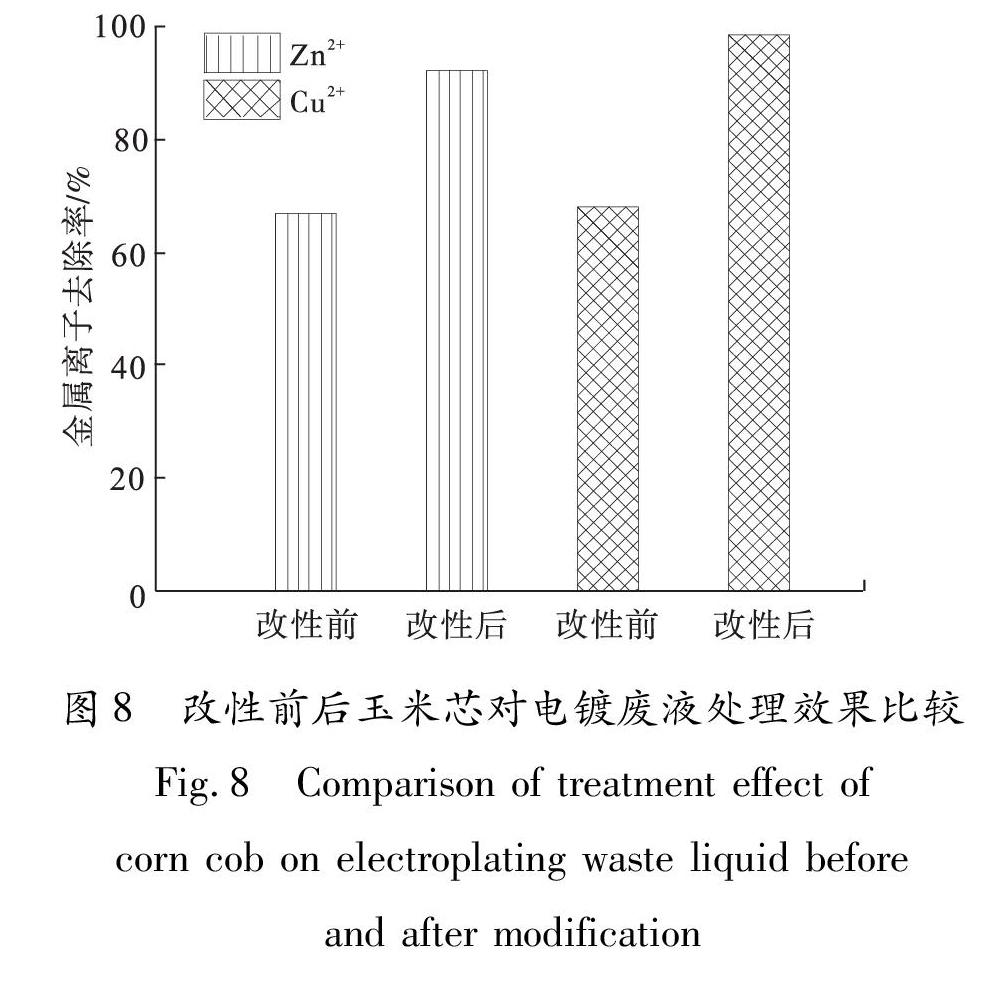
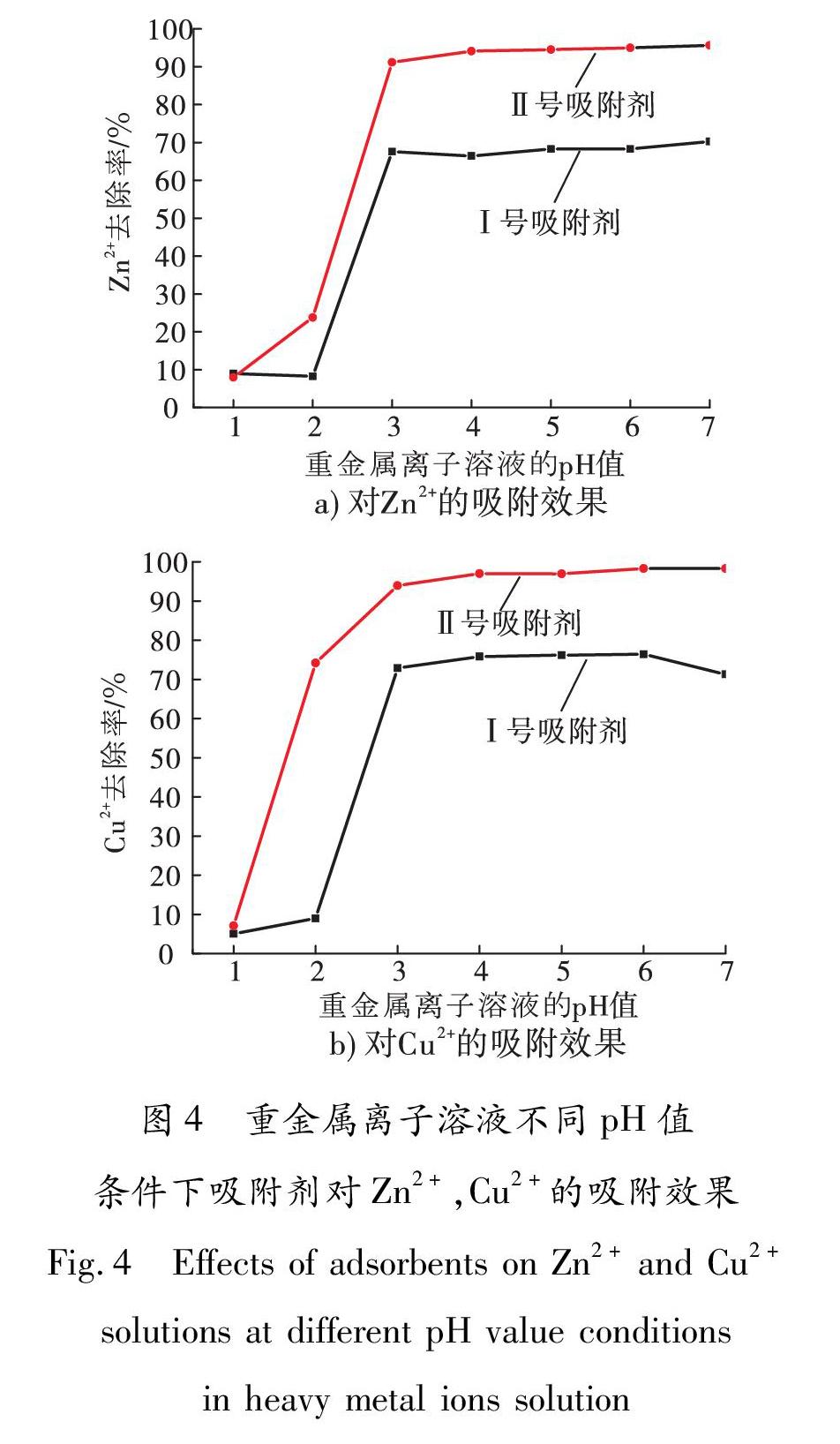
摘要:以玉米芯为原料,采用KMnO4对玉米芯进行化学改性,考察改性前后玉米芯用量、溶液pH值、温度和吸附时间等因素对Zn2+和Cu2+重金属离子吸附效果的影响,并对其结构和形貌进行表征.结果表明:对于100 mL质量浓度为20 mg/L的金属离子溶液,吸附剂适宜用量3.0 g,吸附时间1 h,温度25 ℃,pH值控制在3~7时,改性玉米芯对Zn2+,Cu2+具有较强的吸附能力;改性玉米芯 —OH 基团数量增加,表面有新生态MnO2形成,改性玉米芯产生许多新的孔洞,比表面积增大,因此改性可显著提高玉米芯的吸附能力.
Abstract:Corn cob was used as raw material to chemically modify corn cob with KMnO4. The effects of corn cob dosage, pH value, temperature and adsorption time on the adsorption of Zn2+ and Cu2+ heavy metal ions were investigated. The structure and morphology were characterized. The results showed that for 100 mL of metal ion solution with a concentration of 20 mg/L, the adsorbent was suitable for 3.0 g, adsorption time was 1 h, temperature was 25 ℃, pH value controlled in 3~7, the modified corn cob had strong adsorption capacity for Zn2+ and Cu2+; the number of modified corn cob —OH groups increased, the surface of new ecological MnO2 formed, the modified corn cob produced many new pores, and the specific surface area increased, indicating that the modification could significantly improve the adsorption capacity of the corn cob.
0 引言
電镀业已成为当今世界三大污染工业之一,电镀废水成分复杂,除含氰和酸碱外,还含有铬、镍、镉、铜、锌、金和银等重金属污染物[1-3],对人类健康及生态环境造成严重的危害.电镀行业每年排放的废水占工业废水排放总量的10%,废水治理难度大,治理成本高.因此,开发高效、廉价、环保的新型吸附材料,已成为含重金属废水处理的一个方向.
玉米在我国种植面积大、分布广,年产量高达1012 kg,位居世界第二位[4].玉米芯作为玉米生产加工过程中的废弃物,多数被焚烧或丢弃,这不仅是一种资源浪费,而且造成环境污染.付丽丽等[5]研究发现,玉米芯的化学结构中含有能够进行离子交换或化学吸附作用的活泼化学基团,可以不同程度地应用于废水或废气的净化领域.近年来,为了提高吸附剂……