56例胸外科糖尿病患者手术后医院感染发生原因及护理体会
2019-04-23唐凤蕾尤婉婷
唐凤蕾 尤婉婷
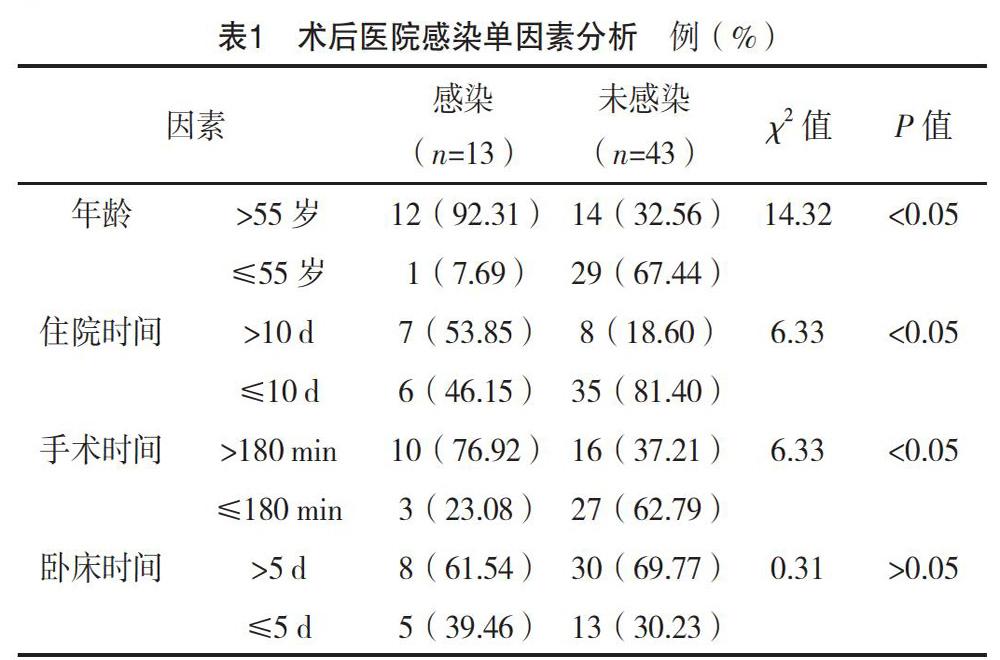
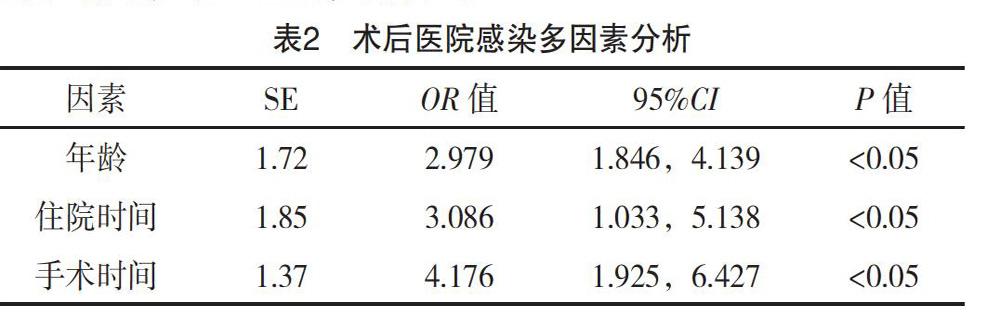
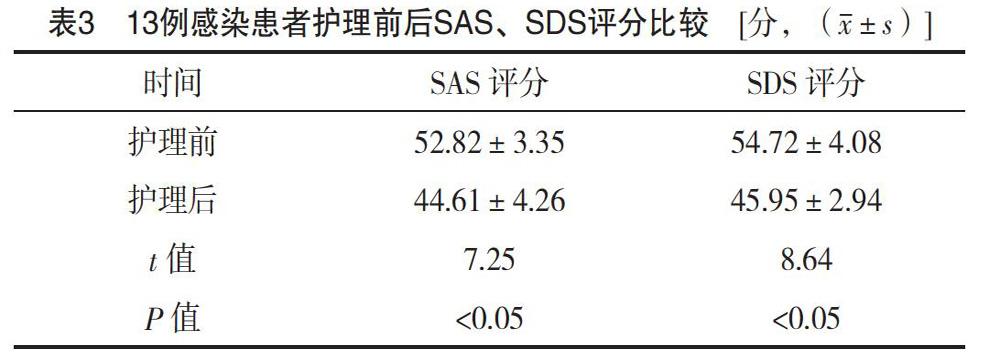
【摘要】 目的:分析胸外科糖尿病患者术后医院感染发生原因及护理方法。方法:选取笔者所在医院2017年1月-2018年1月胸外科收治的56例糖尿病患者,分析术后医院感染原因并制定综合护理干预措施,评价护理措施的应用效果。结果:56例患者术后发生医院感染13例,占总例数的23.21%(13/56);导致患者术后出现医院感染的原因主要包括年龄、手术时间、住院时间;护理后,感染患者SAS、SDS评分及空腹血糖水平均较护理前降低,差异均有统计学意义(P<0.05)。结论:胸外科糖尿病患者术后存在大量引发医院感染的因素,因此在临床干预中必须予以重视。针对感染发生的原因采取针对性的护理干预手段,可最大程度改善患者预后。
【关键词】 胸外科糖尿病患者 术后 医院感染 护理
[Abstract] Objective: To analyze the causes of nosocomial infection after surgery and nursing methods in patients with diabetes mellitus in thoracic surgery. Method: A total of 56 patients with diabetes mellitus admitted to our hospital from January 2017 to January 2018 in thoracic surgery were selected. The causes of nosocomial infection after surgery were analyzed, and comprehensive nursing intervention measures were formulated to evaluate the effect of nursing measures. Result: There were 13 cases of nosocomial infection after surgery in 56 cases, accounting for 23.21% of the total cases (13/56). The causes of the nosocomial infection after surgery of the patients were mainly age, duration of surgery, hospital stay. After nursing, SAS and SDS scores and fasting blood glucose levels of infected patients were lower than those before nursing, and the differences were statistically significant (P<0.05). Conclusion: There are a lot of factors that easily lead to nosocomial infection after surgery in patients with diabetes mellitus in thoracic surgery, so we must pay attention to them in clinical intervention, and take targeted nursing intervention measures for the causes of infection, so as to improve the prognosis of patients to the greatest extent.
糖尿病作为目前临床中的常见慢性病,可对患者脏器功能造成严重损伤,最终降低机体免疫力。在胸外科患者中,糖尿病患者在手术治疗过程中的医院感染发生率较高,对临床治疗工作的开展产生不利影响。因此,在临床干预阶段,需要对胸外科糖尿病患者术后医院感染的危险因素进行识别,并采取针对性的护理干预手段,才能切实改善患者预后,达到预期目的。
1 资料与方法
1.1 一般资料
选取笔者所在医院2017年1月-2018年1月胸外科收治的56例糖尿病患者。纳入标准:(1)符合糖尿病诊断标准;(2)符合手术指征。排除标准:(1)伴精神障碍;(2)依从性差。根据术后医院感染情况分为感染患者与未感染患者。感染患者13例,男8例,女5例;年龄55~69岁,平均(63.2±4.6)岁。未感染患者43例,男29例,女14例;年龄46~56岁,平均年龄(51.6±4.9)岁。患者对本研究知情同意,且签署知情同意书。
1.2 方法
1.2.1 医院感染原因分析 详细收集患者临床资料,对关键数据进行调查,包括疾病诊断、病程记录、医嘱单等,对各种引发医院感染的因素进行识别。……