基于贝叶斯模型组合的随机森林预测方法
2019-04-13董娜常建芳吴爱国
董娜 常建芳 吴爱国
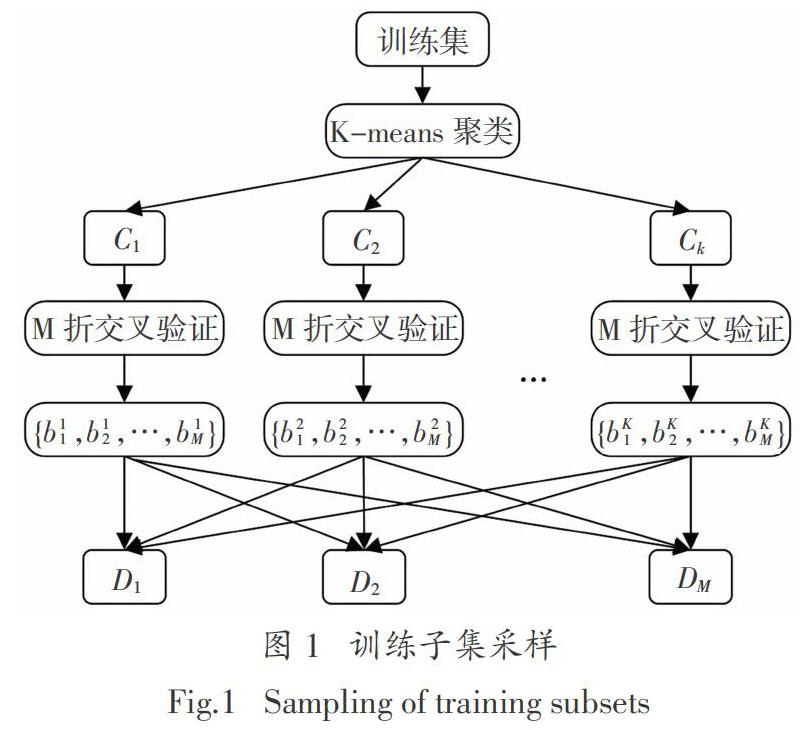
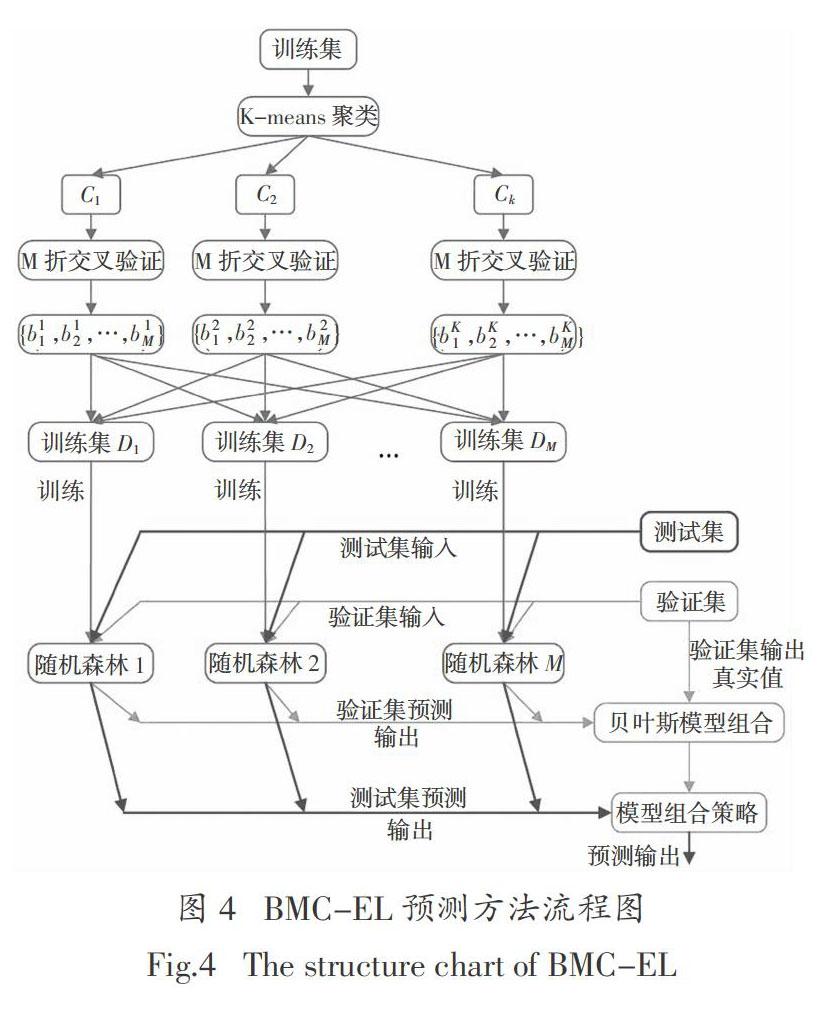
摘 要:为了能够精准可靠地估计太阳能辐照度,本文提出一种基于贝叶斯模型组合的随机森林算法用于太阳能辐照度预测. 首先,引入K-means聚类和K折交叉验证将气象数据训练集生成多个训练子集,以增加训练子集的多样性并保证均匀采样. 其次,将随机森林作为基学习器建立集成学习预测模型,导入训练子集并训练各个随机森林. 之后,依据各个随机森林在验证集上的预测性能,采用贝叶斯模型组合算法制定组合策略. 个体随机森林在测试集上的预测值经过模型组合策略得到最终输出. 最后,基于气象实测数据建立仿真实验,并引入其他四种预测方法进行对比仿真研究,通过实验结果验证了文中所提出预测方法在太阳能辐照度预测问题中的准确性和可靠性.
关键词:K均值聚类;交叉验证;随机森林;贝叶斯模型组合;太阳能辐照度
中图分类号:TP181 文献标志码:A
Random Forest Prediction Method Based on Bayesian Model Combination
DONG Na,CHANG Jianfang,WU Aiguo
(School of Electrical and Information Engineering,Tianjin University,Tianjin 300072,China)
Abstract: To accurately and reliably estimate the solar irradiance, a random forest algorithm was proposed based on the Bayesian model combination for solar irradiance prediction. Firstly, the K-means clustering and K-fold cross validation were introduced to generate multiple training subsets so as to increase the diversity of training subsets and to ensure uniform sampling. Secondly, the random forests were defined as base learners to establish an ensemble learning prediction model,with each training subset being used to train the corresponding individual random forest. Then, according to the prediction performance of each individual random forest on the verification set, the Bayesian model combination algorithm was applied to formulate the combination strategy. The prediction values of individual random forest on the test set were fused to the final output through the model combination strategy. Finally, the proposed method was applied to solve the solar irradiance prediction problem. Simulation experiments were carried out by measured meteorological data. Other four kinds of prediction methods were also introduced to establish the contrast experiments,and the accuracy and reliability of the proposed method in the solar irradiance prediction were verified by comparison results.
Key words: K-means clustering;cross validation;random forest;Bayesian model combination;solar irradiance
太陽能在光热领域和光电领域被广泛应用并被视为最佳代替能源. 季节、气候、云层密度等气候因素引起太阳能辐射量的不确定性制约了其应用领域的发展. 高精度的预测方法一直是太阳能预测研究的热点[1-2].
当前,太阳能辐照度的预测研究主要是使用支持向量机[3-6] (SVM)和人工神经网络[7-9](ANN)算法. 这类学习算法难于平衡训练集的训练误差和测试集的泛化误差之间的关系[10],在训练过程中容易出现过拟合或欠拟合的现象. 然而,在太阳能供热系统……