被动语态讲解
2018-11-22朱晓虹
朱晓虹
英语中的及物动词有两种语态:主动语态和被动语态。主动语态表示主语是动作的执行者,被动语态表示主语是动作的承受者。如:
We should plant many trees on the mountains.(主动)
我们应该在山上种许多树.
Many trees should be planted on the mountains.(被动)
应该在山上种许多树。
汉语中,我们常用“被”“给”“由”“受”等词表示被动,而英语中的被动语态是怎样构成的呢?我们一起往下看。
被动语态的构成
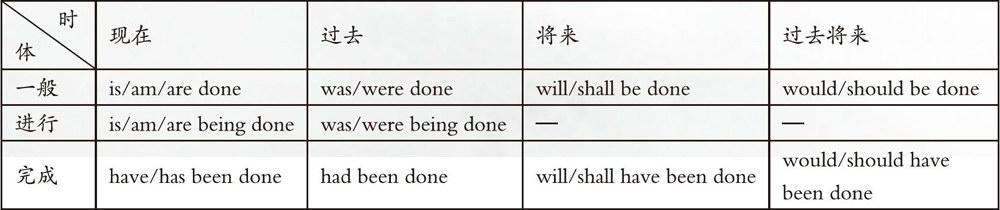
总的来说,被动语态的构成为:助动词be+及物动词的过去分词。被动语态中,助动词be随主语人称、数、时态和语气的不同而变化,具体时态形式见下表:被动语态的用法
1.当不知道或没有必要指出动作的执行者时,常用被动语态,此时往往不用by短语。
This statue was created 500 years ago.
这个雕塑创作于500年前。
2.突出或强调动作的承受者或事件本身,如果需要说出动作的执行者,使用by短语。
All the employees except the manager are required to work online at home.
除了经理外所有的员工都被要求在家网上办公。
These songs were composed by Mozart.
这些曲子是由莫扎特创作的。
3.当汉语句子的主语既不是动作的执行者,也不是动作的承受者时,这时常用in+名词做状语,而不用by短语。
More than 20, 000 cars will be produced each year in this factory.
每年,超过20 000辆汽车将在这个工厂生产。
4.“get+过去分词”可表示被动,此结构比较口语化。
Some glasses got broken when we were moving.
我们搬家的时候有些玻璃杯被打碎了。
主动形式表示被动意义
1.“系动词look, sound, feel, smell, taste, appear, seem, go, prove, turn, stay, become, fall, get, grow, keep+形容词/名词”构成系表结构。
-Do you like the material?
-Yes, it feels very soft.
——你喜欢这种材料吗?
——是的,它摸起来很柔软。
2.表示主语的某种属性特征的不及物动词,
如 read,write, sell, wash, clean,wear, open, cook, lock, shut等,可用主动形式表示被动含义。
No matter how hard he tried, the door wouldn't open.
不管他怎么努力开门,门就是打不开。
Books of this kind sell well.
这种书很畅销。
3.动词want, need, require作“需要”讲时,后接不定式的被动形式或动名词的主动形式意义相同。……