The fascinating origins of 11 beautiful flower names
2018-09-07ByKellyClarkson
By Kelly Clarkson
11种美丽鲜花名字的起源,大多你都不知道吧。
Here are the origins behind the names of 11 of the loveliest flowers.
以下是11种美丽鲜花名字的起源。
1.PEONY牡丹
The peony,a word found in Old English,was believed to have healing properties in early medicine,which is why its name might honor Paion,the physician of the gods in Greek mythology.

牡丹的英文名peony起源于古英语,在早期医学中,人们认为牡丹具有疗伤功效,因此,可能根据希腊神话中众神的医生Paion,将其命名为peony。
2.RHODODENDRON杜鹃

Like many other flower names,rhododendron enters the English record in the mid-1500s.The name literally means “rose tree” in Greek(rhodon means and is related to the word “rose”).It’s an apt name,for this shrub or small tree blooms with brilliant,rose-colored flowers.
和其他众多鲜花名一样,rhododendron(杜鹃)是16世纪中叶传入英语中的。rhododendron在希腊语中的意思是“玫瑰树”(rhodon意思和玫瑰相关)。这个名字非常贴切,因为这种像小树一样的灌木植物能开出鲜艳的玫瑰色花朵。
3.AMARYLLIS朱顶红

In the pastoral poems of Theocritus,Ovid,and Virgil,Amaryllis was a common name for a beautiful country girl.Carl Linnaeus,the father of modern taxonomy,adopted Amaryllis for this flower family in the late 1700s.The name Amaryllis may derive from a Greek verb meaning to “sparkle” or “shine”,fitting for the rich red veins that pop out from the long white petals of these flowers.
在忒俄克里托斯、奥维德和维吉尔的田园诗歌中,Amaryllis是美丽乡村女孩的常见名字。18世纪晚期,现代分类学之父卡尔·林奈为这种花取名Amaryllis。Amaryllis这个名字可能源于一个希腊动词,意为“闪耀”或“发光”,与这些长长的白色花瓣中绽放出的丰润的红色纹理的花很相配。
4.CARNATION康乃馨

There are two etymologies for carnation,a term found in English in the early 1500s.According to one,carnation may be a corruption of coronation,perhaps because the flower’s toothed petals resembled crowns or because the flowers were worn,crown-like,as garlands.The second etymology comes from the flower’s original color,and roots carnation in the Middle French carnation, “pink complexion,” from the Latin root caro, “flesh,” source of less delicate words like carnal and carnage.
康乃馨在16世纪初期出现在英语中,关于carnation的词源有两种说法。其中一种说法认为,carnation可能是coronation(加冕礼)的变体,可能是因为康乃馨的锯齿状花瓣好像皇冠,又或者是因为人们把这种像皇冠的花当花环佩戴。第二种说法与康乃馨的原色有关,认为carnation这个名字来自中古法语carnation(粉红的气色),这个单词的拉丁语词根是caro(肉欲),与carnal(肉欲的)、carnage(大屠杀)等不太好听的单词词根相同。
5.DAISY雏菊
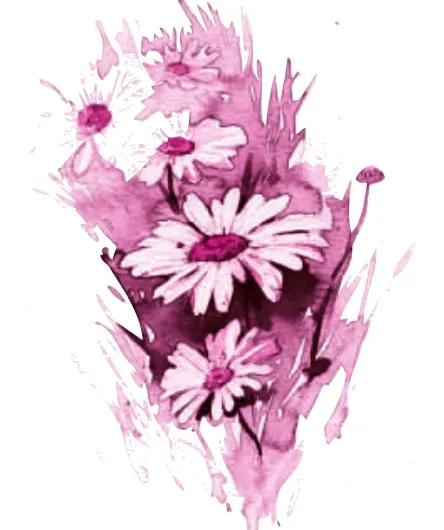
The word daisy has deep roots in the English language.As attested to in some of English’s earliest records,daisy comes from the Old English phrase dgesege:the“day’s eye”,as the flower’s white petals close at dusk and open at dawn,like the eye of the day as it sleeps and wakes.
Daisy这个词在英语中有着很深的渊源。根据一些英语相关的早期记载,daisy来自于古英语短语dgesege,意思是“日之眼”。白色的雏菊黎明花开,黄昏花谢,就像我们的眼睛一样每天睡去醒来。
6.FORGET-ME-NOT勿忘我

The name forget-me-not was a direct translation from the Old French “ne m’oubliez mye” (“do not forget me”).Renaissance romantics believed that,if they wore these soft-colored flowers,they would never be forgotten by their lovers,making the flower a symbol of fidelity and everlasting love.Other languages also translated “ne m’oubliez mye”:For this flower,German has Vergissmeinnicht,Swedish has forgatmigej,and Czech has nezabudka.
“勿忘我”这个名字是来自古老的法语“不要忘记我”的直接翻译。……