昆山市中医医院门诊中药房智能调配系统与传统调配模式效果比较
2018-06-20张雷王芳袁娟娟
张雷 王芳 袁娟娟
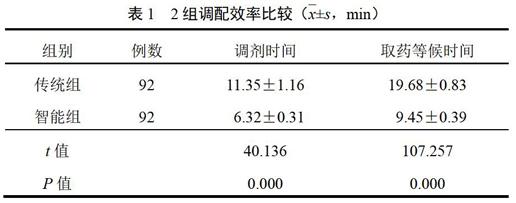
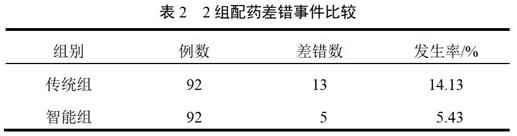
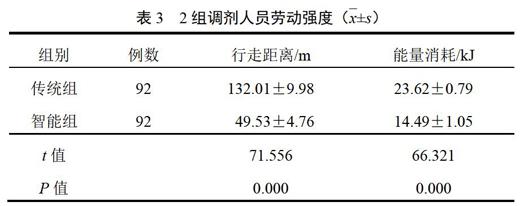
摘要:目的 了解昆山市中医院(以下简称“本院”)门诊中药房调剂新模式的应用效果。方法 以在本院门诊中药房取药的184例患者为研究对象,随机等分为传统组与智能组。采用SPSS24.0统计软件,对2组处方调配在工作效率、差错发生率与劳动强度方面的差异进行比较分析。结果 智能组工作效率显著优于传统组(P<0.01),而差错发生率及劳动强度均显著低于传统组,组间差异具有统计学意义(P<0.05)。结论 本院门诊中药房应用智能调配系统能够提高工作效率,降低劳动强度和差错事件的发生,有助于提高调剂工作质量。
关键词:昆山市中医医院;门诊中药房;调剂;智能中药调配系统;医院药学
DOI:10.3969/j.issn.1005-5304.2018.05.031
中图分类号:R288 文献标识码:A 文章编号:1005-5304(2018)05-0124-03
Comparison of Effects of Intelligent Deployment System and Traditional Deployment Pattern in Outpatient Service of Kunshan TCM Hospital
ZHANG Lei, WANG Fang, YUAN Juan-juan
Pharmacy Department, Kunshan TCM Hospital, Kunshan 215300, China
Abstract: Objective To study the application effects of new model of deployment in the TCM outpatient pharmacy of Kunshan TCM Hospital (hereinafter referred to as “our hospital”). Methods Totally 184 patients in the TCM pharmacy for dispensing medicine were taken as the research objects, and divided into traditional group and intelligent group randomly. The difference of working efficiency, the number of error events and labour intensity were collected for comparative analysis by adopting SPSS24.0 statistical software. Results Compared with the traditional group, intelligent group was better in work efficiency significantly (P<0.01), but error incident cases and labour intensity were obviously lower than those of the traditional group, with statistical significance (P<0.05). Conclusion The intelligent deployment system applied in the TCM outpatient pharmacy of our hospital can improve the work efficiency, reduce the labor intensity and error events, and then improve the quality of dispensing work.
Keywords: Kunshan TCM Hospital; TCM outpatient pharmacy; deployment; intelligent deployment system of TCM; hospital pharmacy
門诊中药房作为实施用药治疗工作的重要窗口,中药调剂的质量高低是服务过程中的关键性环节,是影响患者满意度的关键性因素。提高工作效率、缩短患者候药时间、减少因忙碌而造成的调配责任事故,是中药房窗口优化服务环境/提升服务质量的目标。昆山市中医医院(以下简称“本院”)自2014年12月起将智能中药调配系统用于门诊配方,成效显著。笔者就本院2016年8-10月门诊中药房2种调剂模式的成效进行调研,兹介绍如下。
1 资料与方法
1.1 一般资料
择取2016年8-10月本院门诊中药房接待的取药患者184例作为研究对象,按照患者门诊取药时间先后顺序随机等分为智能组和传统组。传统组男性48例,女性44例,年龄22~67岁,平均年龄(45.3±6.1)岁;智能组男性45例,女性47例,年龄25~64岁,平均年龄(43.8±7.3)岁。智能组和传统组患者性别、年龄等一般资料比较差异无统计学意义(P>0.05),具有可比性。
1.2 调剂模式
传统组患者行常规模式(手工调配),智能组患者行新模式(智能调配)。智能中药调配系统包括机械系统和控制系统两部分,其中机械系统由储备机组和固定仓组成,控制系统由主控计算机、备货计算机和窗口计算机组成;……