客车发动机舱热管理系统的数值仿真与实验验证
2018-01-13赵强林建平闵峻英胡巧声宋伟
赵强++林建平++闵峻英++胡巧声++宋伟
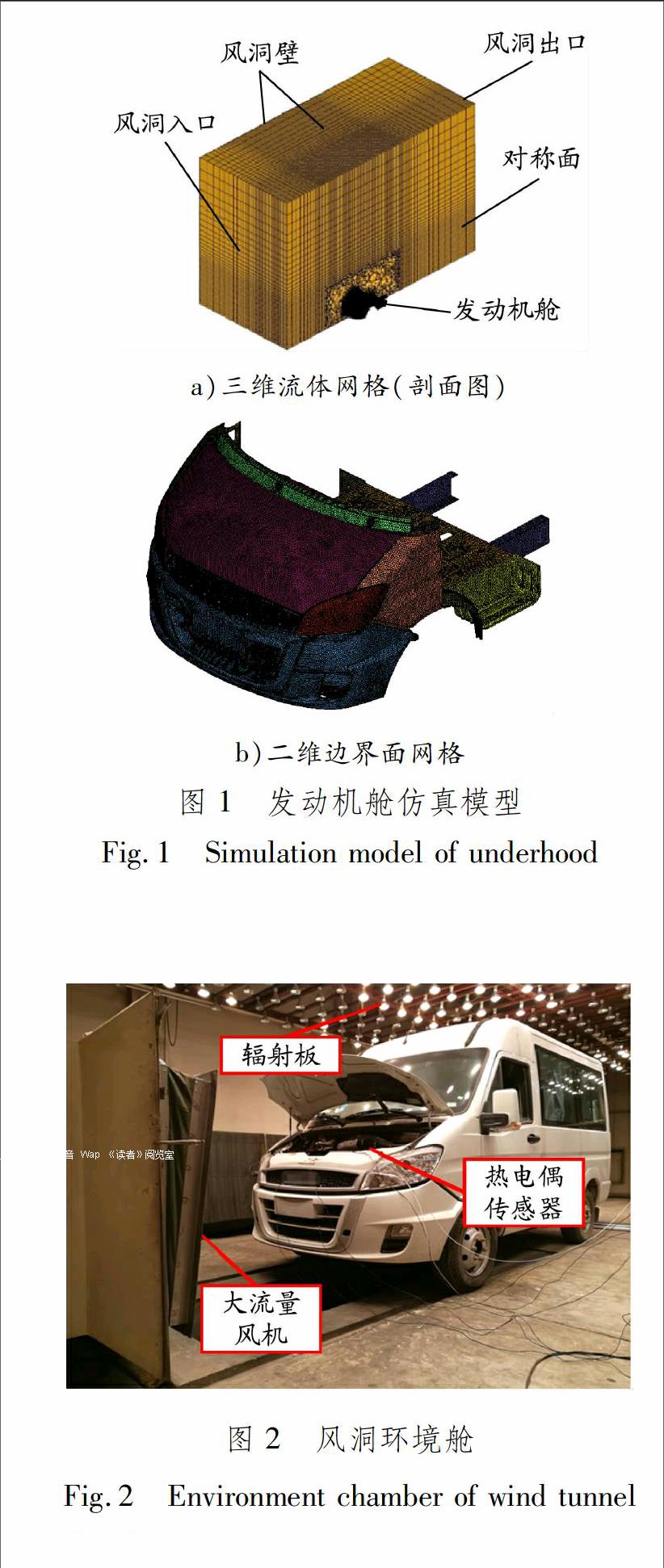
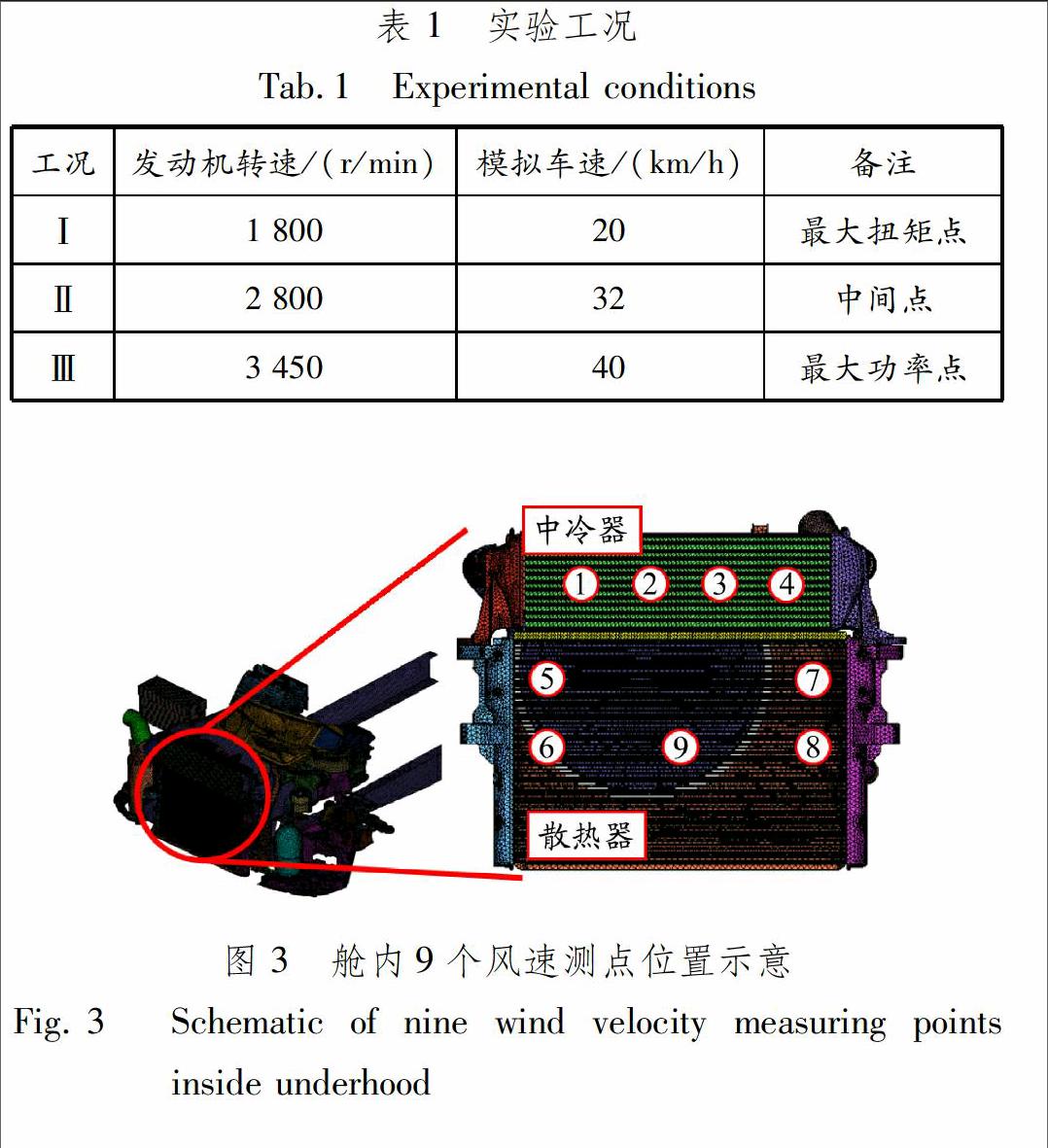
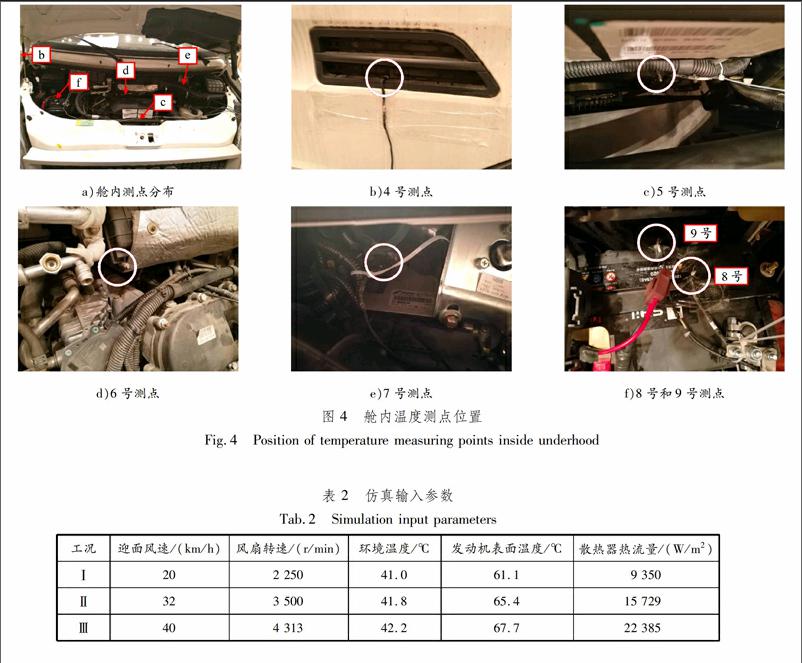
摘要: 依据整车环境模拟实验,选取最大扭矩点、中间点和最大功率点(对应的发动机转速分别为1 800,2 800和3 450 r/min)作为发动机舱热管理系统分析的3个工况,应用FLUENT建立发动机舱热管理系统的三维仿真模型,根据实验边界条件,进行风速场和温度场的耦合仿真。采用稳态计算方法,获得发动机舱内外稳定的风速场和温度场分布。对比分析发现仿真结果与实验结果的均方根相对误差在合理范围内,从而验证该发动机舱热管理系统仿真模型的有效性。
关键词: 发动机舱; 热管理系统; 计算流体力学; 环境模拟实验; FLUENT
中图分类号: U467.13文献标志码: B
收稿日期: 2017[KG*9〗07[KG*9〗02修回日期: 2017[KG*9〗08[KG*9〗27
作者简介: 赵强(1993—),男,安徽明光人,硕士研究生,研究方向为汽车轻量化,(Email)qiangzhao1993@163.com;
林建平(1958—),男,江西南昌人,教授,博导,博士,研究方向为汽车轻量化、先进材料成形和连接技术,
(Email)jplin58@tongji.edu.cn
Numerical simulation and experimental verification on
bus underhood thermal management system
ZHAO Qiang1a,1b, LIN Jianping1a,1b, MIN Junying1a,1b,1c,
HU Qiaosheng2, SONG Wei3
(1. a. Shanghai Key Lab of Vehicle Aerodynamics and Vehicle Thermal Management Systems; b. School of
Mechanical Engineering; c. Institute for Advanced Study, Tongji University, Shanghai 200092, China; 2. SAIC
Volkswagen Co., Ltd., Shanghai 201805, China; 5. NAVECO Co., Ltd., Nanjing 210028, China)
Abstract: According to the vehicle environment simulation experiment, the maximum torque point, the interpolation point, and the maximum power point (the corresponding engine speeds are 1 800, 2 800 and 3 450 r/min) are selected as three working conditions for analyzing the underhood thermal management system. The 3D simulation model of underhood thermal management system is established by FLUENT. Based on the experimental boundary conditions, the coupling simulation of wind speed field and temperature field is carried out. The steady state calculation method is used to obtain the wind speed and temperature field distribution inside and outside the underhood. The comparative analysis shows that the rootmeansquare relative error between the simulation values and the experimental values is within a reasonable range, which can verify the effectiveness of this simulation model of underhood thermal management system.
Key words: underhood; thermal management system; computational fluid dynamics; environment simulation experiment; FLUENT
0引言
隨着汽车保有量的增加,排放法规日趋严格,而人们对汽车的动力性、燃油经济性和安全性等要求越来越高。客车发动机功率不断提升,发动机舱内的热量也显著增加[1],同时为满足客车轻量化的要求,前舱设计越来越紧凑,舱内空气流动状态变得更复杂,发动机散热设计更加困难[2]。发动机散热设计不好会导致发动机舱温度偏高、发动机过热、充气效率下降、燃烧不正常、润滑油性能变差和供油系统气阻等现象;同时,舱内局部温度过高还会导致橡胶件或电线软化,减少电子元器件的使用寿命,极端情况下甚至引起自燃,严重影响车辆的安全。……
