基于全球流动性背景下的新兴资本市场收益研究
2017-10-31张一
张一
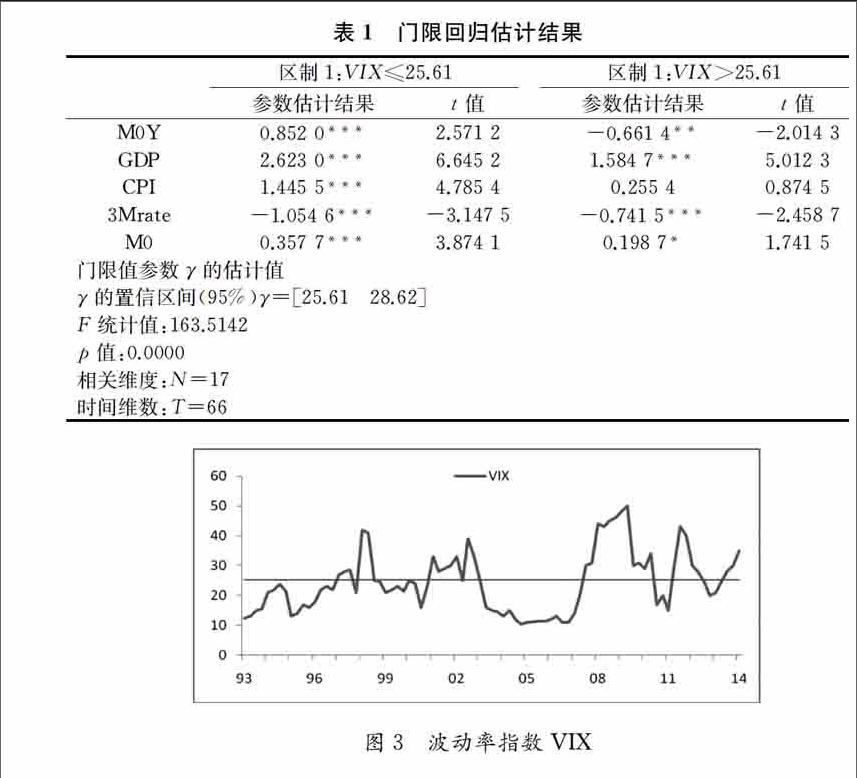
摘要随着在全球金融一体化程度不断加深,全球流动性状况对于新兴市场资产价格的影响备受关注.构建了反应主要发达国家与新兴市场国家对全球货币数量影响的广义流动性指标,并以波动率指数作为反映市场情绪的变量将市场分为平稳期和压力期.通过建立非线性面板门限回归模型考察了全球流动性状况对于金砖五国资本市场的非线性影响,结果表明在金融市场繁荣期,流动性过剩对于资产价格起到了明显的正向带动作用;而在市场衰退期间,流动性的释放并没有对资产价格的提升产生显著的影响.
关键词金融工程;波动率指数;面板门限回归模型;全球流动性;新兴市场
中图分类号F810.30文献标识码A
Research on the Returns of the Emerging Capital Market based on the Background of Global Excess Liquidity
Yi ZHANG
(School of Management Science and Engineering,Central University of Finance and Economics,beijing ,100081,China)
AbstractWith the deepening of the degree of global financial integration,the effect of global liquidity surplus on the asset prices of emerging markets has attracted more attention.In this paper,we construct the generalized liquidity index of the main developed countries and emerging market countries on the global monetary environment,and the volatility index is used as a variable to reflect the market sentiment,which can be divided into stationary stage and pressure stage.Using a panel threshold model,we find that in a period of global investors high risk appetites,global excess liquidity is a positive determinant of asset prices in emerging market countries.However,the link between the two variables changes when global risk aversion strengthens.
Key wordsfinancial engineering;volatility index;panel threshold model;global liquidity;emerging markets
1引言
2008年全球金融海嘯的爆发对世界经济和金融格局产生了深远的影响,全球经济至今为止仍处在后危机时代的背景下.为了应对此次危机,世界各国央行均以凯恩斯主义经济学为理论依据,采取极端宽松的货币政策向市场注入流动性,以期能阻止金融机构的持续恶化以及实体经济的衰退.这些货币政策就包括大幅降低基准利率,定向收购金融机构有毒资产并向银行注资,增加信贷,增加基础设施建设以及量化宽松等非常规货币政策工具.政府的积极干预取得了一定的效果但也同时令人忧虑,一方面,实体经济的复苏之路并不如想象中的顺利,各个主要经济体的经济增长速度仍远低于危机爆发前;……