画面的空间与观看
——以丁托列托作品《耶稣为门徒洗脚》为例
2017-09-13岳中生
禾 苗 文 岳中生 译
丁托列托(1518—1594)原名为Jacopo Robusti,是文艺复兴晚期威尼斯画派的重要画家和代表画家之一。这位几乎终生驻守在威尼斯的“小染色匠”(他的意大利名字“Tintoretto”之原意,因为其父亲的职业是染色匠),有着“米开朗琪罗的素描和提香的色彩”①的雄心和才能,在五十多年漫长的创作生涯中,完成了五百多幅作品。
在他众多的作品中,有一类作品具有这样的特点:1.为特定的公共场所订制而创作;2.构图呈非中心对称结构;3.为大画幅②的宗教题材作品。
Tintoretto (1518-1594), originally known as Jacopo Robusti, was one of the greatest painters of the Venice School in the late Renaissance.The“little dyer” (which “Tintoretto” suggests in the Italian language, because his father was a dyer), who spent almost his entire life in Venice, had ambition and potential to produce “Michelangelo’s drawing and Titian’s color.”1And he produced more than 500 works through five decades of creation.
Among his vast oeuvre was such a type of works which were: 1)commissioned for particular public spaces; 2) non-centrosymmetric in composition; and 3) large-sized2and religion-themed.
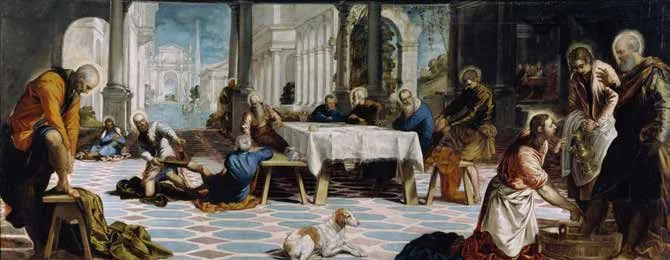
图1 丁托列托 耶稣为门徒洗脚 布面油画 228×533cm 1548年 马德里普拉多博物馆Fig.1 Christ Washing the Feet of His Disciples, Tintoretto, Oil on Canvas, 228×533cm, 1548, Prado National Museum,Madrid
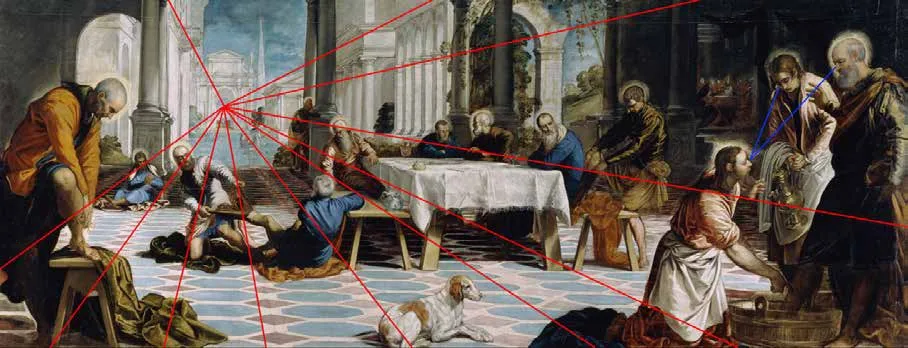
图2 《耶稣为门徒洗脚》动作指向示意图与线性透视图Fig.2 Action-direction schematic and linear perspective: Christ Washing the Feet of His Disciples
一、画面空间的特点
下面就以丁托列托的《耶稣为门徒洗脚》(Christ Washing the Feet of His Disciples)(图1)为例,先从画面中的空间结构入手,分析观看这类作品所需要把握的规律。
《耶稣为门徒洗脚》(228×533cm,1548年, 西班牙马德里普拉多博物馆)(图2)中,丁托列托设置了两个透视点,这样做的目的是为表达多重含义。根据在画面中的远近位置,图中有三组人物:位于画面最右边的这组人物,三个人物的头部构成锐角三角形的关系,两位圣徒面向耶稣,根据他们站立的朝向和姿态,以及耶稣头部所在锐角的顶端位置,耶稣的头部自然而然成为视觉的焦点所在(图2中以蓝线标示)。也就是说,第一个焦点在耶稣的头部,这也是《耶稣为门徒洗脚》整个画面的主题所在。“这个消失点意指基督的人性光辉和为人类的自我牺牲。”[1]24第二个消失点在由建筑结……