《简·爱》与自我的构建
2017-08-03ByKarenSwallowPri
By+Karen+Swallow+Prior
Consider the selfie. By now, its a fairly mundane artistic tradition, even after a profusion of thinkpieces have wrestled with its rise thanks to the so-called Me Generations “obsession” with social media.1 Anyone in possession of a cheap camera phone or laptop can take a picture of themselves, edit it(or not), and share it with the world in a matter of seconds.
But before the selfie came “the self,” or the fairly modern concept of the independent“individual.” The now-ubiquitous selfie expresses in miniature the seismic2 conceptual shift that came about centuries ago, spurred in part by advances in printing technology and new ways of thinking in philosophy. Its not that the self didnt exist in pre-modern cultures: Rather, the emphasis the Protestant Reformation3 in the 16th century placed on personal will, conscience, and understanding—rather than tradition and authority—in matters of faith spilled over the bounds of religious experience into all of life. Perhaps the first novel to best express the modern idea of the self was Jane Eyre, written in 1847 by Charlotte Bront?.4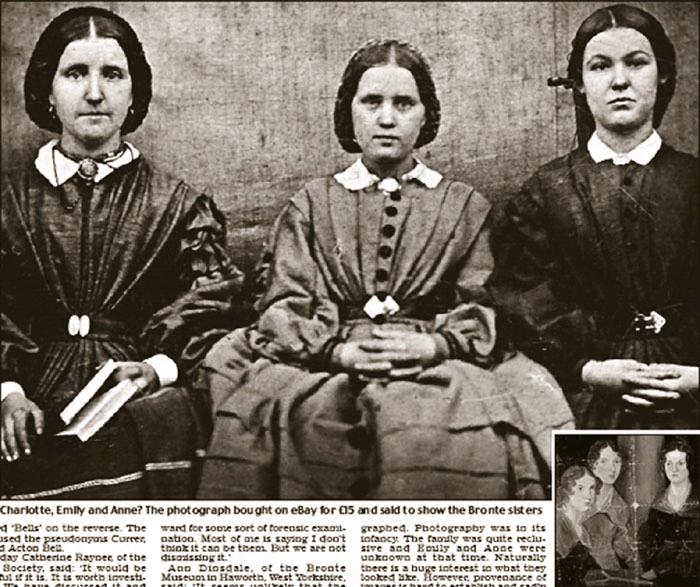
Those who remember Jane Eyre solely as required reading in high-school English class likely recall most vividly its overthe-top Gothic tropes: a childhood banishment to a deathhaunted room, a mysterious presence in the attic, a Byronic hero,5 and a cold mansion going up in flames. Its more seemingly the stuff of Lifetime6 television, not revolutions. But as unbelievable as many of the events of the novel are, even today, Bront?s biggest accomplishment wasnt in plot devices. It was the narrative voice of Jane—who so openly expressed her desire for identity, definition, meaning, and agency7—that rang powerfully true to its 19th-century audience. In fact, many early readers mistakenly believed Jane Eyre was a true account (in a clever marketing scheme, the novel was subtitled, “An Autobiography”), perhaps a validation of her characters authenticity.
The way that novels paid attention to the particularities of human experience (rather than the universals of the older epics and romances8) made them the ideal vehicle to shape how readers understood the modern individual. The rise of the literary form was made possible by the technology of the printing press, the print culture that followed, and the widening literacy that was cultivated for centuries until Jane Eyres publication. The novel seemed perfectly designed to tell Bront?s first-person narrative of a destitute orphan girl searching for a secure identity—first among an unloving family, then an austere charity school,9 and finally with the wealthy but unattainable employer she loves. Unable to find her sense of self through others, Jane makes the surprising decision to turn inward.
The broader cultural implications of the story—its insistence on the value of conscience and will—were such that one critic fretted some years after its publication that the “most alarming revolution of modern times has followed the invasion of Jane Eyre.” Before the Reformation and the Enlightenment that followed, before Rene Descartess cogito ergo sum (“I think, therefore I am”),10 when the sources of authority were external and objective, the aspects of the self so central to todays understanding mattered little because they didnt really affect the course of an individuals life. The Reformation empowered believers to read and interpret the scriptures for themselves, rather than relying on the help of clergy; by extension, this seemed to give people permission to read and interpret their own interior world.
To be sure, early novelists before Bront? such as Frances Burney, Daniel Defoe, Samuel Richardson, and Mary Shelley contributed to the forms developing art of the firstperson narrator.11 But these authors used the contrivances of edited letters or memoirs, devices that tended toward underdeveloped characters, episodic plots,12 and a general sense of artificiality—even when the stories were presented not as fiction but “histories.” No earlier novelist had provided a voice so seemingly pure, so fully belonging to the character, as Bront?. She developed her art alongside her sisters, the novelists Anne and Emily (all of them publishing under gender-neutral pseudonyms),13 but it was Charlotte whose work best captured the sense of the modern individual. Anne Bront?s novels Agnes Grey and The Tenant of Wildfell Hall contributed to the novels ability to offer social commentary and criticism, while the Romantic sensibilities of Emily Bront?s Wuthering Heights explored how the “other,” in the form of the dark, unpredictable Heathcliff, can threaten the integrity of the self.
One of the greatest testimonies to Bront?s accomplishment came from Virginia Woolf,14 a modernist pioneer who represents a world far removed from that of Bront?s Victorianism. “As we open Jane Eyre once more,” a doubting Woolf wrote in The Common Reader, “we cannot stifle the suspicion that we shall find her world of imagination as antiquated, mid-Victorian, and out of date as the parsonage on the moor, a place only to be visited by the curious, only preserved by the pious.”15 Woolf continues, “So we open Jane Eyre; and in two pages every doubt is swept clean from our minds.” There is nothing of the book, Woolf declares, “except Jane Eyre.” Janes voice is the source of the power the book has to absorb the reader completely into her world. Woolf explains how Bront? depicts:
… an overpowering personality, so that, as we say in real life, they have only to open the door to make themselves felt. There is in them some untamed ferocity perpetually at war with the accepted order of things which makes them desire to create instantly rather than to observe patiently.16
It is exactly this willingness—desire, even—to be “at war with the accepted order of things” that characterizes the modern self. While we now take such a sense for granted, it was, as Bront?s contemporaries rightly understood, radical in her day. More disturbing to Bront?s Victorian readers than the sheer sensuality of the story and Janes deep passion was “the heroines refusal to submit to her social destiny,”as the literary critic Sandra M. Gilbert explains. Indeed, one contemporary review complained, “It is true Jane does right, and exerts great moral strength,” but the critic continues that“it is the strength of a mere heathen17 mind which is a law unto itself.” In presenting such a character, the reviewer worries,Bront? has “overthrown authority” and cultivated “rebellion.”And in a way they were right: “I resisted all the way,” Jane says as she is dragged by her cruel aunt toward banishment in the bedroom where her late18 uncle died. This sentence, Joyce Carol Oates argues, serves as the theme of Janes whole story.
But Janes resistance is not the empty rebellion of nihilism or self-absorption (consider how current practitioners of “selfie culture” frequently weather accusations of narcissism).19 Rather, her quest for her true self peels back the stiff layers of conventionality in order to discover genuine morality and faith. As Bront? explains in the preface to the novels second edition (a preface necessitated by the moral outrage that followed the novels publication),
Conventionality is not morality. Self-righteousness is not religion. To attack the first is not to assail the last…These things and deeds are diametrically20 opposed: they are as distinct as is vice from virtue. Men too often confound them: they should not be confounded: appearance should not be mistaken for truth; narrow human doctrines, that only tend to elate and magnify a few,21 should not be substituted for the world.
In a letter to a friend, Bront? responded to her criticsobjections by declaring, “Unless I have the courage to use the language of Truth in preference to the jargon22 of Conventionality, I ought to be silent...”
The refusal of such a woman, who lived in such a time, to be silent created a new mold for the self—one apparent not only in todays Instagram photos, but also more importantly in the collective modern sense that a persons inner life can allow her to effect change from the inside out.
想想自拍吧。现在,自拍成了一种再寻常不过的艺术传统,甚至是在铺天盖地的批评文章全力开火之后,自拍之风仍然因所谓的唯我的一代“病态地迷恋”社交媒体而蔓延开来。任何人只要有一部价格低廉、具备照相功能的手机或者笔记本电脑就能自拍、修图(或者不修图),然后与世界分享之:整个过程只需要几秒钟的时间。
但自拍出现之前先有“自我”,或者说独立“个体”这一非常现代的观念。如今无处不在的自拍以小见大地表达了几个世纪之前所发生的巨大的观念转变,这一转变一定程度上是由印刷技术与哲学新思想促成的。这并不是说自我在前现代文化中就不存在:相反,16世纪宗教改革在信仰方面对于个人意志、良知与理解——而非传统与权威——的强调从宗教生活的界限外溢到生活的方方面面。或许第一部最能表达“自我”这一现代观念的小说就是夏洛蒂·勃朗特于1847年写就的《简·爱》了。
那些仅仅将《简·爱》作为高中英语课必读书目印刻在记忆中的人很可能会想起作品中夸张的哥特式表达手法:童年被关进被死亡阴影笼罩着的房间、阁楼中神秘的存在、一位拜伦式的英雄以及在腾腾烈焰中焚毁的冷冰冰的宅子。这看上去更像是Lifetime电视台才会播出的情节,而非思想变革。尽管这本小说中的许多情节不足为信,甚至放到今天依然如此,但是勃朗特最高的成就并非在于情节构想,而是在于简的叙述——她公开地表达了自己对于身份、定义、意义以及施为能力的渴望——让19世纪的读者产生了强烈的真实感。……