悬臂式抗滑桩桩前被动土拱效应研究
2017-04-07罗丽娟夏香波王瑞陈悦
罗丽娟+夏香波+王瑞+陈悦

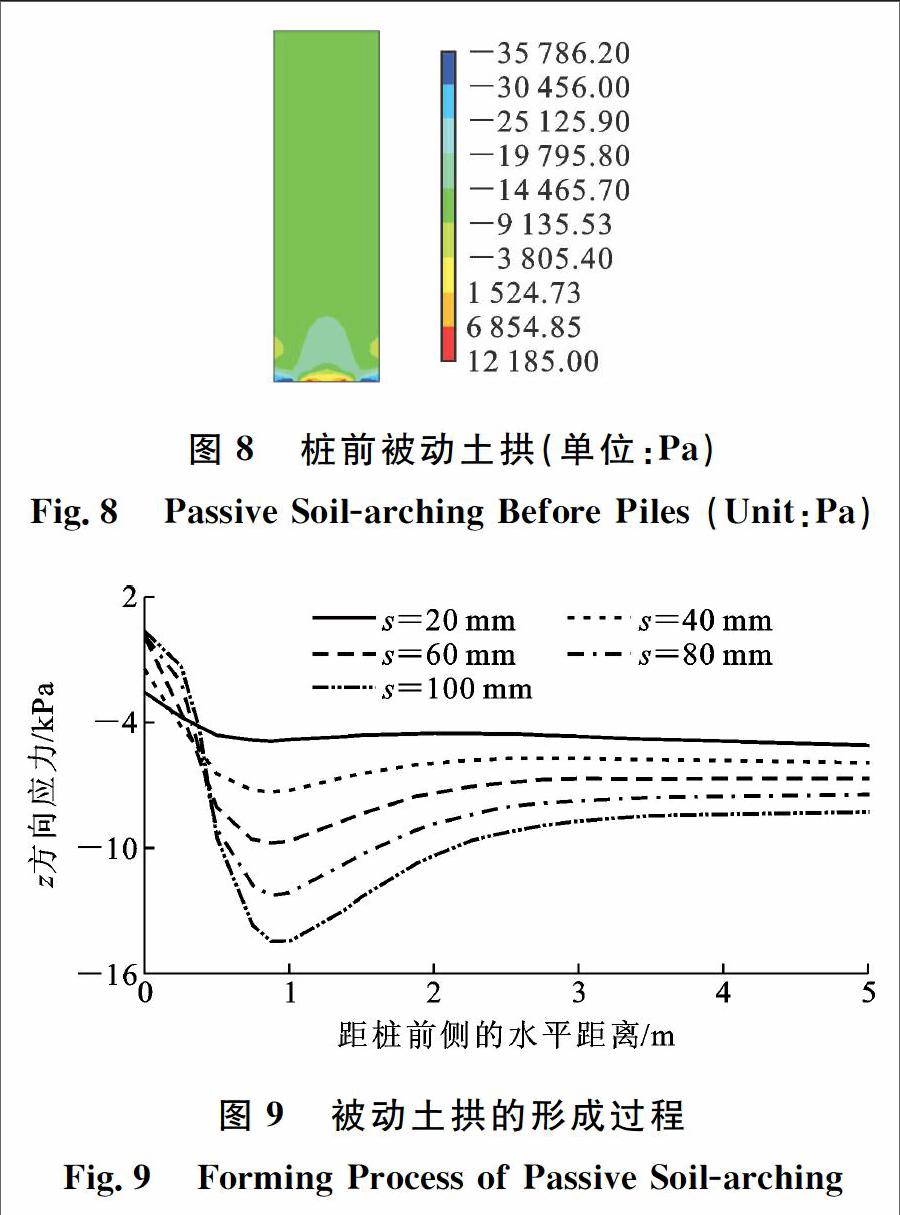
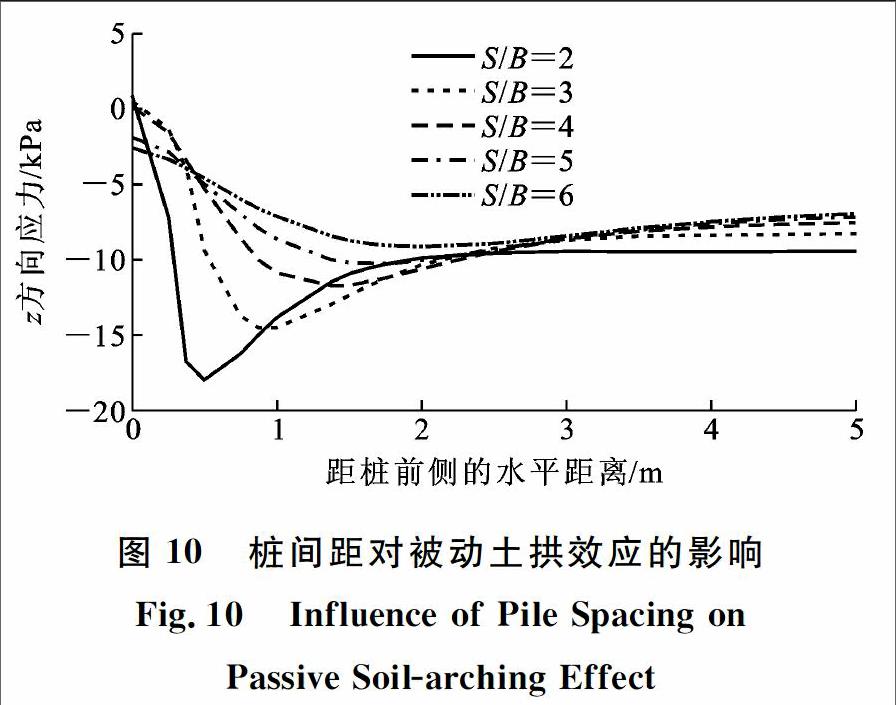
摘要:基于1∶10的抗滑桩与土体相互作用模型试验,对悬臂式抗滑桩桩前被动区土体的成拱效应趋势做了初步探讨,利用ANSYS对悬臂式抗滑桩桩前被动土拱效应的形成过程及其影响因素进行数值分析,研究了桩身水平位移、桩间距、土体黏聚力和内摩擦角等因素对被动土拱效应的影响。结果表明:相邻两桩桩前一定范围内土体中会产生被动土拱效應,且随着桩身水平位移的增加和沿桩深度的减小,被动土拱效应增强,土拱范围变大;随着桩间距的增加,被动土拱效应减弱,土拱形态先变陡峭而后逐渐变平缓;土体黏聚力与被动土拱效应呈正相关关系,而土体内摩擦角对被动土拱效应的影响较小。
关键词:悬臂式抗滑桩;被动土拱效应;模型试验;数值分析;黏聚力;内摩擦角
中图分类号:TU473.1 文献标志码:A
Abstract:Based on the 1∶10 physical model test on soil-pile interaction, the formation tendency of soil-arching effect in passive areas before cantilever anti-slide piles was discussed preliminarily. In addition, the analysis of numerical model was constructed to study the formation process and influence factors of passive soil-arching effect before cantilever anti-slide piles by using ANSYS, the influences of horizontal displacement of pile, pile-space, soil cohesion and internal friction angle on passive soil-arching effect were analyzed. The results show that the passive soil-arching effect appears in a certain range of passive area before two adjacent piles, and strengthens with the increase of horizontal displacement of pile and with the decrease of depth, and the range of soil-arching grows larger. With the increase of pile-space, the passive soil-arching effect weakens gradually, the shape of soil-arching becomes steep firstly and then becomes smooth gradually. The soil cohesion plays a positive role in passive soil-arching effect, but the internal friction angle has little influence on passive soil-arching effect.
Key words:cantilever anti-slide pile; passive soil-arching effect; model test; numerical analysis; cohesion; internal friction angle
0引 言
滑坡治理一直是中国地质灾害防治的重要任务之一,悬臂式抗滑桩作为一种以横向受力为主的支挡结构物,因其对周边地质体的扰动相对较小,施工便捷,被广泛应用于滑坡治理等工程中。桩和土体之间的相互作用问题一直是抗滑桩加固机制和设计理论研究的核心问题。在侧向荷载作用下,由于桩和土体之间的相互作用而产生了所谓的“土拱效应”,土拱现象最早由Terzaghi[1]基于活动门试验提出,Ladanyi等[2]、Wang等[3]、Chen等[4]先后通过理论、试验和数值方法验证了土拱效应的存在。中国学者由不同土拱形态及破坏形式得到了形式各异的临界桩间距计算公式[5-10];……
