逆向物流网络优化及其算法设计
2017-04-01李姗姗
李姗姗
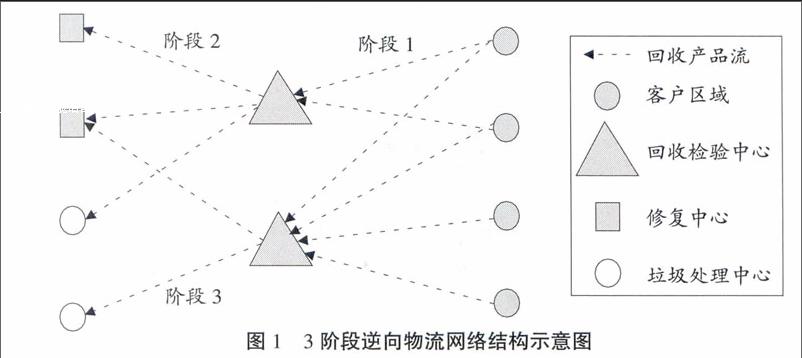
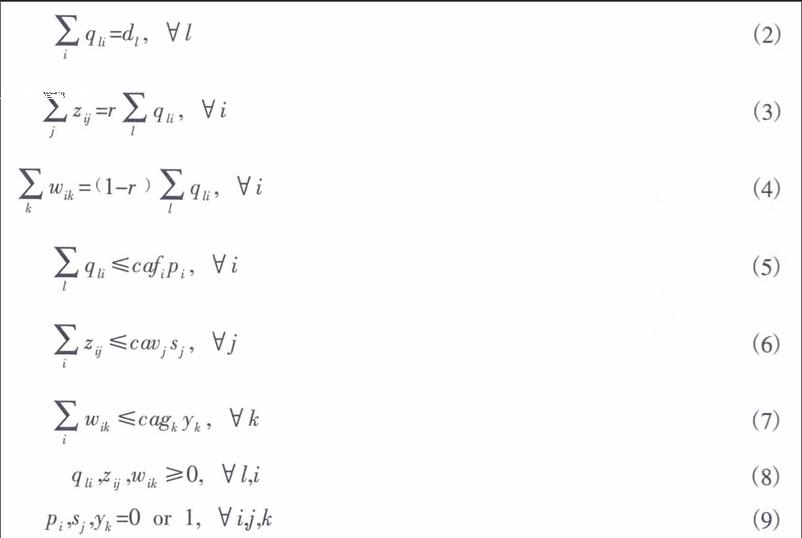
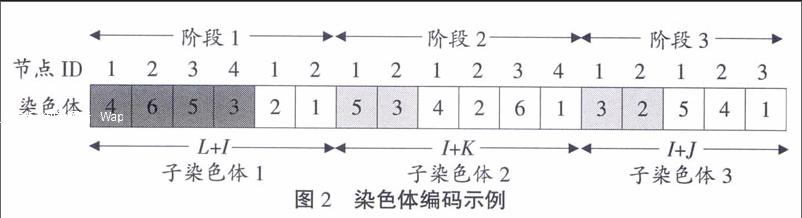
摘 要:分析了产品回收流程,指出在回收检验中心对产品进行质量检测并分类处理,有助于降低逆向物流总运营成本。针对到这一特点,结合流量平衡与生产能力等特有约束,建立了新的3阶段逆向物流网络混合整数规划模型,以确定回收检验中心、修复中心与垃圾处理中心的位置、数量与规模,以及对各网络路径上的物流流量进行分配。考虑到其NP-hard特性,开发了遗传算法,以获得大规模问题的近似解。大规模实验表明,所构建的混合整数规划模型与遗传算法是有效的,且遗传算法的求解效率与求解质量也优于LINGO软件。
关键词:质量检测;逆向物流;数学模型;最优解
中图分类号:F713.2 文献标识码:A
Abstract: Through the analysis of handling procedure for returned product, it is suggested returned products should be disposed differently after quality inspection, so as to minimize the total costs. Considering the flow balance capacity limit and capacity limit constraints, a new mixed integer programming model for three-stage reverse logistics network is proposed, in order to obtain the quantity of various infrastructures, the scales and locations. Because it is NP-hard, a genetic algorithm is proposed. Random experiments show that the algorithm and model are effective. Meanwhile, when the experiments are larger, the genetic algorithm outperforms LINGO software on solving efficiency.
Key words: quality inspection; reverse logistics; mathematics model; optimal solution
0 引 言
物流网络设计是供应链管理的一项重要内容,其以确定网络中的设施数量、位置与规模,以及各类设施间的合理物流量为主要目的。由于在較短时间内很难改变一个现有设施的位置与规模,且需要付出较大的成本代价,因此物流网络设计是一项战略性决策,对其进行优化的回报要远远大于其它战术性与作业性决策问题。近年来,关于物流网络设计的研究层出不穷,大致可分为三类:一是从正向角度进行优化[1-3];二是从逆向角度进行研究;三是对正向物流网络与逆向物流网络的整合性研究[4-5]。本文主要是面向第二类的研究。
逆向物流网络可使一些有价值的产品得到回收再利用,并取得降低环境污染、提高资源利用率的目的。……