野生与栽培苦参生物碱含量的比较研究
2017-02-16姚丽易红高慧敏马蕙文张继远田莲
姚丽+易红+高慧敏+马蕙文+张继远+田莲超+刘晓谦+王智民
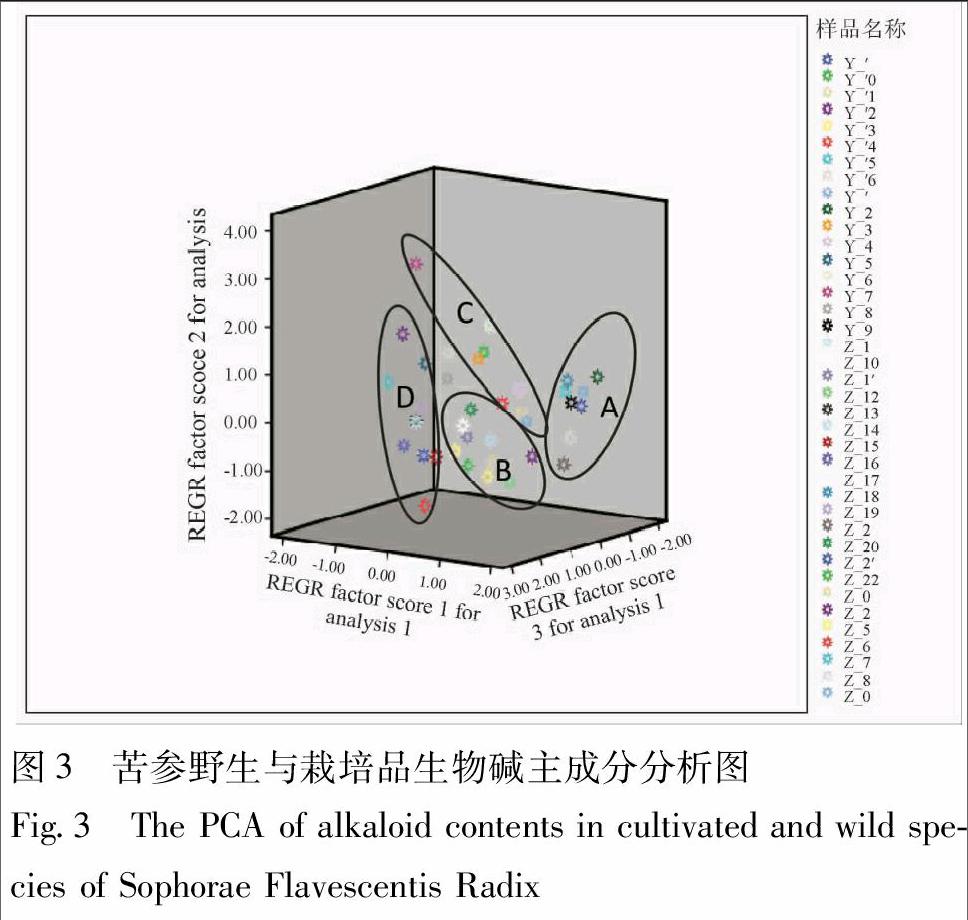
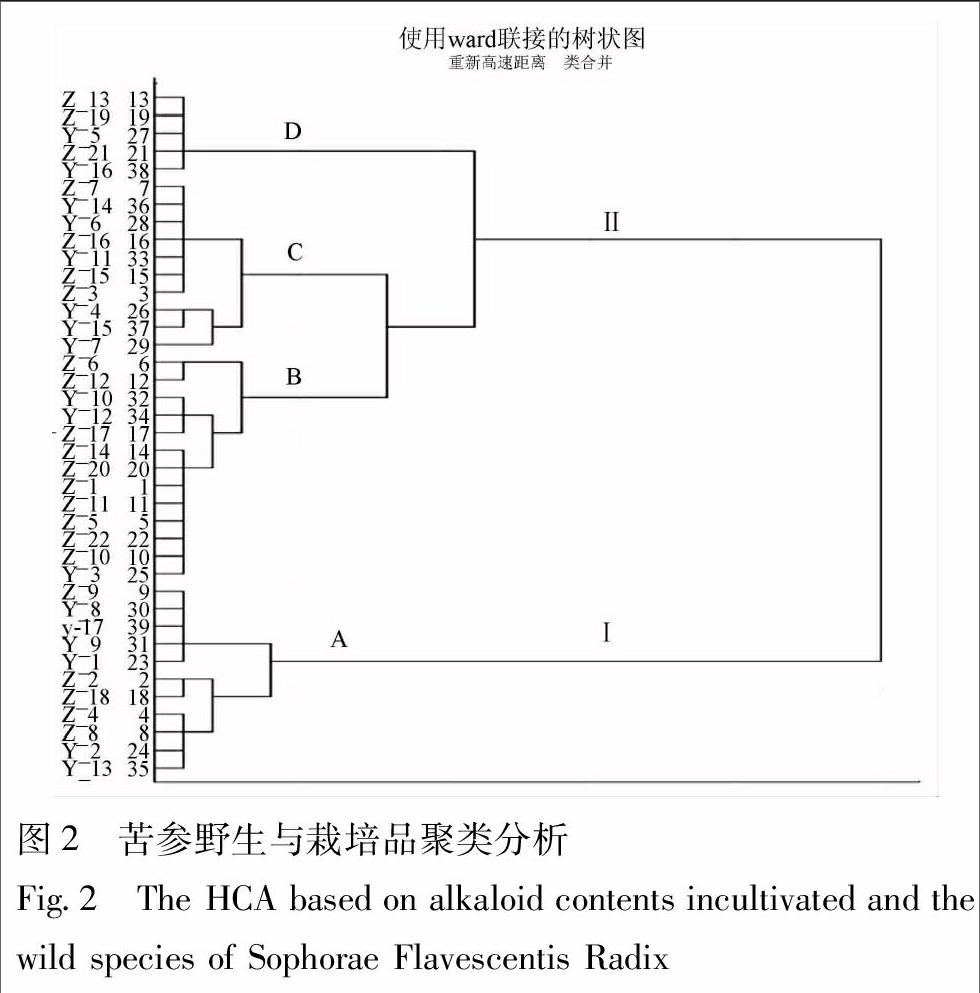
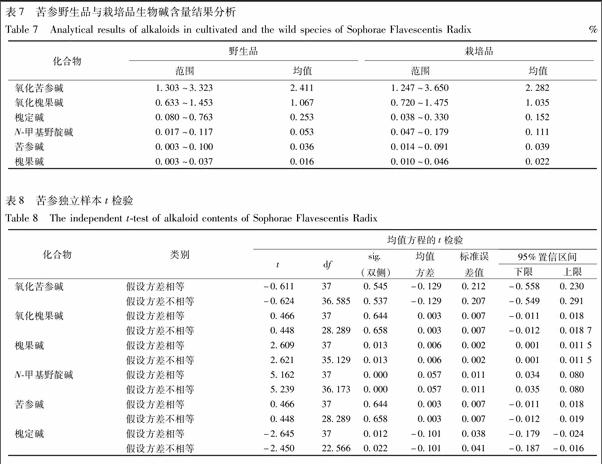
[摘要]为比较苦参药材的野生品与栽培品在生物碱成分含量上的质量差异,对收集的22个栽培样本和17个野生样本,用HPLC同时测定了6种生物碱(氧化苦参碱、氧化槐果碱、槐定碱、N-甲基野靛碱、苦参碱、槐果碱)的含量,以独立样本t检验,辅以聚类分析(HCA)和主成分分析(PCA)方法进行评价。独立样本t检验表明:野生品与栽培品在N-甲基野靛碱、苦参碱、槐果碱3种成分含量上有差异(苦参碱及槐果碱P<0.05,N-甲基野靛碱P<0.01),氧化苦参碱、氧化槐果碱、槐定碱野含量无差异,但组内差异均较大;聚类分析及主成分分析表明:野生品与栽培品在生物碱含量上无差异。故认为栽培品与野生品在生物碱含量方面无差异。
[关键词]苦参; 野生与栽培; 生物碱
[Abstract]To compare the contents of alkaloids in theroots of cultivated and the wildSophora flavsecens, 22 cultivated and 17 wild samples were collected. HPLC method was employed to simultaneously determine the contents of six alkaloids (oxymatrine, oxysophocarpine, sophoridine,N-methylcytisine, matrine, and sophocarpine). Independentt-test, hierarchical clustering analysis(HCA)and principal components analysis(PCA)were applied to analyze and evaluate the cultivated and the wildS.flavsecens. With a great wide range of the inter-group, thet-test results showed that the contents difference ofN-methylcytisine, matrine, and sophocarpine were statistical significance(matrineandsophocarpineP<0.05,N-methylcytisineP<0.01).However, it was not statistically significant for oxymatrine, oxysophocarpine, and sophoridine.HCA and PCA showed that there were no significant differences in the contents of alkaloids of cultivated and wildS. flavsecens. The results indicated that there were no differences in the contents of alkaloids of cultivated and wildS. flavsecens.
[Key words]Sophora flavsecens; cultivated and wild; alkaloid
doi:10.4268/cjcmm20162114
苦参为豆科植物苦参Sophora flavsecensAit.的干燥根,主产于山西、河北、河南等地,其性寒、味极苦,具有抗炎、抗菌、抗病毒及抗肿瘤等多种药理活性[1-4],主要用于热痢、便血、黄疸尿闭、赤白带下等妇科疾病[5]。此外,苦参不仅应用到医药行业,也逐步应用到农业、畜牧业及化妆品行业,有韩国研究者将其放入空气过滤器中用来改善空气质量,为天然药物制成空气杀菌剂提供了理论依据[6-7]。随着苦参需求量的增加,野生资源锐减,栽培品渐渐替代野生品已成趋势;但由于广泛而分散的种植形式,很难形成统一的管理标准,以致各地苦参药材质量不均,品质下降,并由此可能引发相关的安全性等问题。虽有研究表明栽培与野生苦参在清热、利尿及镇痛方面的药理活性相同[8],但关于其主要活性成分——生物碱类成分的差异目前尚无报道。
为保证研究结果的数据的可比性、减少气候地理等干扰因素,本研究在苦参样本的采集区域方面作了限定:选择道地产区种植品和栽培品储量均丰富的山西地区作为本研究的样品采集区;……