野餐从何而来
2016-03-12FionaCAI
Fiona+CAI
In our world today, picnic simply means a pleasurable outing at which a tasty meal is eaten outdoors, preferably in a beautiful landscape. But did you know that the relaxing and carefree act of eating outdoors and sharing quality time with those you care about has its roots back in medieval times in England?
Picnics evolved from the elaborate1) traditions of outdoor feasts enjoyed by the wealthy. Medieval hunting feasts and Renaissance era country banquets can be credited with laying the foundation of the outdoor dining experiences we enjoy today. The history of picnicking is credited to the Europeans, and nowadays people all around the world enjoy participating in these leisurely outings.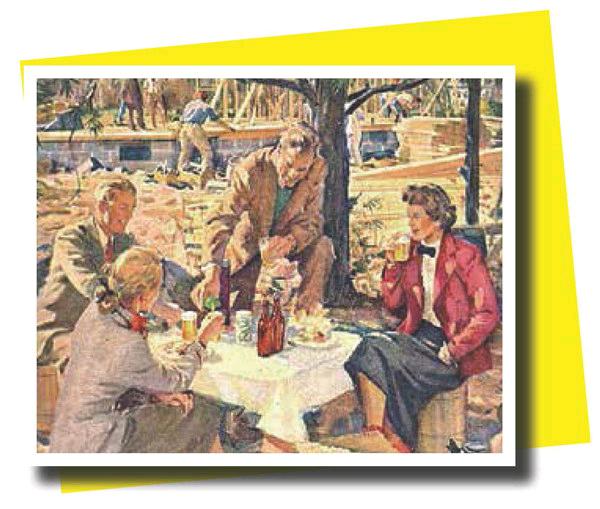
In Europe during the 14th century, the earliest picnics were medieval hunting feasts in England. These feasts before the hunt began were of special importance and the main foods that could be found at these feasts would be hams, baked meats and pastries2).
According to the Oxford English Dictionary (2nd edition, volume XI, p. 779), a picnic originally means "a fashionable social entertainment in which each person present contributed a share of the provisions3); now, a pleasure party including an excursion4) to some spot in The country where all partake of5) a repast6) out of doors: the participants may bring with them individually the viands7) and means of entertainment, or the whole may be provided by someone who 'gives the picnic'".
The oldest print evidence of the word picnic in the English language can be traced back to 1748, according to the Oxford English Dictionary. The word picnic was known in France, Germany and Sweden before it became part of the English society. According to Wikipedia, a free online encyclopedia, "the first usage of the word picnic was traced to a 16th century French text, describing a group of people dining in a restaurant who brought their own wine". A theory has it that the word picnic is based on the verb piquer which means "pick" or "peck" with the rhyming nique perhaps meaning trifle. The 1692 edition of Origines de la Langue Franqoise de Ménage, which mentions "piquenique" as being of recent origin, marks the first appearance of the word picnic in print. The word picnic first appeared in English texts in the mid-1700s, and may have entered the English language from this French word or from the German Picknick.
Hundreds of years ago, a picnic meant a potluck8), an entertainment at which each person contributed some dishes to a common table for all to share. The change in the meaning of the term, from "everyone bringing some food" to "everyone eating out of doors" seems to have been completed by the 1860s. Dining outdoors with a casual atmosphere, no strict course9) menu and jovial10) company is something that has taken hold of not only the European countries, but in the United States. By the mid-19th century, Americans had also adopted a flair11) for picnicking.
In America, we are a cultural melting pot, and there are many types of foods and cultural practices available to flair a picnic outing. There are many different types of culinary dishes and recipes which can be prepared for a picnic. Your environment might also influence the recipes you decide to make and bring along on your outdoor dining experience. If you are from the north-eastern states, you might decide to bring along a thermos12) of clam chowder13), a variety of sweet and tasty cheeses and meats, along with your favorite red or white wine. If you are picnicking in the southern states, a hefty14) supply of delicious BBQ and a cooler full of your favorite beers will satisfy you and your guests! A delicious blend of aromatic15) coffee with a selection of cheeses, cold cut meats and breads would suffice for a pleasant picnic no matter your location. For mid-western states, hamburgers, chili and biscuits and a crisp16), cold beverage would soothe the soul. For western states, a variety of upscale dining such as lobster or sushi with a heavenly dose of white wine would complete the picnic affair.
Gourmet delicacies no matter your location will supply you with an alternative to the traditional selection of sandwiches and salads. As long as you are relaxing, enjoying the scenery and affable17) company with scrumptious18) foods .... You are practicing the art of picnicking!
春暖花开的阳春三月,或携友结伴而行,或举家出行,带上自己喜爱的便携美食,走进海滨山谷、乡村麦田、林间湖畔、郊外公园……野餐不仅仅是在怡人的美景中享受美食,还是一个与家人、朋友交流感情的机会。那么,野餐这一健康、自然的户外休闲活动是怎么来的呢?一起来了解一下吧!
在当今世界,野餐意味的只是一次愉快的出游,期间在户外吃上一顿美味的餐食,最好还能置身于美景之中。但是你知道吗?在户外用餐并和你在意的人一起享受美好时光,这种无忧无虑的放松行为可以追溯到中世纪的英格兰。
野餐是从富人们所喜爱的户外宴会这一讲究的传统演变而来的。我们现在所喜爱的户外用餐体验,其基础的奠定都可以归功于中世纪的狩猎宴会以及文艺复兴时期的乡村宴会。野餐的历史要归功于欧洲人,现如今全世界的人们都喜欢参加这种悠闲的出游活动。
在14世纪的欧洲,最早的野餐是英格兰的狩猎宴会。这些在狩猎开始前举办的宴会有其独特的重要性,在这些宴会上,人们可以看到的食物主要是火腿、烤肉以及点心。
根据《牛津英语大词典》(第二版,第11卷,第779页),“野餐”原指“一种时髦的社交娱乐活动,每位出席者都贡献一份食物;现指一次愉快的聚会,包括去乡村的某个地方远足,所有人都会在那里享用一顿户外的餐食:参与者可以自行准备食物,设计娱乐活动的形式,或者这一切也可以都由‘野餐组织者来提供”。