中国2002—2012年冬油菜全要素生产率分析
2015-09-09刘成冯中朝
刘成 冯中朝
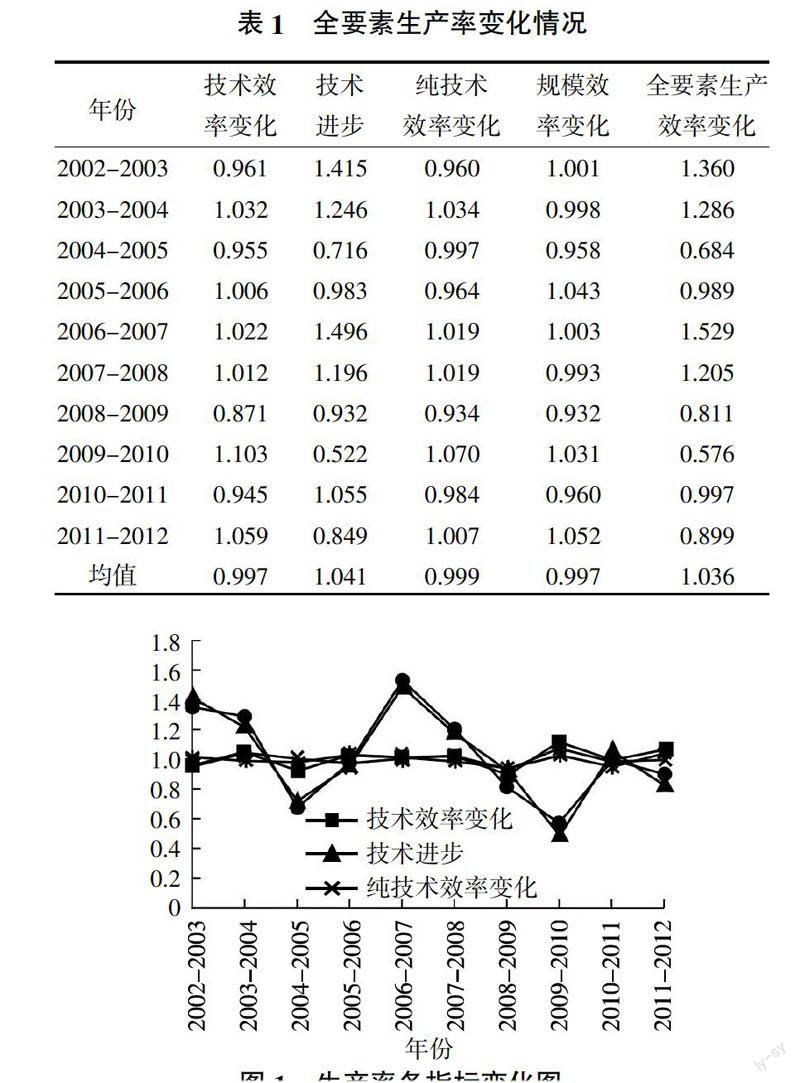
摘要:从我国冬油菜主产区中选取9个省市,基于2002-2012年的油菜生产投入产出面板数据,运用Malmquist指数分析历年主产区、分地区的TFP变化情况。结果表明,研究期间主产区TFP的年均增长率为3.6%,其中技术进步年均增长率为4.1%,是影响TFP的主要因素。省域层面上,四川、重庆、安徽、湖北、湖南、江苏、浙江等省出现了正增长,但各省之间差距较大,其中四川省增长最快为13.4%,贵州、江西两省是负增长,最后,根据分析结果给出相应的对策建议。
关键词:冬油菜;Malmquist指数;全要素生产率;技术进步
中图分类号:F224;F326.11 文献标识码:A 文章编号:0439-8114(2015)15-3838-04
DOI:10.14088/j.cnki.issn0439-8114.2015.15.064
Abstract: Choosing 9 provinces and cities from chinas main winter rape producing areas and collect relative input-output panel data from 2002 through 2012 to analyze the changes of TFP in different main producing areas by using Malmquist index. The results show that the average annual growth rate of TFP in main producing areas was 3.6%, and the average annual growth rate of technological advance was 4.1%, which is the major factor affecting TFP. On provincial level, Sichuan, Chongqing, Anhui, Hubei, Hunan, Jiangsu and Zhejiang were positive growth, while Guizhou and Jiangxi were negative growth. Besides, among those provinces with positive growth, there were big differences in their growth rate and Sichuan was with the highest growth rate of 13.4%. Then, some suggestions are provided according to these results.
Key words: winter rapeseed; malmquist index; total factor productivity; technological progress
中国是世界第一油菜生产大国,油菜播种面积和总产量分别约占世界总值的33%。油菜产业的发展状况不仅关系到我国的国计民生,乃至对世界油菜产业的平稳发展有着至关重要的影响。我国油菜生产区域划分为冬油菜产区和春油菜产区,冬油菜种植面积约占全国油菜播种总面积的90%,主要集中在长江流域各省市。目前种植油菜经济效益较低,严重削弱了农民种植的积极性,导致油菜生产产量不稳定,且对国外油菜子依赖程度较高。
我国不仅仅是一个油菜生产大国,而且冬油菜占据我国油菜生产的大多数,对冬油菜主产区的生产效率进行评价,综合分析其影响因素以及变动趋势,对充分了解我国油菜生产状况有着重要的意义。本文运用“全要素生产率”(Total Factor Productivity,TFP)作为生产效率的指标,测算我国冬油菜主产区2002-2012年期间油菜全要素生产率的变动以及分析其变动主要的推动因素。……