不同层次网络课程内容呈现方式差异性
2015-06-09王佳
王佳
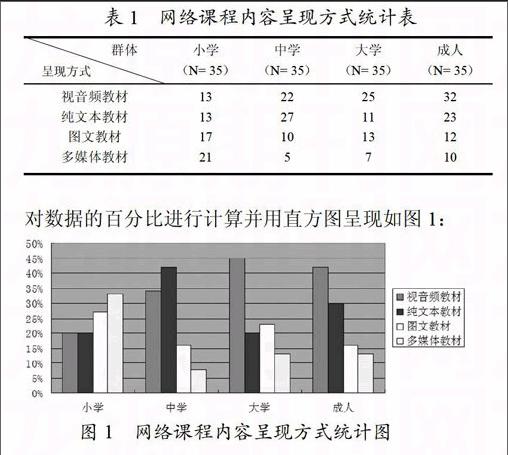
摘 要 网络课程中的知识与传统知识一样分为不同的类型,为了能够促进学习者对不同类型知识的学习,网络课程中的内容呈现采取了多种方式,网络时代媒体的多样化与网络技术的发展也为多种多样的内容呈现方式提供了可能。本文在介绍网络课程多种内容呈现方式的基础上,基于知识分类理论对网络课程中的内容呈现方式进行了界定,并对小学、中学、大学及成人的网络课程中内容呈现方式分别进行了统计,结合不同层次人员的特点,对调查现状进行了分析。
关键词 网络课程 内容呈现方式 差异性
中图分类号:G642 文献标识码:A DOI:10.16400/j.cnki.kjdkx.2015.05.013
Differences of Different Levels of Network Presentation of Course Content
WANG Jia
(Hu'nan Normal University School of Education Science, Changsha, Hu'nan 410081)
Abstract Online courses and traditional knowledge in the same divided into different types, in order to promote knowledge of the different types of learners learning, online course content presentation adopted in a variety of ways, the development of the Internet age diverse media and network technology but also for a wide variety of content presentation possible. Based on a variety of content presentation introduces online courses on knowledge classification based on network theory course content presentation were defined, and the primary, secondary, university and adult content online courses were carried out statistical presentation combining the characteristics of different levels of personnel, the status of the investigation were analyzed.
Key words network course; presentation of course content; otherness
1 理论基础
网络课程实际上就是网络技术与课程的整合。网络课程虽然与传统课堂存在很多不同,但是学习的目的都在于用不同的方式帮助学生构建知识体系。知识的分类是选择和设计内容呈现的基础。在心理学对知识分类的研究历程中,各家各派提出了多种不同的分类标准,我们所熟知和影响较大的有:布鲁姆的教育目标分类理论将认知学习结果由低级到高级分为知识、领会、运用、分析、综合和评价;奥苏贝尔的有意义言语学习理论将知识分为表征学习、概念学习、命题学习,解决问题和创造;加涅的学习结果分类理论将学习分为智慧技能、认知策略、言语信息、动作技能和态度五类;安德森的陈述性知识和程序性知识的划分等。这几种对知识的分类理论各有优缺点,也有很大的相通之处。……
