香蕉和土壤中吡唑醚菌酯的残留分析
2015-05-30赵方方等
赵方方等
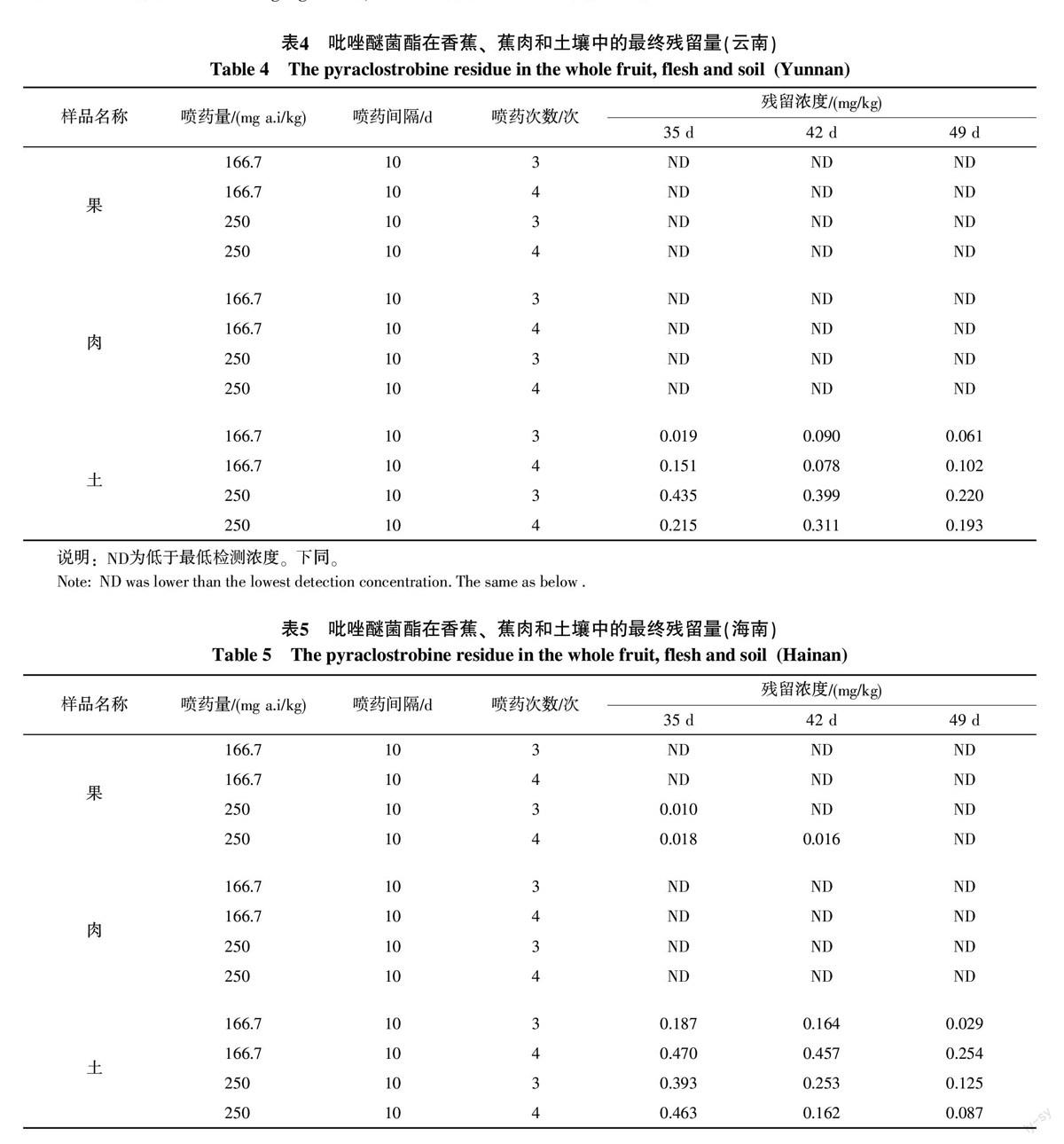
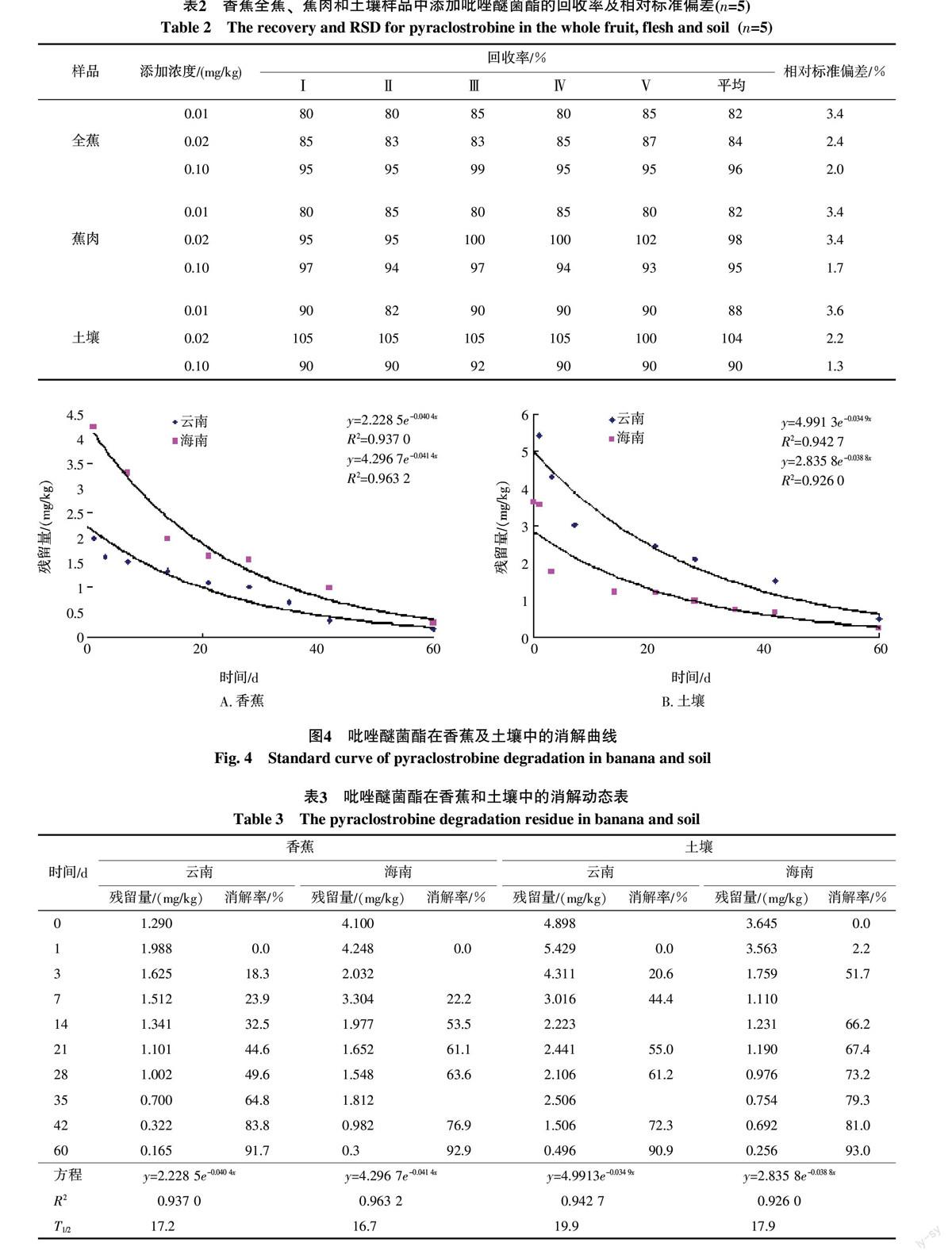
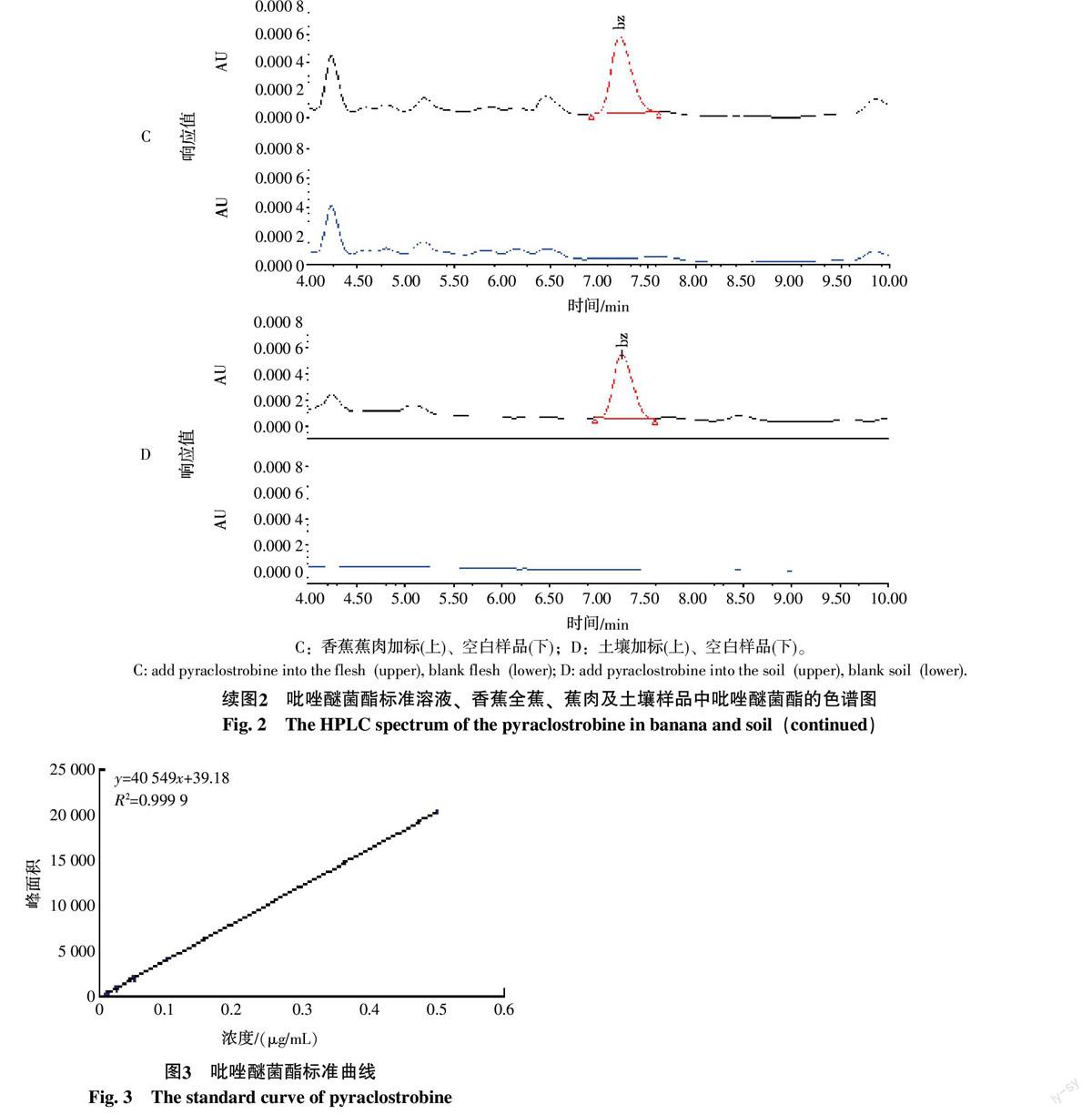
摘 要 建立吡唑醚菌酯在香蕉全蕉、蕉肉及土壤中的残留分析方法,测定吡唑醚菌酯在云南、海南两地香蕉及土壤中的残留动态及最终残留。结果表明:在0.01~0.1 mg/kg添加范围内,吡唑醚菌酯在香蕉果、肉、土中的平均回收率为82%~104%,变异系数为1.3%~3.6%;方法最小检出量为1×10-10 g,最低检出浓度为0.01 mg/kg。吡唑醚菌酯在云南和海南两地香蕉中的半衰期分别为17.2、16.7 d,在土壤中的半衰期分别为19.9、17.9 d。施药后35、42、49 d收获的香蕉中吡唑醚菌酯残留量均低于0.02 mg/kg。该方法准确度高,灵敏度高,线性良好。
关键词 吡唑醚菌酯;香蕉;土壤;液相色谱;消解;残留
中图分类号 TQ450 文献标识码 A
Residue Analysis of Pyraclostrobine in Banana and Soil
ZHAO Fangfang, ZHANG Yue, Lü Daizhu, XIE Defang
Analysis & Testing Center, Chinese Academy of Tropical Agricultural Sciences / Hainan Provincial Key
Laboratory of Quality and Safety for Tropical Fruits and Vegetables, Haikou, Hainan 571101, China
Abstract The method for the determination of pyraclostrobine residues in banana fruit, flesh and soil was established. Residue analysis of pyraclostrobine in banana and soil were determined. The field experiments were investigated in Yunnan and Hainan. Average recoveries of pyraclostrobine in banana fruit, flesh and soil were found in the range of 82%~104% at the three spiking levels from 0.01 to 0.1 mg/kg with relative standard deviations of 1.3%~3.6%. The lowest detection limit of instrument for pyraclostrobine was 1×10⁻¹⁰ g, and the limit of quantitation was 0.01 mg/kg. The experiments results demonstrated that the half-lives for banana was 17.2 d in Yunnan, and 16.7 d in Hainan, respectively. And the half-lives for soil was 19.9 d in Yunnan, and 17.9 d in Hainan, respectively. The residue of pyraclostrobine was <0.02 mg/kg in banana, after 35, 42 and 49 d of spray. The method showed high accuracy, high sensitivity and good linearity. The experiments provide scientific basis for evaluating the safety and rationality of using pyraclostrobine in banana.
Key words Pyraclostrobine; Banana; Soil; HPLC; Degradation; Residue
doi 10.3969/j.issn.1000-2561.2015.09.024
吡唑醚菌酯(Pyraclostrobine)化学名称为N-[2-[[1-(4-氯苯基)吡唑-3-基]氧甲基]苯基]-N-甲氧基氨基甲酸甲酯,是由德国巴斯夫公司于1993年开发的兼具吡唑结构的甲氧基丙烯酸酯类杀菌剂[1],能有效防治多种由真菌病原引起的病害如叶枯病、锈病、白粉病、霜霉病等[2]。现已在我国广泛应用于谷物、蔬菜、水果等作物上的病害防治[3-7]。其中,吡唑醚菌酯在防治香蕉黑星病和叶斑病等病害中发挥了积极作用[8-9]。吡唑醚菌酯的广泛使用随之带来的在香蕉等作物及土壤中的残留及安全性受到广泛关注。我国规定吡唑醚菌酯在香蕉中的MRL低至0.02 mg/kg(GB 2763-2014)。
目前,吡唑醚菌酯的检测方法主要采用高效液相色谱法[10-11]、气相色谱法[12]、液相色谱-串联质谱法[13-14]、气相色谱-串联质谱[15]以及表面等离子体共振生物传感技术[16]等。但主要集中在白菜、西瓜、葡萄、草莓等作物上吡唑醚菌酯的研究[4-7]。而在香蕉和土壤中的残留检测技术和残留消解行为尚未见文献报道。……