橄榄油好处多,新鲜最要紧
2014-01-06ByAllisonAubrey
By Allison Aubrey
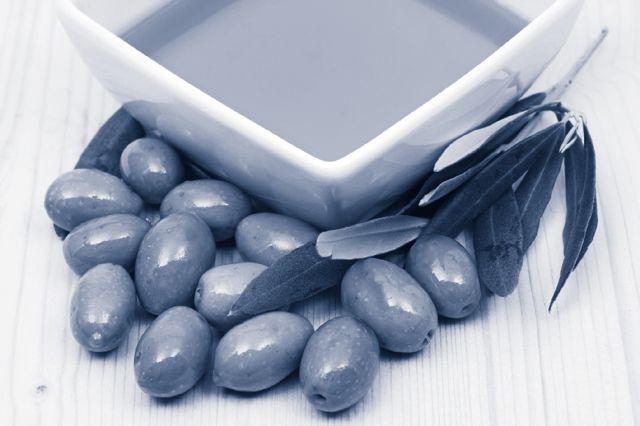
David Greene (Host): Were 1)sorting out some health food claims this morning, like 2)kombucha. Is this 3)fermented brew really good for you? Well find out in a moment. But first, olive oil. The truth: not all oils are created equal. NPRs Allison Aubrey reports on what you need to look for to make sure youve got the good stuff.
Allison Aubrey: If you pay any attention to health trends, youve likely heard about the 4)Mediterranean diet. This is a pattern of eating that includes lots of vegetables, grains and fish—not so much meat—and generous portions of olive oil.
Mary Flynn: Olive oil is a very healthy food. I consider it more medicine than food.
Aubrey: Thats Mary Flynn. Shes an associate professor of medicine at Brown University. And she says the evidence that olive oil is good for your heart has never been more clear. She points to a big study published earlier this year in The New England Journal of Medicine, where researchers in Spain had men and women in their 50s, 60s and 70s who were at risk of heart disease follow one of three diets. Some ate a low-fat diet. Another group ate a Mediterranean diet with nuts. And a third group ate a Mediterranean diet that included nearly four 5)tablespoons of extra-virgin olive oil per day.
Flynn: So, they could compare the three diets: Was it nuts, was it olive oil, or was the low fat diet as beneficial?
Aubrey: And what researchers found was that a Mediterranean diet rich in olive oil cut the risk of heart attack and strokes by about 30%. Researchers even stopped the study early, since the benefits were so clear.
Tom Mueller: The fact is, there are a huge range of different health benefits of real extravirgin olive oil.
Aubrey: Thats Tom Mueller. He has spent the last six years investigating and writing about olive oil. He says olive oil is good for two reasons. Its mostly 6)unsaturated fat, and extra-virgin oil—which is the highest-grade and least-processed form of olive oil—contains a whole range of other beneficial plant compounds called 7)polyphenols. But heres the catch: Unfortunately, it turns out that more than half of the extra-virgin olive oil imported into the U.S. has been shown to be sub-standard.
Mueller: Its quite often just very low-grade olive oil that doesnt give you the health benefits and doesnt give you taste that extra-virgin should give you.
Aubrey: In fact, a study from UC Davis found that 69% of imports tested failed to meet a 8)USDA quality standard. And Mueller says, in some cases, the oil is just too old. By the time the imported olive oil reaches us, its often been shipped from place to place, and sometimes not stored well. And even if it isnt noticeably 9)rancid, many of the heart-healthy compounds have degraded or 10)fizzled out.
Mueller: Extra-virgin olive oil is fresh-squeezed olive juice. Its a fruit juice. Therefore, freshness is a critical question.
Aubrey: Mueller says the 11)FDA used to police olive oil imports to ensure producers were meeting quality and freshness standards. But those efforts have fallen off. So where does that leave those of us who want to get our hands on the healthy stuff? Well, for starters, Mueller says look for brands that carry a harvest date on the bottle. California Olive Ranch oil—which is sold in lots of chain supermarkets nationwide—has a date clearly stamped on the back of the bottle. I met up with Gregg Kelley of California Olive Ranch at a Safeway grocery store.
Gregg Kelley: So this is a harvest date. Every single bottle produced by California Olive Ranch includes the date the olives were harvested to produce the oil in the bottle.
Aubrey: And he says the olives were pressed very quickly, so the oil is really fresh.
Kelley: The most important thing for consumers to remember when theyre purchasing extra-virgin olive oil is it is not wine. It does not get better with age. So olive oil never gets better than the day it was produced.
Aubrey: Now, as long as its properly stored, the freshness will hold in the bottle, at least for a while. Some bottles now carry an expiration date. But as soon as you open the bottle and expose the oil to oxygen and light, it will slowly start to degrade. So Tom Mueller says dont make the mistake his family made.
Mueller: I grew up with terrible oil. I grew up with a huge tin in my grandparents cabin, and that was olive oil for me. And it was moldy and 12)fusty, and it was there for years.
Aubrey: Many factors determine how quickly an olive oil goes bad. But studies suggest once youve opened it, you should consume it within four to six months.
Now, oils with the highest levels of hearthealthy compounds tend to be 13)pungent and 14)peppery. And Mueller says if the oil stings the back of your throat a little, that tells you that those beneficial polyphenols really are there. I got the chance to experience this during a tasting of fresh imported oils at Greg Bonaduccis(ph) olive oil shop in Brooklyn.
Greg Bonaducci: You ready?
Aubrey: Mm-hmm.
Bonaducci: This is an organic Coratina, and it was grown in Peru, and it was just crushed in April.
Aubrey: We did feel that 15)tickle, and it made us both cough.
Bonaducci: That pungency...(Soundbite of Coughing)
Bonaducci: This is definitely a two-cougher.(Laughter)
Aubrey: And Mueller says thats what youre looking for.
Mueller: Once you have that taste, you get used to the little bitterness and the little pungency, you never go back. Its a completely different experience.
Aubrey: And a healthy one, too.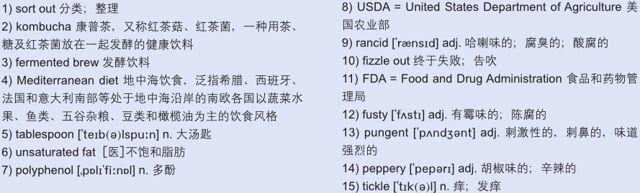
戴维·格林(主持人):今天上午我们会整理一些号称是健康食品的食物,比如康普茶。这些发酵饮料真的对你有好处吗?我们迟些会找出真相。首先我们来说说橄榄油。事实上,并不是所有的橄榄油都是“生而平等”。NPR的记者阿利森·奥布里在报道中告诉你需要注意什么才能得到优质的食品。
阿利森·奥布里:如果你有关注健康趋势,你很可能已经听说过地中海饮食。这种饮食模式包括食用大量蔬菜、五谷杂粮和鱼类——不那么多的肉类——还有分量十足的橄榄油。
玛丽·弗林:橄榄油是一种非常健康的食品。我认为它是食物,更是药物。
奥布里:那是玛丽·弗林,她是布朗大学药物助理教授。她说有证据表明橄榄油有利于人的心脏是毫无疑问的,她指出今年年初刊登在《新英格兰医学杂志》一个大型研究,该研究的西班牙研究员让处于心脏病发病风险的50、60和70多岁的男女中老年人遵循三种饮食当中的其中一种。有些食用低脂肪食品,另一组采用地中海饮食方式加坚果,第三组采用地中海饮食方式,还包括每天将近四大汤匙特纯橄榄油。
弗林:那么,他们就可以比较这三种饮食方式:是坚果,还是橄榄油,或是低脂肪饮食对身体更有益?
奥布里:而研究人员发现地中海饮食加上丰富的橄榄油,降低了患心脏病和中风大概30%的风险。研究人员甚至提前结束研究,因为(橄榄油)的好处已经很显而易见了。
汤姆·穆勒:事实上,真正的特纯橄榄油在很大范围内对健康有不同的好处。……