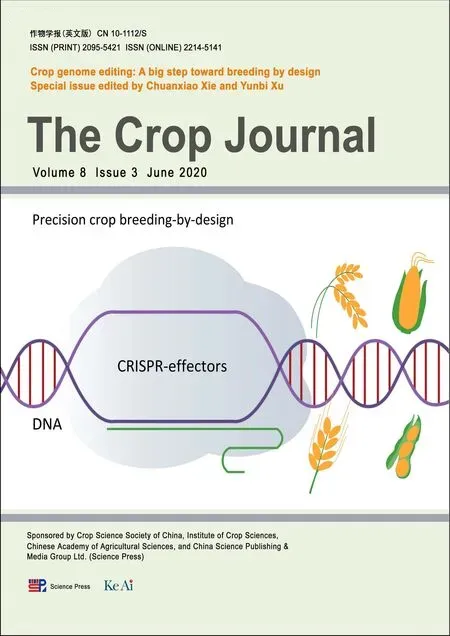
目录
- Crop genome editing: A way to breeding by design
- Base editing in plants:Current status and challenges
- Increasing fidelity and efficiency by modifying cytidine base-editing systems in rice
- Improving the efficiency of the CRISPR-Cas12a system with tRNA-crRNA arrays
- Developing high-efficiency base editors by combining optimized synergistic core components with new types of nuclear localization signal peptide
- Highly efficient CRISPR-SaKKH tools for plant multiplex cytosine base editing
- Intron-targeted gene insertion in rice using CRISPR/Cas9: A case study of the Pi-ta gene
- Generation of seed lipoxygenase-free soybean using CRISPR-Cas9
- Conversion of a normal maize hybrid into a waxy version using in vivo CRISPR/Cas9 targeted mutation activity
- Precise base editing of non-allelic acetolactate synthase genes confers sulfonylurea herbicide resistance in maize
- Targeted mutagenesis of amino acid transporter genes for rice quality improvement using the CRISPR/Cas9 system
- Mutagenesis reveals that the rice OsMPT3 gene is an important osmotic regulatory factor
- OsABA8ox2, an ABA catabolic gene, suppresses root elongation of rice seedlings and contributes to drought response
- Less and shrunken pollen 1 (LSP1) encodes a member of the ABC transporter family required for pollen wall development in rice (Oryza sativa L.)
- Brief Guide for Authors