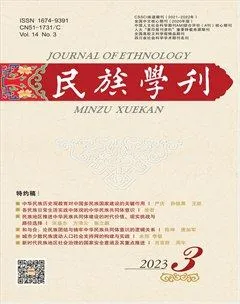
目录
铸牢中华民族共同体意识专题
- 中华民族历史观教育对中国多民族国家建设的关键作用
- 各民族日常生活实践中体现的中华民族共同体意识
- 民族地区推进中华民族共同体建设的时代价值、现实挑战与路径选择
- “和”与“合”:论民族团结与铸牢中华民族共同体意识的逻辑关系
- 民族地区“多层级协同治理”的结构特征与内在逻辑
- 乡村振兴背景下羌族地区民宿产业发展模式
- 四川省红色旅游共生图谱形成机理及演进态势研究
- 古代西南各民族文学交融史料研究的核心问题
- 民族志舞蹈影像的早期实践与文化建构
- 城市少数民族流动人口社会支持网的构建与实践
- 新时代民族地区社会治理的国家安全意涵及其重点推进
- 现代道路与少数民族传统社会变迁
- 清初的康区贸易管控及其原因探析
- 明清时期土司制度与国家治理的进路
- Vital Roles of the Education on the View on the History of the Chinese Nation in the Construction of the Multi-Ethnic Country of China
- The Sense of Chinese National Community Embodied in Daily Life Practices of Various Ethnic Groups
- The Construction of the Chinese National Community in Ethnic Areas:the Value of Times, Practical Challenges, and Path Choice
- “Harmony” and “Integration”: On the Logical Relationship between Ethnic Unity and Forging a Sense of Community for the Chinese Nation
- “Multi-level Collaborative Governance” in Ethnic Areas:Structural Features and Internal Logic
- A Development Model for the Homestay Industry in Qiang Areas Against the Background of Rural Revitalization:Based on a Survey in Wenchuan County, Aba Prefecture
- A Study on the Formation Mechanism and Evolution Trend of Red Revolutionary Tourism Symbiosis Atlas in Sichuan Province
- Core Issues in the Philological Study of Ethnic Literary Integration History in Ancient Southwest China
- The Early Practice and Cultural Construction of Visual Ethnodanceology
- On the Building and Practice of a Social Support Network for the Urban Ethnic Minority Floating Population: A Case Study of “Ethnic Homes” in Guangzhou
- The National Security Implication of Social Governance in Ethnic Minority Areas in the New Era and Its Promotion
- Modern Road and Traditional Social Changes of Ethnic Minorities:Based on the Investigation of Puxiong Yi Society Along the Chengdu-Kunming Railway System
- From Little Tradition to Great Tradition:The Influence of the Gaitu Guiliu Policy on Social Life in Southwestern Hubei
- Trade Control in Khams during the Early Qing Dynasty and Its Reasons
- The Tusi System and the National Governance Approach in the Ming and Qing Dynasties